https://www.svd.se/a/K8nrV4/metas-ai-smart-glasses-and-data-privacy-concerns-workers-say-we-see-everything

callled #Sama…subcontractor to Meta…in Kenya’s capital, thousands of people train AI systems, teaching them to recognise and interpret the world.

…called data #annotators…they are the manual labourers of the #AI revolution. On the screens they draw boxes around flower pots and traffic signs, follow contours, register pixels and name objects: cars, lamps, people…

…workers in #Kenya say that it feels uncomfortable to go to work. They tell us about deeply private video…

Meta’s AI Smart Glasses and Data Privacy Concerns: Workers Say “We See Everything”

Bank details, sex and naked people who seem unaware they are being recorded. Behind Meta’s new smart glasses lies a hidden workforce, uneasy about peering into the most intimate parts of other people’s lives.

Svenska Dagbladet

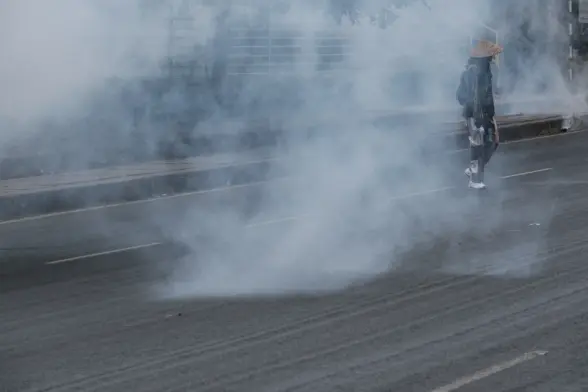
“Drinking water does not reach the tap”

Kenya is among the countries identified as having unsafe tap water. It is one of 187 countries in the world where tap water is considered unsafe.

Not surprisingly, the safest tap water is found in developed countries. Conversely, countries in Central America, Africa, Asia and the Middle East are…

🔎 https://nicolas-hoizey.photo/photos/drinking-water-does-not-reach-the-tap/

📅 25 février 2019

📸 Fujifilm X-T3 + 56mm
🎛️ ISO 160, ƒ/1.2, 1/17000 s

#TravelPhotography #Africa #Kenya #Photography

Clean water is a game-changer! See how it is transforming the Permaculture Training Centre.

#Permaculture #CleanWater #Kenya

https://www.wordforest.org/2023/12/01/water-is-coming-to-the-permaculture-training-centre/

Water Is Coming To The Permaculture Training Centre - Word Forest

Listen to this article. Water scarcity or lack of water at all, threatens health and development of communities. Such communities are constrained even economically as what little income they have must be used to secure water. Kahondzi is a woman who was eight months pregnant and gave birth on her way while searching for water. […]

Word Forest

Sicilianews24.it: Nuova strategia per salvare gli squali in Kenya coinvolge i pescatori nella conservazione.

Nuove Strategie per la Conservazione di Squali e Razze in Kenya
Un gruppo di enti governativi, scienziati e membri delle comunità costiere ha presentato un piano d’azione con 19 obiettivi per invertire il drammatico calo delle popolazioni di squali e razze in Kenya. I pescatori artigianali, che hanno un impatto significativo sulle specie marine, sono al centro di molte di queste strategie, che mirano a coinvolgerli attivamente nel processo di conservazione.
Le proposte includono l’uso di attrezzature da pesca alternative, opportunità di sostentamento diverse per ridurre la pressione della pesca, l’aumento delle aree marine gestite localmente, un coinvolgimento dei pescatori nelle decisioni di conservazione e un’applicazione più efficace delle normative esistenti. Rappresentanti delle comunità di pescatori hanno dichiarato di essere favorevoli al piano, sottolineando però la necessità di offrire alternative concrete e sostenibili per il sostentamento.
L'articolo Nuova strategia per salvare gli squali in Kenya coinvolge i pescatori nella conservazione. sembra essere il primo su Sicilianews24.it.

New strategy to save sharks in Kenya involves engaging fishermen in conservation.

New Strategies for the Conservation of Sharks and Rays in Kenya

A group of government agencies, scientists, and coastal community members has presented an action plan with 19 objectives to reverse the dramatic decline of shark and ray populations in Kenya. Artisanal fishermen, who have a significant impact on marine species, are at the center of many of these strategies, which aim to actively involve them in the conservation process.

The proposals include the use of alternative fishing gear, diverse livelihood opportunities to reduce fishing pressure, the expansion of locally managed marine areas, the involvement of fishermen in conservation decisions, and more effective enforcement of existing regulations. Representatives of the fishing communities have stated that they are favorable to the plan, emphasizing however the need to offer concrete and sustainable alternatives for livelihoods.

The article "New Strategy to Save Sharks in Kenya Involves Fishermen in Conservation" seems to be the first on Sicilianews24.it.

#Kenya #first

https://www.sicilianews24.it/nuova-strategia-per-salvare-gli-squali-in-kenya-coinvolge-i-pescatori-nella-conservazione-824119.html

Nuova strategia per salvare gli squali in Kenya coinvolge i pescatori nella conservazione.

Nuove Strategie per la Conservazione di Squali e Razze in Kenya Un gruppo di enti governativi, scienziati e membri delle comunità costiere ha presentato

Sicilianews24.it
Kenya: bodies in mass graves came from hospital morgue, police finds http://newsfeed.facilit8.network/TRkKlN #Kenya #BreakingNews #PoliceReport #MassGraves #HospitalMorgue
Kenya's flower industry profits wither from Middle East war effect http://newsfeed.facilit8.network/TRkFBb #Kenya #Floriculture #FlowerIndustry #MiddleEastConflict #Agriculture
African River Wildlife Camera powered by Explore.org

YouTube
African Safari Camera powered by Explore.org

YouTube

Il Fatto Quotidiano: Ecco il Masripithecus – scoperto in Egitto un fossile di 18 milioni di anni che riscrive la storia dell’evoluzione

Un fossile scoperto nel Sinai potrebbe riscrivere la storia dell’evoluzione dei primati e degli uomini. Si tratta di un reperto risalente a 18 milioni di anni fa, appartenente a una nuova specie denominata Masripithecus, che secondo i ricercatori potrebbe indicare l’Egitto come la culla degli antenati comuni di scimmie e umani. La scoperta, guidata da Shorouq Al-Ashqar dell’Università di Mansoura, è stata pubblicata sulla rivista Science e apre scenari inediti sulle origini degli ominoidi.
Fino a oggi, gli studiosi ritenevano che i primi ominoidi avessero avuto origine nell’Africa orientale, tra Etiopia e Kenya. I nuovi fossili suggeriscono invece che la nascita di questi primati potrebbe essere avvenuta molto più a nord, nell’attuale Egitto, e invitano a riconsiderare luoghi e tempi della nostra evoluzione. “I nuovi ritrovamenti confermano che i paleontologi potrebbero aver cercato gli antenati degli ominoidi moderni nel posto sbagliato”, sottolineano David Alba e Júlia Arias-Martorell dell’Università di Barcellona in un commento sulla stessa rivista.
Masripithecus rappresenta una tessera fondamentale per ricostruire il puzzle evolutivo dei nostri antenati e delle scimmie che, milioni di anni dopo, avrebbero dato origine a grandi primati come scimpanzé e oranghi, fino agli uomini. Gli autori dello studio evidenziano inoltre che gran parte delle ipotesi precedenti sono state influenzate dalle lacune nei ritrovamenti fossili, concentrati finora solo in alcune regioni, mentre molte altre aree del Nord Africa restano ancora inesplorate. Nuove ricerche in queste zone potrebbero dunque rivoluzionare ulteriormente la comprensione delle origini dei primati.
FOTO DI ARCHIVIO
L'articolo Ecco il Masripithecus – scoperto in Egitto un fossile di 18 milioni di anni che riscrive la storia dell’evoluzione proviene da Il Fatto Quotidiano.

Here is the Masripithecus – a fossil discovered in Egypt dating back 18 million years that is rewriting the history of evolution.

A fossil discovered in the Sinai could rewrite the history of primate and human evolution. It is a find dating back 18 million years, belonging to a new species called Masripithecus, which researchers believe may indicate Egypt as the cradle of the common ancestors of monkeys and humans. The discovery, led by Shorouq Al-Ashqar of Mansoura University, was published in the journal Science and opens new horizons on the origins of hominoids.

Until now, scholars believed that the first hominoids originated in Eastern Africa, between Ethiopia and Kenya. The new fossils suggest instead that the birth of these primates could have occurred much further north, in present-day Egypt, and invite us to reconsider the places and times of our evolution. “The new findings confirm that paleontologists may have been looking for the ancestors of modern hominoids in the wrong place,” say David Alba and Júlia Arias-Martorell of the University of Barcelona in a comment on the same journal.

Masripithecus represents a fundamental piece for reconstructing the evolutionary puzzle of our ancestors and monkeys that, millions of years later, would have given rise to great primates such as chimpanzees and orangutans, up to humans. The authors of the study also highlight that much of the previous hypotheses has been influenced by the gaps in fossil finds, concentrated so far only in some regions, while many other areas of North Africa remain unexplored. New research in these areas could therefore further revolutionize our understanding of the origins of primates.

#Egypt #Masripithecus #ShorouqAl-Ashqar #MansouraUniversity #Science #first #EasternAfrica #Ethiopia #Kenya #DavidAlba #NorthAfrica

https://www.ilfattoquotidiano.it/2026/03/26/masripithecus-fossile-egitto-evoluzione-primati-news/8337553/

Ecco il Masripithecus – scoperto in Egitto un fossile di 18 milioni di anni che riscrive la storia…

Secondo i ricercatori il ritrovamento potrebbe indicare l’Egitto come la culla degli antenati comuni di scimmie e umani

Il Fatto Quotidiano
Herders in the Kenyan countryside