 Editor
WEST WALES HEALTH ALERT: One in three children starting school are above a healthy weight — and activity levels are ‘deeply concerning’
One in three children aged four and five in West Wales are above a healthy weight — and the situation only gets worse as they get older, a major new regional report has found.
The research, published by Activate West Wales, which covers Swansea, Neath Port Talbot, Carmarthenshire and Pembrokeshire, paints a stark picture of the health and activity landscape facing young people across the region.
At primary school age, fewer than one in four children and young people are achieving the recommended 60 minutes of daily physical activity. By secondary school, that figure drops even further — to just 19% of pupils meeting the daily guideline across West Wales.
The gender gap is a particular concern. Boys are significantly more active than girls at secondary school age, with between 22% and 24% of boys meeting the daily activity target compared to just 13% to 14% of girls. Girls are also more sedentary than boys across all four local authority areas.
Sedentary behaviour — time spent sitting or inactive — is high across the region, with young people in Swansea and Neath Port Talbot reporting seven or more sedentary hours on weekdays, exceeding the Wales average.
The data was compiled as part of a new ‘State of the Region’ report delivered by the Welsh Institute of Physical Activity, Health and Sport (WIPAHS) on behalf of Activate West Wales. A wide range of organisations contributed to the findings, including local authorities, health boards, national governing bodies and community groups with an interest in sport, health and wellbeing across the four authority areas.
Not all of the findings are negative. West Wales as a region has a higher proportion of children and young people taking part in organised sport three times a week than the Wales average — a bright spot in an otherwise difficult picture. However, girls’ participation in organised sport remains lower than boys in every local authority area across the region.
More health stories from Swansea Bay News
Stay up to date with the latest health and care news from across Swansea, Neath Port Talbot, Carmarthenshire and Pembrokeshire. Read all our health coverage here.
The report also explored what children and young people with disabilities want from sport and physical activity. Those with disabilities expressed interest in weightlifting, tennis and archery, while those without disabilities most commonly cited swimming, football and cycling as activities they wanted to do more of.
Dr Susan Barnes, Chair of Activate West Wales, said the findings amounted to “a clear and uncomfortable truth.” She warned: “Unless we act decisively now, too many people across our regional footprint will face a future marked by preventable ill health, widening inequality, and diminished opportunity.”
The stakes extend well beyond childhood, she argued. “Without intervention, today’s inactive child is highly likely to become tomorrow’s unhealthy adult and will enter the workforce later, leaving it earlier, and spending more years dependent on health and social care services.”
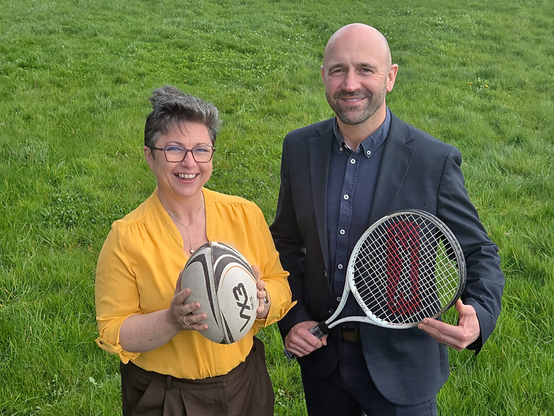
Kate Williams, Head of Strategic Partnerships and Development at Activate West Wales, and Jamie Rewbridge, CEO of Activate West WalesThose warnings land at a moment when health services across West Wales are already under severe strain. As we have previously reported, Welsh A&E departments have been linked to nearly 1,000 deaths connected to excessive waiting times, with pressure on the region’s hospitals showing little sign of easing.
Jamie Rewbridge, who was appointed as chief executive of Activate West Wales as part of a restructure of the region’s sports partnership, said no single body could turn the situation around alone.
“Reversing this trajectory will require sustained, coordinated action across sectors,” he said. “Success depends on collaboration from our government down through our local authorities, health boards, schools, community organisations, clubs, businesses, and national partners.”
He added: “By using what we’ve learned in this report to guide our work in local communities — and by joining forces to break down barriers and promote inclusion — we can help create a healthier, more active and more equal West Wales. This report is not an end point, but a starting line for lasting change.”
Activate West Wales said the purpose of the report was to bring together existing data sources, highlight patterns and inequalities, and identify where more targeted support is needed across the region.
The full State of the Region report is available at activate.wales.
Related stories from Swansea Bay News
A&E crisis: Nearly 1,000 deaths in Wales linked to 12-hour waits as calls grow for urgent action
The pressure on health services that an increasingly inactive population is set to make worse.
BLOOD TEST SHUFFLE: Llanelli patients moved again as services shift to new £60m Pentre Awel site
The changing face of health provision across West Wales as services adapt to growing demand.
HEARING FEAR: Ammanford star Owain Wyn Evans warns “I was missing conversations”
Another health concern hitting West Wales residents — and a reminder of why preventative action matters.
West Wales Sports Partnership announces key leadership appointments
The background on Activate West Wales and the leadership team behind the State of the Region report.