Achilleus: "Can't outrace a tortoise," huh? Well, tough guy, why don't you come over HERE and say that?
Zeno of Elea: ... 🤗 🤓
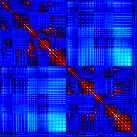
Let \(\varpi=\dfrac{\Gamma^2\left(\frac14\right)}{2\sqrt{2\pi}}=2.62205755\ldots\) be the lemniscate constant. Then,
\[\Large\displaystyle\sum_{n=1}^\infty\dfrac{1}{\sinh^4(\pi n)}=\dfrac{\varpi^4}{30\pi^4}+\dfrac{1}{3\pi}-\dfrac{11}{90}\]
#Series #Sum #InfiniteSum #LemniscateConstant #GammaFunction #Lemniscate #LemniscateOfBernoulli #Bernoulli #Math #Maths #InfiniteSeries #HyperbolicSines
“But synthetical reasoning, setting up as its goal some unattainable abstraction, like an imaginary quantity in algebra, and commencing its course with taking for granted some two assertions which cannot be proved, from the union of these two assumed truths produces a third assumption, and so on in infinite series, to the unspeakable benefit of the human intellect.”
But synthetical reasoning, setting up as its goal some unattainable abstraction, like an imaginary quantity in algebra, and commencing its course with taking for granted some two assertions which cannot be proved, from the union of these two assumed truths produces a third assumption, and so on in infinite series, to the unspeakable benefit of […]
An infinite sum consisting of Fibonacci numbers:
\[\displaystyle\sum_{n\geq0}\binom{2n}{n}\dfrac{F_n}{8^n}=\sqrt{\dfrac{2}{5}}\]
#FibonacciNumber #Fibonacci #FibonacciSequence #FibonacciNumbers #FibonacciSeries #InfiniteSum #InfiniteSeries #Sum #Maths #Math
Imagine trembling with awe and mystery, glimpsing at Ramanujan's equation tonight as you drift off to sleep.
An amazing relationship among \(\pi\), \(e\), a continued fraction, and an infinite series:
\[\sqrt{\dfrac{\pi e}{2}}=\dfrac{1}{1+\dfrac{1}{1+\dfrac{2}{1+\dfrac{3}{1+\dfrac{4}{\ddots}}}}}+\left(1+\dfrac{1}{1\cdot3}+\dfrac{1}{1\cdot3\cdot5}+\cdots\right)\]
#pi #ContinuedFraction #InfiniteSeries #Series #AmazingConnection #Ramanujan #Mathematics #Equations #Relationship
#math #calculus #infiniteseries #series
Something for your AP/Calc2 students...
1 - 1/3 + 1/5 - 1/7 +...
(a) Write this series in summation notation
(b) Explain why it converges.
(c) Using Wolfram Alpha or similar technology, calculate the sum of the 1st 1000 terms to 4 places.
(d) What is the approximate % error in using this partial sum to approximate π/4. Impressed or not?
(e) What is the connection between the inf series and π/4?
(f) Questions/Ideas?