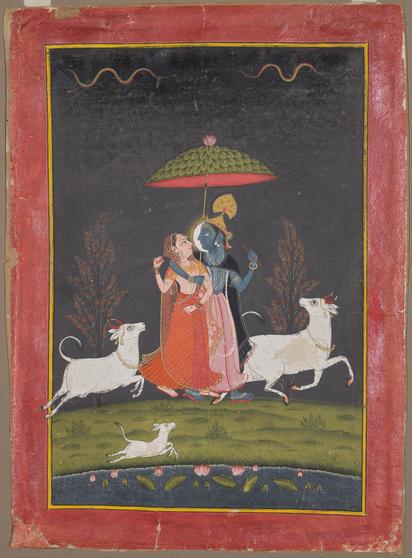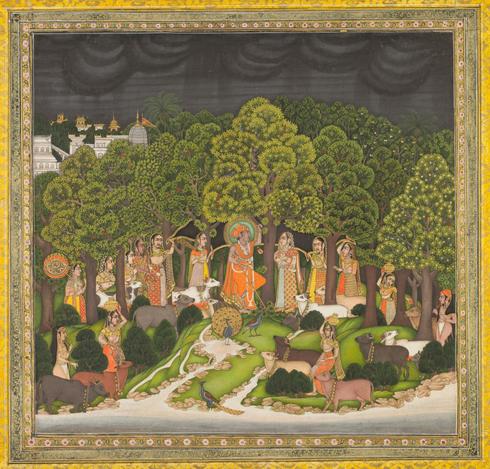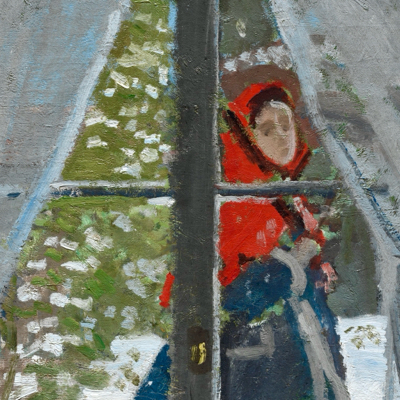
The white cow’s belly glows orange with henna, a mark of devotion or celebration. Figures cluster beneath a storm-dark sky, their gestures urgent yet reverent—protection offered to a god who needs none.

Why does the artist render the cow’s adornment with such care, while Krishna’s divine strength remains unseen?

#ClevelandMuseumofArt #IndianMiniature #SacredArt
https://clevelandart.org/art/2013.352

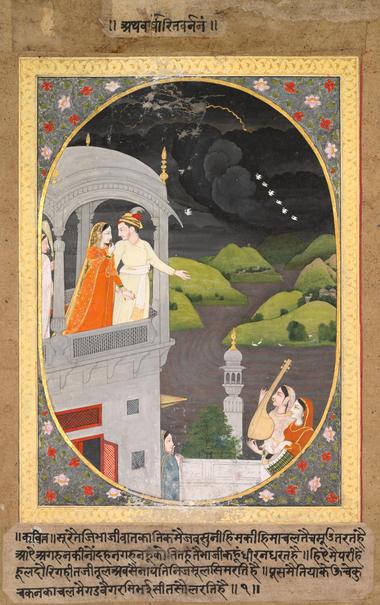
Experience the romance and serenity in "Krishna and Radha Watching Rain Clouds." This Mughal masterpiece beautifully combines nature, music, and elegance, inviting viewers into a lush world. What emotions does this scene evoke for you?
#MughalArt #ClevelandArt #IndianMiniature
https://clevelandart.org/art/1973.104

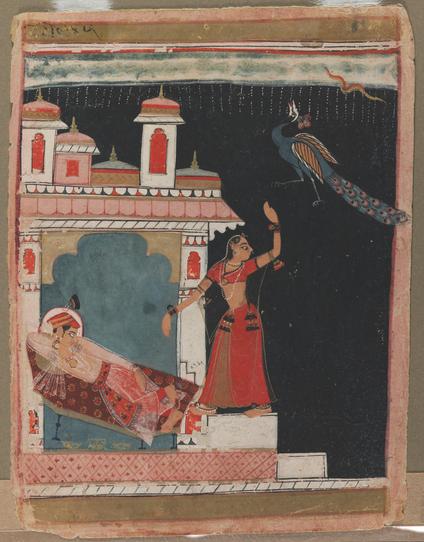
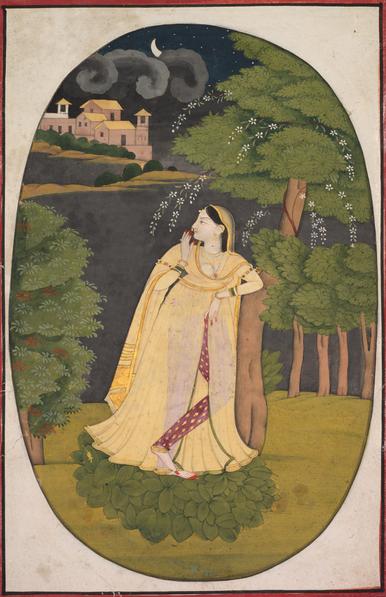
"Beneath the crescent moon, a heroine awaits with hope amidst looming clouds. This exquisite Pahari painting captures the tension of longing beautifully. What emotions does this scene evoke in you?

#ClevelandArt #IndianMiniature #ArtAppreciation"
https://clevelandart.org/art/1932.118

Radha and Krishna in the Rain draws viewers into a world of love and divinity, elegantly portrayed in vivid colors and intricate details. The pastoral setting and rich symbolism invite contemplation. What feelings does this artwork inspire in you?
#ClevelandArt #IndianMiniature #ArtAppreciation
https://clevelandart.org/art/1988.120
Radha and Krishna in the Rain | Cleveland Museum of Art

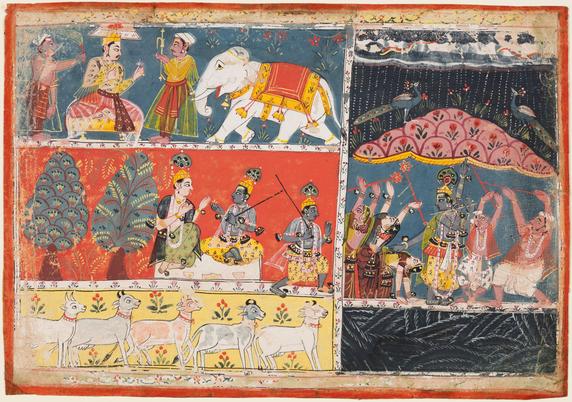
Experience the divine encounter in "Krishna Lifts Mount Govardhan." Vibrant colors and intricate patterns breathe life into this mythological tale. How does this blend of regal and pastoral themes resonate in today’s art?
#ClevelandArt #IndianMiniature #ArtHistory
https://clevelandart.org/art/2018.134
Krishna Lifts Mount Govardhan, from a Bhagavata Purana | Cleveland Museum of Art

After Krishna convinced the dwellers of the cowherd village in Braj to not give the annual offering to Indra, king of the gods, an enraged Indra flooded the village with heavy rainfall. Krishna, shown with four arms, lifted nearby Mount Govardhan, and the villagers took shelter underneath. The painting depicts a heavy torrent of rain, and in the upper left, Indra sits enthroned with two attendants and his white elephant mount.

Experience the enchanting world of Radha and Krishna in the Rain, a stunning testament to Rajasthani tradition. The vibrant colors and delicate details invite you to explore the themes of love and nature. What emotions does this artwork evoke for you?
#ClevelandArt #IndianMiniature #RadhaKrishna #ArtAppreciation
https://clevelandart.org/art/1988.120
Radha and Krishna in the Rain | Cleveland Museum of Art

A stunning glimpse into divine playfulness, Krishna masterfully lifts Mount Govardhan, showcasing spiritual strength and harmony. The vibrant detailing and rich storytelling resonate deeply. How does this artwork reflect the balance between power and humility?

#ClevelandArt #IndianMiniature #Krishna #ArtHistory
https://clevelandart.org/art/2006.203

Krishna Lifting Mount Govardhan, from a Persian translation of the Bhagavata Purana, c. 1625 | Cleveland Museum of Art

Indra, king of the gods and controller of rain and thunder, was furious when Krishna decided to eat his annual offerings. Perched on his white elephant, Indra sent storms to destroy Krishna and his cowherd community, but Krishna effortlessly raised the nearby Mount Govardhan like an umbrella, and everyone rejoiced in his protection. Krishna balances the mountain on one finger while fluting and taking refreshment (<em>paan</em>) from a milkmaid. Below the figure of four-armed Krishna, Indra is shown defeated, kneeling in acquiescence to Krishna’s superior power.

Admire the regal elegance of Maharana Raj Singh II, who, at just eleven, rides a majestic black stallion amidst detailed vibrant hues. Intricately rendered, this Indian miniature showcases youthful poise and tradition. What catches your eye first?
#ClevelandArt #IndianMiniature #ArtHistory
https://clevelandart.org/art/2018.148
Equestrian Portrait of Maharana Raj Singh II of Mewar (r. 1755–62) | Cleveland Museum of Art

The youthful king was only eleven years old when he inherited the throne from his father Pratap Singh II (r. 1752–55). Here shown with barely the beginnings of facial hair starting to grow, he wears a gorgeous turban with fresh flowers tucked into the bejeweled band, and a lion-headed dagger in his belt. Multicolored clouds gather forbiddingly in the sky, promising rain, as the black stallion trots through the grasses, and he gestures to his attendants not to be afraid.

In "Radha and Krishna meet in the forest during a storm," vibrant colors and intricate details bring this pastoral scene to life. Notice the henna on the cow's belly and the fine lines on Krishna & gopis. Can you feel the divine energy? What draws your eye the most?
#ClevelandArt #IndianMiniature #ArtAnalysis
https://clevelandart.org/art/2013.352
Radha and Krishna meet in the forest during a storm | Cleveland Museum of Art

This painting depicts the Hindu deity Krishna as a youth among the villagers of the cowherding community where he grew up. Drawn to him, the women hurry to hold a coverlet over him in protection from the rain, not realizing that he is able to lift a mountain to shield them all. Birds and monkeys populate the trees, and a Hindu temple and palace buildings stand in the background. This vibrant work was probably made for an aristocratic Hindu ruler of territories in eastern India during the period when Mughal artists dispersed from the imperial center after the invasion of Delhi in 1739.

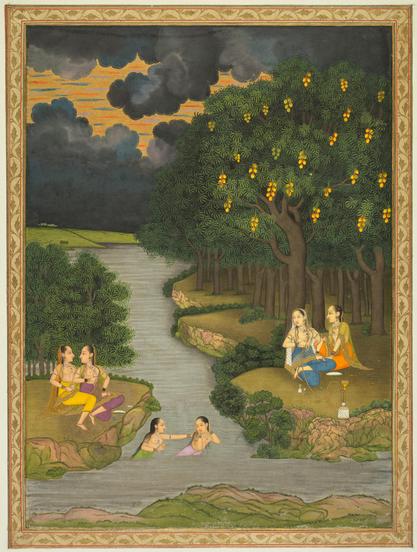
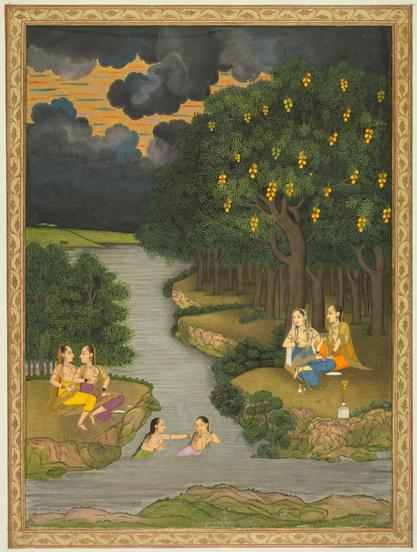
Admire the intricate details of "Women Enjoying the River at the Forest’s Edge" at #ClevelandMuseumofArt. This vibrant scene of prosperity and joy is a Mughal-era masterpiece. Can you feel the serenity as rain clouds nourish the land and the palace peeks from afar?

#Art #IndianMiniature #MughalEra
https://clevelandart.org/art/2013.351.a

Women Enjoying the River at the Forest’s Edge (recto) | Cleveland Museum of Art

The image of young women at play, in association with water and the fruiting of trees, such as this mango, has been used in Indian art to signal the idea of prosperity and abundance. Rain clouds approach that will nourish the land. The pairs of women on the banks sample perfumes, and in front of them bowls made of leaves appear to hold jasmine flowers for adorning the hair. One woman smokes a hookah and looks on as two companions frolic in the rivulet. The palace’s white marble buildings are barely indicated in the far distance.