South Korea's Ministry of Trade, Industry and Energy launches 14th Public Data Utilization Idea Contest, offering 57 million won in prizes and employment benefits to discover AI-driven solutions for regional economic revitalization, with submissions accepted until July 6.
#YonhapInfomax #PublicData #ArtificialIntelligence #MinistryOfTrade #RegionalEconomy #IdeaContest #Economics #FinancialMarkets #Banking #Securities #Bonds #StockMarket
https://en.infomaxai.com/news/articleView.html?idxno=112609
Ministry of Trade Seeks Ideas to Revitalize Regions with Public Data, AI

South Korea's Ministry of Trade, Industry and Energy launches 14th Public Data Utilization Idea Contest, offering 57 million won in prizes and employment benefits to discover AI-driven solutions for regional economic revitalization, with submissions accepted until July 6.

Yonhap Infomax

Learning from Social Entrepreneurs: Fodeography

This interview series was developed and conducted by students from Salzburg College.

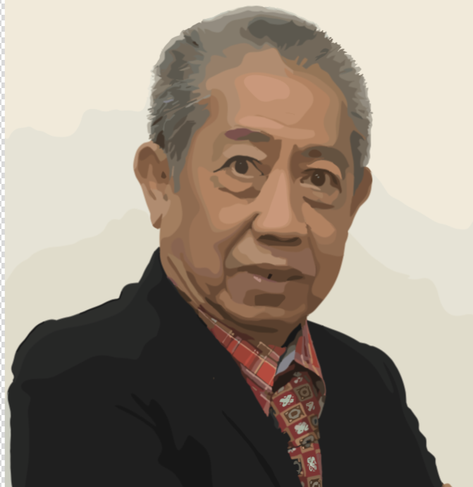
Dr. Eduardo Canela

Meet Dr. Ed Canela: a global freelancing consultant, digital transformation guru, and AI innovator who’s changing the world one project at a time. As a polio survivor since age 3, he proves that resilience and brilliance can conquer any challenge. With expertise in Organization Development (OD), data sciences, AI, and project management, he’s worked across 79 countries, partnering with major global players like The World Bank, UNDP, and USAID to solve real-world problems and create sustainable solutions.

Dr. Canela’s academic journey is just as impressive. He holds degrees in Electrical Engineering, an MBA in Operations Management, and a PhD in Systems Dynamics. He’s taught at institutions such as the Asian Institute of Management and UP Institute for Small Scale Industries. Beyond teaching, he shares cutting-edge ideas through his bi-monthly Substack newsletter “OD Play Notes”.

What sets him apart? He’s not just about theory; he’s about action — helping organizations innovate and thrive in an ever-changing world. Whether it’s advising governments or training future leaders, Dr. Canela’s impact is felt globally. For college students aspiring to make a difference, his story is a reminder that passion, perseverance, and knowledge can truly shape the future.

INTERVIEW OF DR. ED CANELA: CRAFTING AND SCALING DIGITAL IMPACTS

1. Which project do you consider your most successful?

As a freelance OD (Organization Development) and AI consultant, I would highlight two initiatives supporting social enterprises in Nigeria and the Philippines. I consider them moderately successful, as both still have potential for wider adoption: (a) Digital and AI literacy program for rural and peri-urban women in Nigeria (donor-supported); and (b) AI Social Impact Crafter for social enterprises in the Philippines.

2. Which current project has the most potential?

2.1 Digital and AI Literacy Programs
These one-week programs targeted women in peri-urban communities around Lagos and Abuja. Each course began with a baseline assessment, followed by short, practical sessions that included case examples, app and device demonstrations, hands-on exercises, and quizzes.

Key topics covered:

  • Digital and EU AI literacy standards
  • Analog-to-digital transition
  • Basic data analytics
  • Safe and responsible mobile phone use
  • Ethics, AI responsibility, and cybersecurity

Most participants were engaged in retail and micro-selling and showed strong interest in using digital tools to improve their businesses and reduce exposure to cyber scams. Anchoring learning on their actual business activities proved to be a strong motivator for capability development.

Even after donor funding ended, the program remained impactful by clearly surfacing capability gaps—particularly in OD, data literacy, and sustainable AI use. These insights continue to inform how I design practical, context-aware, and sustainable interventions.

2.2 AI Social Impact Crafter
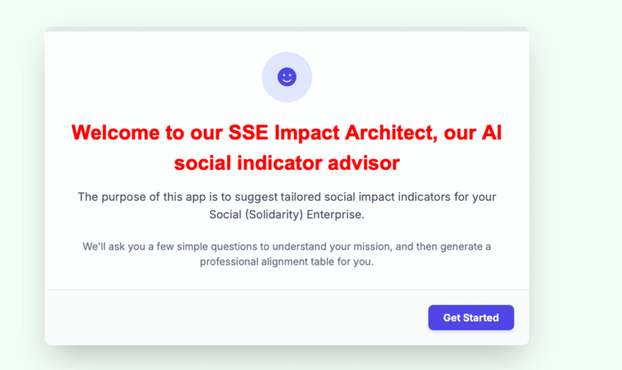
The AI-driven Social Impact Crafter was developed to address common challenges faced by social enterprises in designing funding proposals and justifying impact.

Built using Google Studio, the tool performs five core functions:

  • Extracts baseline data from the social enterprise
  • Recommends ten relevant social impact indicators
  • Facilitates stakeholder discussion to select three to four priority indicators
  • Aligns indicators with current UN Sustainable Development Goals (SDGs)
  • Suggests measurement methods and reporting frequency

This tool is “live” and accessible online. Interested users may e-mail the author for further information.

Screenshot of SSE Impact Architect

3. How do you measure success?

I measure success by adoption, application, and capability growth, not outputs alone. Indicators include: (a) continued use of tools and frameworks; (b) improved reporting (even anecdotal); (c) stronger funding proposals and safer digital practices; (d) ongoing use of tools after formal engagements end; and (e) sustained use signals real impact.

4. Do you consider your projects sustainable?

Yes. Sustainability is a core design principle. My work emphasizes:

  • Internal capability building rather than consultant dependence
  • Low-cost, mobile-friendly solutions
  • Integration into existing workflows
  • Even after funding or formal programs conclude, the knowledge and tools remain usable

5. How are your projects impacted by local and national governments?

Government priorities shape my work, particularly in:

  • Digital transformation and education
  • Cybersecurity and online fraud prevention
  • Social enterprise and MSME development
  • Alignment with national policies and UN SDGs ensures relevance for public institutions and donors, even when projects are independently implemented.

Closing Statement

My work sits at the intersection of OD, AI, and social impact — focused on practical capability building that continues to deliver value long after formal projects end.

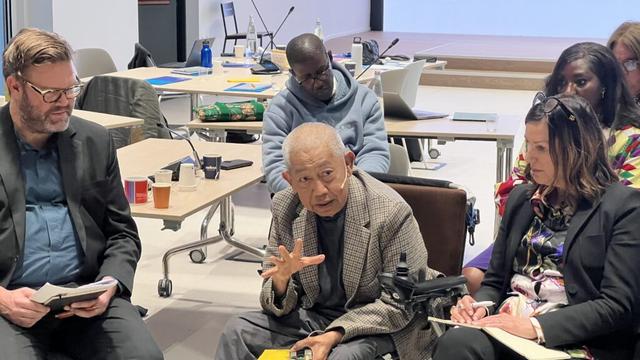
Dr. Eduardo Q. Canela among students

#africa #ideacontest #interview #Philippines #socialEntrepreneurship

Learning from Social Entrepreneurs: Turkana Leo Magazine

This interview series was developed and conducted by students from Salzburg College.

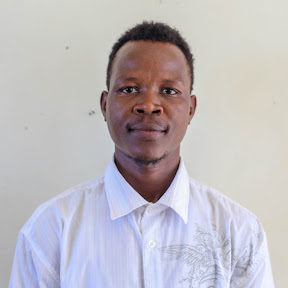
Nadiita Soninke

Nadiita Soninke is a technology champion and social entrepreneur using digital innovation to drive inclusive growth in marginalized communities. As Operational Manager of Lodwar Tech Hub II and Co-Founder of Lodu Tech Agency, he leads initiatives that bridge the digital divide through training, mentorship, and sustainable tech solutions. He is also a digital consultant and Co-Founder of Turkana Leo Magazine, a platform amplifying local voices and celebrating cultural identity through storytelling.

In this interview, Nadiita shares where his inspiration comes from, his biggest challenges and his current project.

1. What inspired you on inclusive technology projects?

My inspiration came from witnessing how limited access to technology deepens inequality in remote regions like Turkana. I saw talented youth with great potential but no digital tools, training, or connectivity. That motivated me to create opportunities that bridge this gap empowering them with digital skills, online work, and access to global platforms.

2. What are some of the biggest challenges you have with your project?

The main challenges include poor internet infrastructure, limited access to computers or smart devices, and financial constraints for scaling the initiatives. Additionally, many rural areas still lack awareness of the value of digital literacy, so part of our effort involves sensitizing communities and inspiring trust in technology.

3. How do you usually find support for your idea?

I find support through partnerships and collaborations with organizations that share similar goals, such as Learning Lions, Startuplions, and local schools. I also engage well-wishers, digital inclusion advocates, and online communities who believe in empowering marginalized youth through technology and education.

4. What do you hope to achieve overall?

My goal is to build a self-sustaining digital ecosystem in Turkana, where youth and women can access training, mentorship, and employment through technology. I hope to see every learner equipped with digital tools and confidence to compete globally while contributing locally to community growth and innovation.

5. What does your project look like currently?

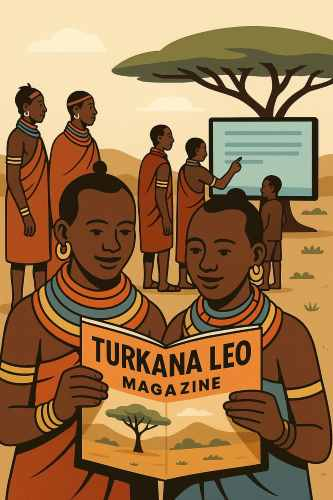
Currently, Turkana Leo Magazine serves as a digital and community empowerment platform that highlights innovation, education, and impact across Turkana. We focus on promoting digital literacy, entrepreneurship, and youth empowerment by sharing real stories from marginalized and refugee communities.

The magazine also integrates community training sessions and awareness programs to help locals use technology for education, online work, and digital business growth. However, due to limited funds and support, we are still in an early phase of development. With adequate funding, we aim to expand our operations, strengthen digital infrastructure, and make the platform fully functional and sustainable, turning it into a true hub for local voices and digital inclusion.

Turkana Leo Magazine

#africa #ideacontest #interview #kenya #socialEntrepreneurship

Learning from Social Entrepreneurs: Ghana Code Club

This interview series was developed and conducted by students from Salzburg College.

Ernestina Appiah

Ernestina Edem Appiah is the founder of the Ghana Code Club, an education-focused social enterprise that has spent over a decade working at the intersection of technology, education, and access in Ghana. For more than 10 years, Ernestina and her team have taught coding and digital skills in environments with limited devices, shared computers, and unreliable internet — conditions that reflect the reality of many schools across the country.

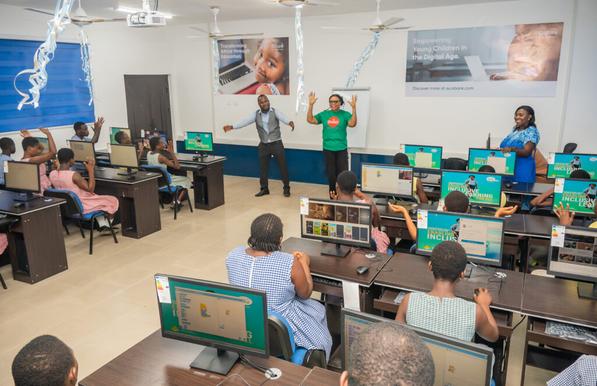
That experience led to a strategic shift. Rather than allowing infrastructure gaps to slow learning, Ghana Code Club intentionally redesigned its approach. Today, the organization operates a blended model that combines device-based learning with unplugged coding and AI education, ensuring that learning never pauses because of missing technology.

This model allows Ghana Code Club to reach learners everywhere — from fully equipped labs to classrooms with no devices at all — while still teaching deep, relevant digital skills.

Ghana Code Club

1. How would you describe access to technology and digital education for young people in Ghana right now?

Access to technology in Ghana has improved, but it remains uneven — and in many cases, fragile.

After teaching for over a decade in public schools, community centers, and rural areas, we’ve learned that access can change overnight. Devices break, labs close, connectivity drops, or classes become too large to share limited computers. Waiting for perfect infrastructure simply means too many children are left behind.

That reality is why Ghana Code Club changed its strategy. We no longer treat devices as the starting point for learning. Through our unplugged coding and AI books, children learn core programming and computational thinking principles using games, paper blocks, storytelling, movement, and real-life problem-solving. When devices are available, we seamlessly transition learners to screens. When they’re not, learning continues.

This flexibility has made our programs more resilient, scalable, and inclusive.

2. What tools or methods work best when teaching kids and especially girls, how to code?

The most effective method is a mix of device and non-device learning, designed intentionally rather than as a fallback.

When infrastructure allows, we teach using Scratch, robotics kits, and web-based tools. But alongside this, we use unplugged activities to introduce and reinforce concepts behind real-world programming languages.

Even without computers, learners explore:

  • How HTML structures information
  • How CSS controls visual design
  • How JavaScript creates interaction and logic
  • How Python uses patterns, conditions, and commands to solve problems

These ideas are taught playfully — through cards, role-play, drawing, sequencing games, and storytelling— so learners understand how code works before they write it.

For girls, this blended approach is especially powerful. It removes fear, reduces screen intimidation, and builds confidence early. Learning becomes collaborative, creative, and human — long before it becomes technical.

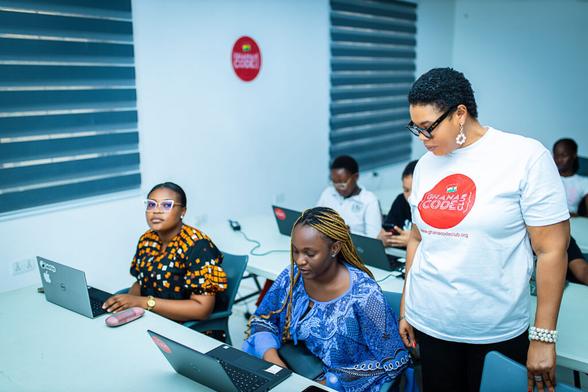
Ghana Code Club

3. What do you think would make the biggest difference for improving digital skills in the future?

The biggest difference will come from rethinking digital education policy and delivery models.

Digital skills should not depend solely on infrastructure. Teacher training, curriculum design, and national strategies must include low-tech, high-impact approaches that work in real classrooms — not just ideal ones.

Our experience shows that when children first learn how technology thinks, they adapt easily to any tool later. By mixing unplugged learning with gradual access to devices, and by equipping teachers with flexible resources, countries can build strong digital foundations at scale.

If we want a future where African children are creators of technology, we must design systems that work with the realities on the ground, not against them.

Ghana Code Club

#africa #Ghana #ideacontest #interview #socialEntrepreneurship

Learning from Social Entrepreneurs: Intro

Or: Why We Launched This Interview Series.

Around the world, social entrepreneurs are developing innovative responses to some of today’s most pressing social and environmental challenges. They operate at the intersection of purpose and practice — often with limited resources, complex local realities, and a deep commitment to creating positive impact.

At ICT4D.at, we believe that learning from these real-world experiences is essential if digital innovation is to truly contribute to equal opportunities for all. That belief is what inspired this interview series.

In collaboration with students from Salzburg College, we set out to explore social entrepreneurship across different regions and contexts by listening to those who are actively shaping change: social entrepreneurs, changemakers, and idea givers.

Why this interview series?

Social entrepreneurship is often discussed in abstract terms — as a concept, a trend, or a buzzword. But behind every initiative are people navigating uncertainty, learning through trial and error, and adapting ideas to real needs on the ground.

Through this interview series, we aim to explore questions such as:

  • What motivates social entrepreneurs to start their initiatives?
  • Which challenges do they face when building and scaling their projects?
  • How do digital tools support their work — and where do they fall short?
  • What lessons can others learn from their experiences?

By sharing these stories, we want to make social entrepreneurship more tangible and accessible — not as a polished success narrative, but as lived practice shaped by local realities, experimentation, and perseverance.

A student-driven collaboration

This interview series was developed and conducted by students from Salzburg College as part of the course “Community Engagement: Innovation & Entrepreneurship.”

Throughout the course, students explored how innovation and entrepreneurship can contribute to social impact. They identified inspiring initiatives around the world, reached out to social entrepreneurs, prepared and conducted interviews, and reflected on the role of communication, storytelling, and community engagement in driving change.

We are grateful for the students’ curiosity, commitment, and thoughtful questions — and for the openness of the social entrepreneurs who generously shared their time, insights, and experiences.

From inspiration to action

The stories in this series are not only meant to inspire — they are also an invitation.

If you find yourself thinking “I have an idea too” or “I’d like to use digital tools to address a social challenge”, we encourage you to take the next step(s).

👉 Our global idea contest “Opening Opportunities: Digital Tech for All!” is currently open.
We are looking for feasible ideas on how digital technologies can empower people and create more equal opportunities.

Sometimes, meaningful change starts with listening and learning — and then daring to try.

We hope this interview series offers you insights, motivation, and maybe even the spark for your own idea.

Idea Contest 2025

#ideacontest #innovation #interview #socialEntrepreneurship

🌍 Open Innovation Idea Contest 2025: Opening Opportunities – Digital Tech for All

Hurray – it’s time to get creative again! 🎉

Our next Open Innovation Idea Contest is live, and we’re looking for your ideas on how digital technology can open doors for everyone.

💡 How can we make sure digital tools empower people instead of excluding them?
🌐 How can we use tech to create equal opportunities, bridge divides, and make the digital future more human?

If you’ve got an idea — big or small — that tackles these questions, we want to hear from you!

Who can join?

Everyone with a spark for change:

  • 🌱 Students & young innovators
  • 💪 NGOs & social entrepreneurs
  • 💻 Tech tinkerers & community builders
  • 🌍 Anyone who believes digital tech should serve all of us

Why join?

Because your idea can make a difference — and we’ll help you make it real:
🗓️ Submission period: November 10, 2025 – January 7, 2026
🏆 Awards: up to €500
🌱 Mentorship Program (optional): January–March 2026
🛠️ Project Forge (online): February 2026
🚀 Project funding: up to €5,000

Let’s co-create a digital future where no one is left behind — where innovation means inclusion.

👉 Submit your idea now via the IdeaSpace Plattform

#ICT4DAt #ideacontest #innovation #project