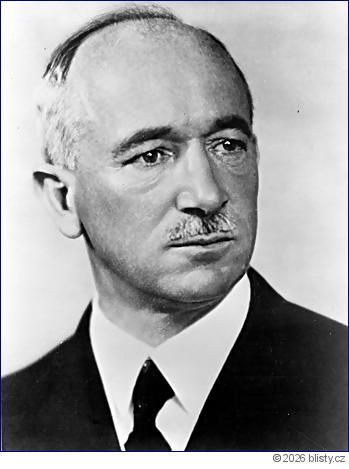
A nebyl to ani Beneš, kdo rozhodl o poválečném odsunu Němců. Název „Benešovy dekrety“ se vžil až dlouho po válce a hlavní slovo tu opět měla (krom vítezných spojenců v Postupimi) československá vláda. Košický vládní program pak jednoznačně stanovil, že odsunuti budou pouze ti, kteří k nám přišli po 1. říjnu 1938, což byli říšští Němci, za protektorátu označováni jako „národní hosté“, a ti, kteří se prokazatelně dopustili zločinů na českém a slovenském národu. Ani dekret č. 33, který stanovoval podmínky pro odnětí československého občanství Němcům a Maďarům, se nezmiňoval o žádné „kolektivní vině“. Dokonce byli zohledňováni ti, kteří se účastnili odboje nebo byli za války perzekuováni. Současně je třeba zmínit, že si každý mohl do šesti měsíců zažádat o československé občanství. Předchozí řádky tohoto textu však nijak nezpochybňují excesy v podobě divokého odsunu. Na něm se podíleli ve velké míře i ti, kteří rozhodně měli co skrývat. Když se Beneš o těchto excesech dozvěděl, trval na tom, že musí být okamžitě prošetřeny. Požadoval dokonce odvolání šéfa Obranného zpravodajství (OBZ) Bedřicha Reicina, neboť měl informace o tom, že příslušníci jeho bezpečnostních oddílů nesli za divoký odsun svůj díl odpovědnosti.

https://blisty.cz/art/134088-edvard-benes-byl-skutecny-statnik-mel-by-byt-oslavovan-nikoli-zatracovan.html

#hstory #demokracie #democracy #čr #česko #czech #czechia #czechrepublic

Edvard Beneš byl skutečný státník, měl by být oslavován, nikoli zatracován | 16. 6. 2026 | Milan Mundier | Britské listy

Nedlouho poté, co v Brně skončil sjezd sudetských Němců (bohužel i za účasti politiků, kteří tématu poválečného odsunu Němců z Československa dlouhodobě zneu...

Britské listy
Today is the feast day of Mauxe of Évreux, the second bishop of Évreux in #Normandy https://cromwell-intl.com/travel/france/jumieges-abbey/?s=mb #travel #France #hstory
Jumièges Abbey

Exploring Jumièges Abbey along the Seine below Rouen, dinner in Duclair, watching Seine river traffic, and overnight at a bed and breakfast in the French countryside.

Bob's Pages of Travel, Linux, Cybersecurity, and More
Inazuma Raigorō, who died OTD in 1877, was #sumo's 7th Yokozuna or top champion https://cromwell-intl.com/travel/japan/kamakura/daibutsu.html?s=mb #travel #Japan #hstory
Daibutsu — Kamakura — Japan

Daibutsu, the huge bronze Buddha at the Kōtoku-in temple outside Kamakura, is a symbol of Japan.

Bob's Pages of Travel, Linux, Cybersecurity, and More

The Venerable Bede and the Ethics of Remembering

A reflection on writing, truth, and what we carry forward


Before words were fast, they were careful. Long before writing became something we shared instantly, it was an act of patience and devotion. Marks were scratched into clay, traced on stone, copied by hand in cold rooms by people who understood how easily words could disappear. Writing began not as performance or publication, but as remembrance. A way of saying this mattered enough to be carried forward.

It is easy, in our own time, to forget how fragile memory once was.

In the early eighth century, there lived a monk named Bede, known to history as the Venerable Bede. The title was not granted because he travelled widely, held power, or participated in great public decisions. It was earned through the quality of his attention.

The Venerable Bede writing the Ecclesiastical History of the English People, from a 12th-century codex at Engelberg Abbey, Switzerland (Public Domain via Wikimedia Commons)

Bede spent almost his entire life within the walls of a monastery in Northumbria. His world was bounded, his movement limited. He was not “at the table” where authority gathered. And yet, from that enclosed life, he shaped how history itself would be remembered.

Bede listened. He read. He gathered letters, oral accounts, earlier manuscripts, and local traditions, carefully weaving them together so they would not be lost. His great work, Ecclesiastical History of the English People, preserved names, dates, and stories that might otherwise have vanished. He even helped organize time itself, popularizing the Anno Domini dating system so the past could be shared and understood across generations.

What makes Bede enduring is not the scope of his life, but the integrity of his work. Limited in movement, he was expansive in care. Rooted in one place, he reached far beyond it. What strikes me most about Bede is not simply what he preserved, but how he went about it. He loved truth, not as an abstract ideal, but as a daily practice. He investigated carefully. He named his sources. He admitted uncertainty. He distinguished between what he had witnessed, what had been reported, and what could not be confirmed.

As one later reader observed in the introduction to Bede’s Ecclesiastical History of England, Bede’s love of truth showed itself in his scrupulous care in investigating evidence and in acknowledging the sources from which he drew. He took pains to assure himself of authenticity, preferring first-hand testimony whenever possible, and carefully noting when such evidence was lacking. — from Bede’s Ecclesiastical History of England: A Revised Translation, with Introduction, Life, and Notes, translated by A. M. Sellar

There is something quietly radical in this. Bede did not confuse faith with carelessness, nor reverence with certainty. He understood that memory deserves honesty, and that future readers should know the difference between what is witnessed, what is told, and what is believed.

We live in an age that values visibility. We travel widely. We attend conferences. We celebrate participation, proximity, and being “at the table.” None of this is wrong. But Bede reminds us that presence alone does not confer meaning. What matters is not where we are seen, but how faithfully we work with what we know.

Authentic creativity is not loud. It is careful. Compassionate creativity is not performative. It is attentive. Truthful creativity is willing to say, “This is what I know — and this is where my knowledge ends.”

From within monastery walls, Bede preserved a world. From within our own lives, however bounded or busy they may be, we, too, are shaping what will be remembered. Perhaps the question is not whether we are sitting at the table, but whether our words can be trusted when they leave our hands.

If this reflection reconnects us to anything, perhaps it is this: the desire to write with care, to read with attention, and to remember honestly.What we carry forward matters. And how we carry it matters just as much.

Rebecca

#Authenticity #Creativity #Hstory #Memory #RebeccaSReadingRoom #SacredWritings #VenerableBede

Mircea the Elder was Voivode of Wallachia from 1386 until his death OTD in 1418; he was the most important Wallachian ruler during the Middle Ages https://cromwell-intl.com/travel/athens-to-paris/bucharest-gura-humorului.html?s=mb #travel #Romania #hstory
Bucharest to Gura Humorului — En Route by Train from Athens to Paris

By train north through Ploieşti, through Moldova and Bucovina to Gura Humorului. Part of 'Athens to Paris by Train'.

Bob's Pages of Travel, Linux, Cybersecurity, and More
Today in Israel is the Day to Mark the Departure and Expulsion of Jews from the Arab Countries and Iran https://cromwell-intl.com/travel/usa/new-york-jewish-les/east-broadway.html?s=mb #travel #hstory
East Broadway

Jewish Heritage along East Broadway in New York's Lower East Side: tenements, businesses, and synagogues.

Bob's Pages of Travel, Linux, Cybersecurity, and More
Today in Israel is the Day to Mark the Departure and Expulsion of Jews from the Arab Countries and Iran https://cromwell-intl.com/travel/usa/new-york-jewish-les/grand-street.html?s=mb #travel #hstory
Grand Street

Jewish heritage along Grand Street in New York's Lower East Side: tenements, businesses, and synagogues.

Bob's Pages of Travel, Linux, Cybersecurity, and More
Gregory of Tours, born OTD in 538, was a Gallo-Roman historian and Bishop of Tours; he is the primary contemporary source for Merovingian history https://cromwell-intl.com/travel/france/boat-trip-canal-lateral-a-la-loire/?s=mb #travel #France #hstory
Canal Latéral à la Loire — Boating through Burgundy

Traveling through Burgundy on the Canal Latéral à la Loire in a rented canal boat, from Briare to Decize.

Bob's Pages of Travel, Linux, Cybersecurity, and More
Today in Israel is the Day to Mark the Departure and Expulsion of Jews from the Arab Countries and Iran https://cromwell-intl.com/travel/usa/new-york-jewish-les/stanton-rivington.html?s=mb #travel #hstory
Stanton Street and Rivington Street

Stanton Street and Rivington Street in New York's Lower East Side: tenements, businesses, and synagogues.

Bob's Pages of Travel, Linux, Cybersecurity, and More
Today in Israel is the Day to Mark the Departure and Expulsion of Jews from the Arab Countries and Iran https://cromwell-intl.com/travel/usa/new-york-jewish-les/houston-clinton-norfolk.html?s=mb #travel #hstory
Synagogues in the Lower East Side

Congregation Masas Benjamin, Congregation Chasam Sopher, and the Angel Orensanz Foundation in New York's Lower East Side.

Bob's Pages of Travel, Linux, Cybersecurity, and More