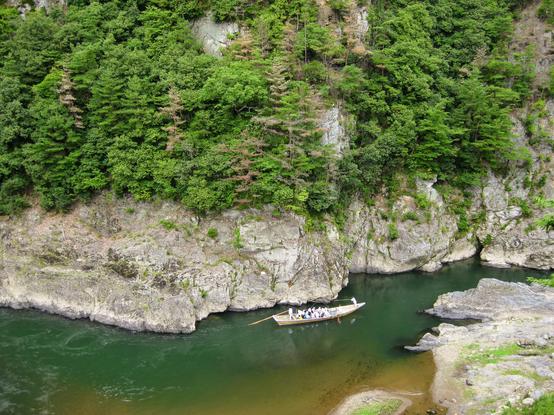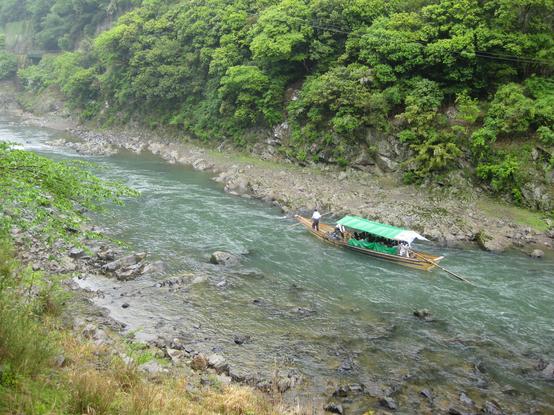
The river upstream of Togetsukyō is called the Ōi-gawa and downstream the Katsura-gawa. It is known as the Hozu-gawa around the Kameoka and retains this name until it reaches Arashiyama (嵐山).

#Hozugawa #Oigawa #Katsuragawa #Arashiyama #Togetsukyo #保津川 #大堰川 #桂川

Ryōi made it possible to use boats along the length of the river, allowing for rice, wheat, firewood and charcoal from Tamba Province to be quickly and cheaply transported.
Before this time lumber, sailed downstream as rafts, was one of the few things that could make the journey.

In 1606 Ryōi started work on his most ambitious river management project...clearing the Hozu-gawa.

#Kyoto #京都 #Hozugawa #保津川

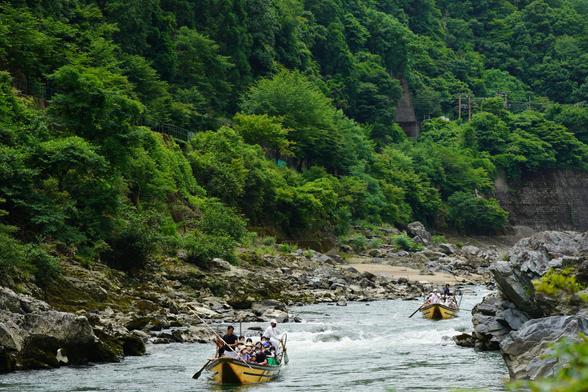
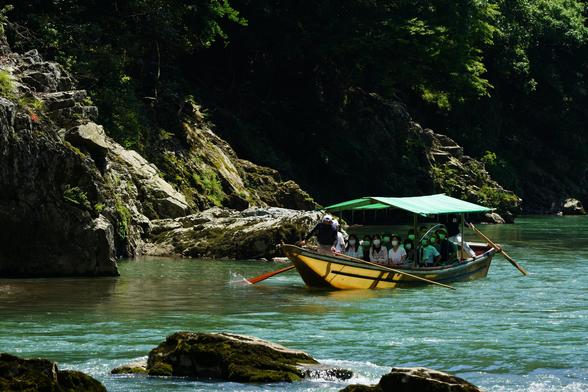
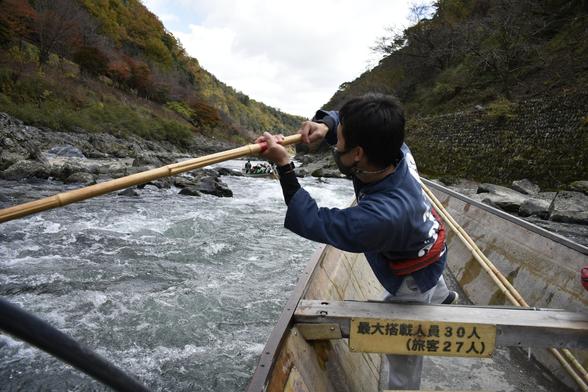
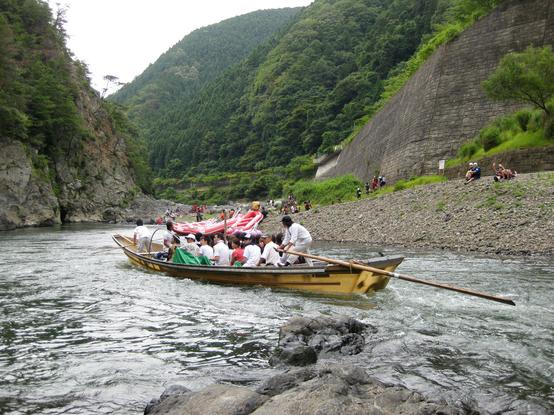
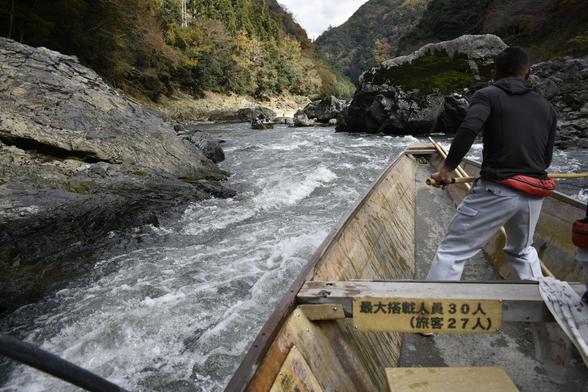
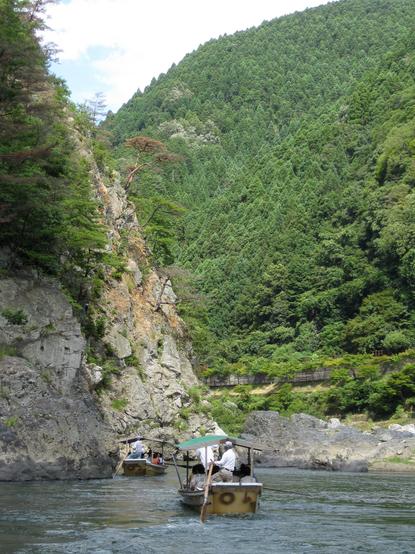
It takes three men to navigate each flat-bottomed boat.
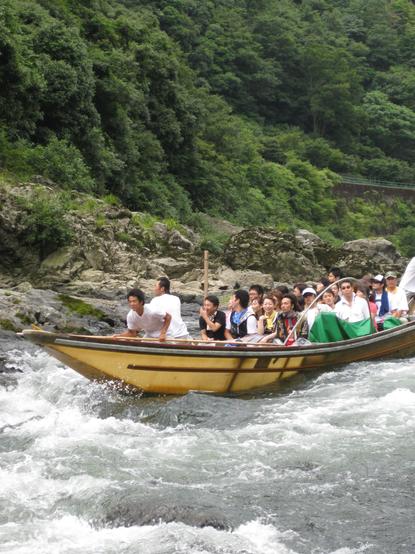
Each team takes a turn at the rudder, oar and a pole (used to guide the boat away from rocks and push it clear of the more dangerous parts of the river).

#Hozugawa #保津川下り #Kyoto #Arashiyama #嵐山 #Kameoka #亀岡 #Japan

It's thought the expression 'kawakudari' (川下り) was first used when boats transported logs to help in the construction of the short-lived capital Nagaoka-kyō (長岡京 784-94).

With (a lot of) poetic license we might better translate 'kawakudari' as 'shooting the rapids'.

#Japan #Arashiyama #boating #Hozugawa #Oigawa

💦TRAVERSING THE RAPIDS🚣‍♂️

The famous poet Susukida Kyūkin (薄田泣菫 d.1945), upon completing his first major collection 'The Departing Spring' (ゆく春), bound the originals in a koto string, weighed them with stones, and tossed them to the water god in the depths of the Hozu River.

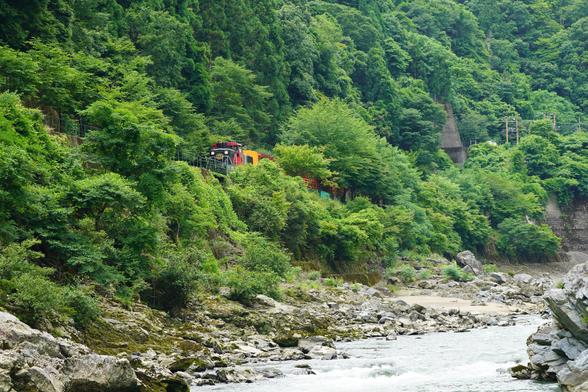
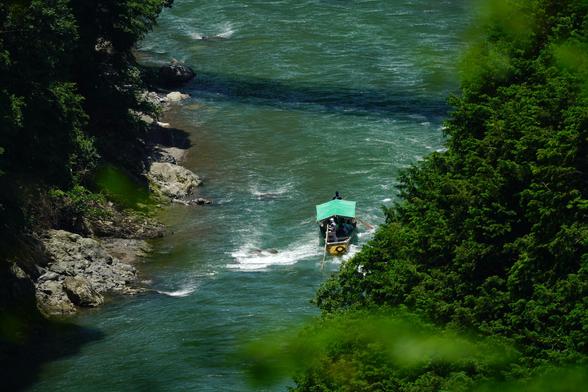
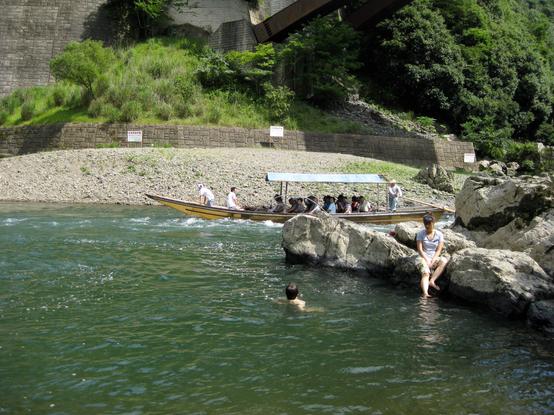
The Hozugawa Kudari (保津川下り lit. 'Down the Hozu River') takes 300,000 visitors a year through the Hozu Gorge (保津峡).

#Kyoto #京都 #Japan #Hozugawa #HozugawaKudari #保津川下り #保津峡 #Arashiyama