 Cam
Cam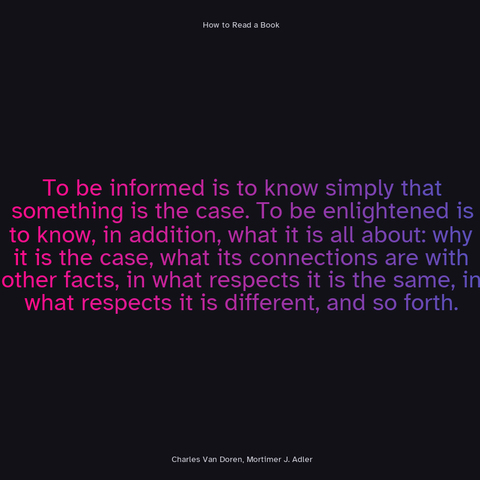
 Jason
JasonHow to Read a Book: 006, Own Your Book
(Or scribble all you want!)
https://janusworx.com/reading/how-to-read-a-book-006/
#mjbWrites #Books #Reading #HTRAB #HowToReadABook #MortimerAdler
How to Read a Book: 006, Own Your Book
(Or scribble all you want!)
https://janusworx.com/reading/how-to-read-a-book-006/
#mjbWrites #Books #Reading #HTRAB #HowToReadABook #MortimerAdler
How to Read a Book: 005, On Reading Speed (or On #SpeedReading)
The Four Levels of Reading
I Need Two Copies of a Book Now
https://janusworx.com/reading/i-need-two-copies-of-a-book-now/
The Four Basic Questions a Reader Asks
A few thoughts on books …

image courtesy, Simon & Schuster A few thoughts on books and how long it takes me to read them, as they relate to what I learned reading this book Reading for joy, is just that. Reading for joy! Nothing needs to come in the way of that. Books can take as long as they need to be read. Comprehension is key. Not how many I finish. I was wondering how so many folks read so many books “better” faster than me. The book assures me that reading books analytically, reading ideas syntopically across a swathe of books is inherently slow. I cannot read everything that way. Nor should I want to obviously. The book needs to be worthy of that kind of time and attention. To quote Adler … A good book can teach you about the world and about yourself. You learn more than how to read better; you also learn more about life. You become wiser. Not just more knowledgeable—books that provide nothing but information can produce that result. But wiser, in the sense that you are more deeply aware of the great and enduring truths of human life.
I’m learning how to read and then writing about what I learn as I go
The four levels of reading:
1. Elementary; can I understand that the characters on the page form words, and can I understand the words in the sentences?
2. Inspectional; to skim and inspect the book in a short period of time (less than an hour) to see if the book is worth your time.
3. Analytical; thorough reading, with an unlimited amount of time, with the goal of _understanding_ what you read.
4. Syntopical; consuming multiple related books to form new ideas and thoughts.
"Reading a book on any level beyond the elementary is essentially an effort on your part to ask it questions (and to answer them to the best of your ability). That should never be forgotten."

 BT Writes Code