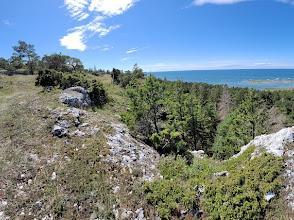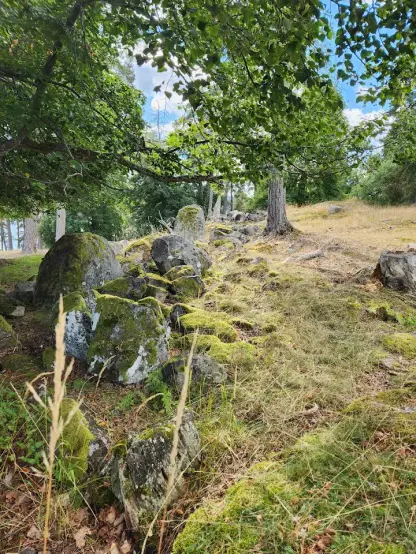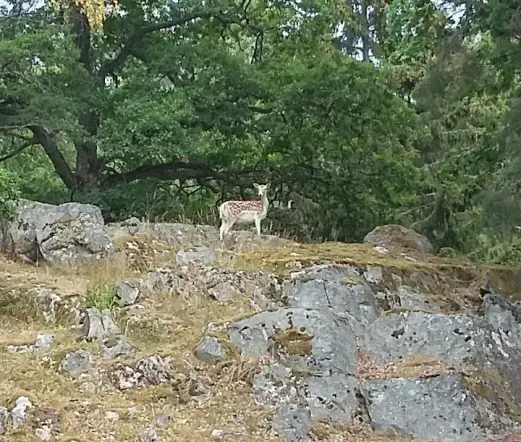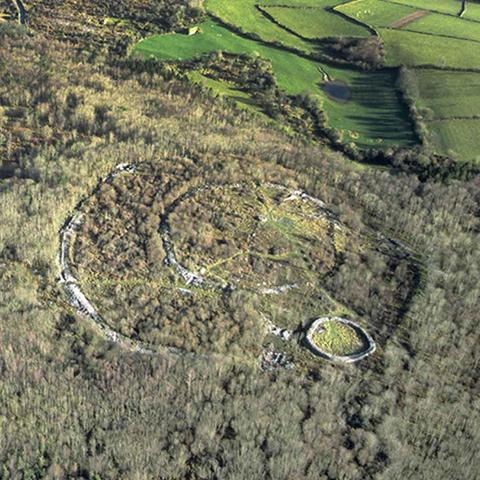
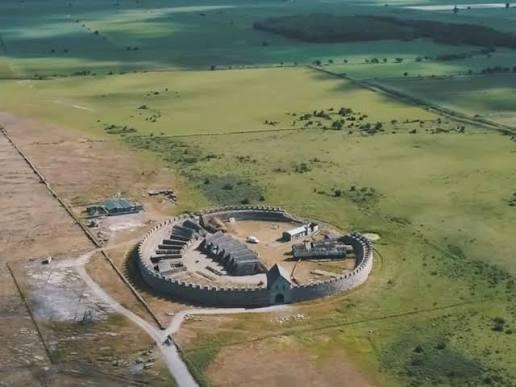
Eketorp on Öland is the only fully excavated and reconstructed hillfort in Sweden. It was used both during the Iron Age and Middle Ages. It has been estimated that it was built by and for 20 households. It had permanent settlement at the end of Iron Age. #HillfortWednesday
Bygdeborg or Bruceborg hill fort lies in Väskinde parish on Gotland. It is 100 x 60 squaremetres in size and defended by steep cliffs in north and west and by a 92 metres long, 3 metres wide and 0.5 metres high. Inside the fort are lime pits. #HillfortWednesday
Lovö hillfort lies in the Lovö nature reserve protruding to the Lake Mälaren in central Sweden. It is 135×70 metres in size. There is a stone wall, c. 100 metres long, on the northern side. A C14 sample from the wall fill dated to AD 240–740. #HillfortWednesday
Mooghaun in County Clare in Ireland is a late Bronze Age hill fort that occupies an entire hill with wide views. Its outer wall encloses 11 ha, the middle one 3 ha, and the innermost 0.83 ha. It is supposed to be the most famous hillfort in Ireland. #HillfortWednesday
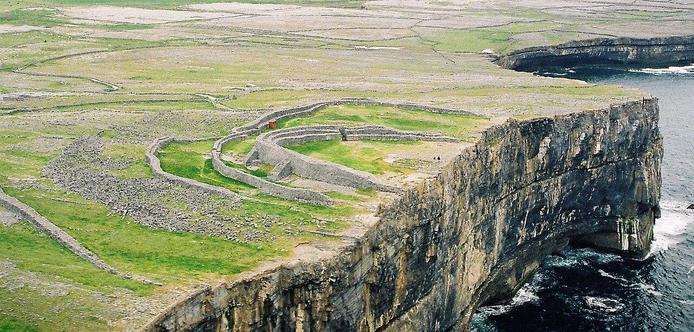
Dún Aonghasa (unofficial anglicised name Dun Aengus) is a prehistoric hill fort on the Aran Islands in County Galway, Ireland. It lies on Inis Mór, at a 100-metre-high cliff. It looks like most of the structures date from the Bronze Age and Iron Age. #HillfortWednesday
The tiny parking lot worked to thwart invaders for thousands of years. #HillfortWednesday
https://mastodon.social/@UllaMR/115019719816366105
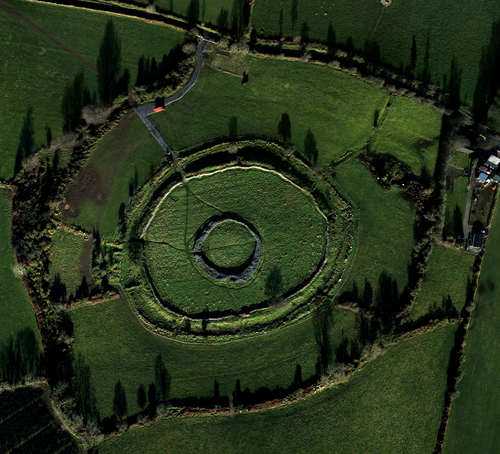
⁦Rathgall, An Ráth Gheal in Irish, is a multivallate hill fort near the town of Shillelagh. It consists of three roughly concentric stone ramparts with a fourth masonry wall dating from the Medieval period at its centre. The three outer rings are Bronze Age. #HillfortWednesday
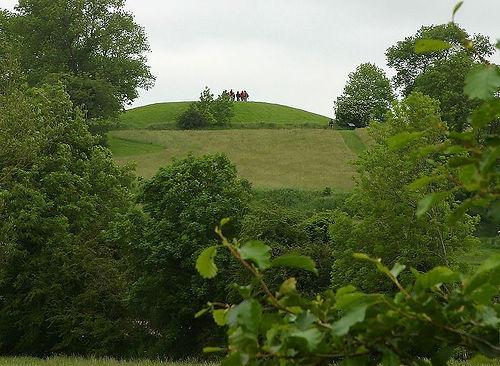
Navan Hillfort, Emain Macha, in Armagh, was according to tradition one of the great royal sites of pre-Christian Gaelic Ireland and the capital of the Ulaidh. It is a large circular hilltop enclosure. There was a ring of timber poles already in the Bronze Age. #HillfortWednesday
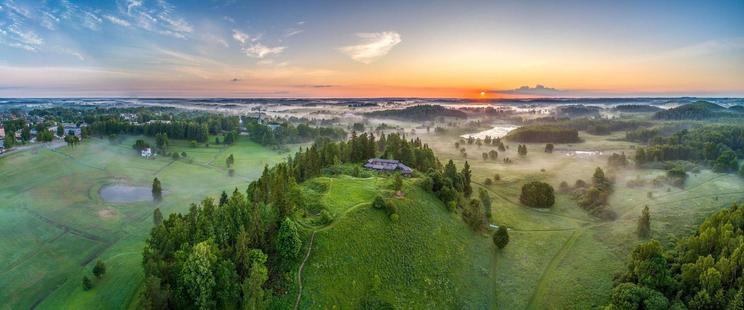
Otepää in Estonia was the main hill fort in the Ugandi district. It dates to the 12th century and lies in southern Estonia on a 13,000-year-old glacial hillock. It holds the ruins of Bishop Henrik's stone castle from 1224. #HillfortWednesday
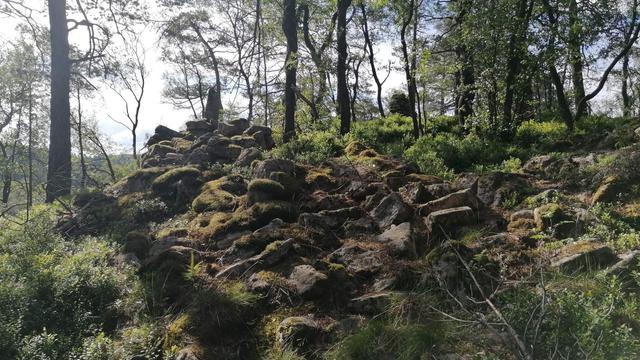
The hill fort of Bjorå in Åbestad is one of the best preserved hill forts in Norway. The fort is dated to c. 400-600 AD. The walls of the hill fort at Bjorå are clearly visible. #HillfortWednesday