 Efani
EfaniWhat happens when you try to force encryption to play by corporate rules?
You get breached — badly.
TeleMessage, a company selling modified versions of Signal, WhatsApp, and Telegram to archive secure communications, has gone dark after reports of a serious hack. This wasn't just any app. It was used by senior U.S. officials — including former National Security Advisor Mike Waltz — to send messages that were meant to be private, archived, and above all, secure.
Turns out, they were none of the above.
According to reports, the breach exposed chat logs, backend systems, and potentially sensitive government and financial institution data. The hacker? Anonymous. The effort? Minimal. The risk? Massive.
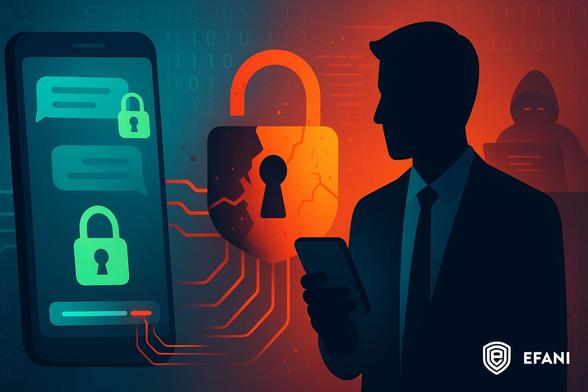
Here’s the problem: End-to-end encryption is designed to be airtight. But when you introduce archiving layers, compliance plugins, or enterprise surveillance features, you’re effectively cutting a hole in the lock and hoping no one notices.
Someone always does.
This isn’t just about a vendor failing to secure its product. It’s about a bigger issue — the illusion of security in environments where surveillance and compliance override privacy. If you're a high-value target, you can't afford that illusion.
At @Efani, we don’t repurpose encryption. We protect it. We secure the mobile infrastructure — so the chain of trust remains unbroken.
Because real privacy means end-to-end — with no backdoors and no shortcuts.