 manorikonikki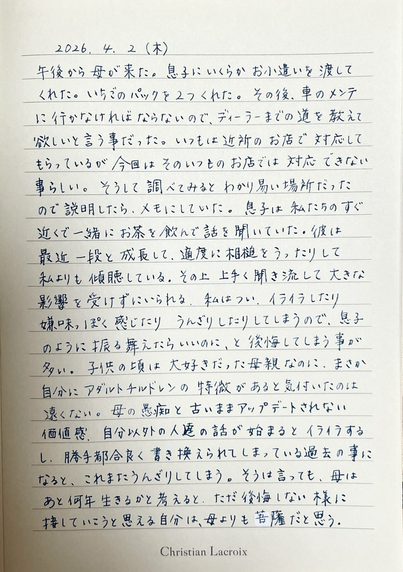
 Zoe
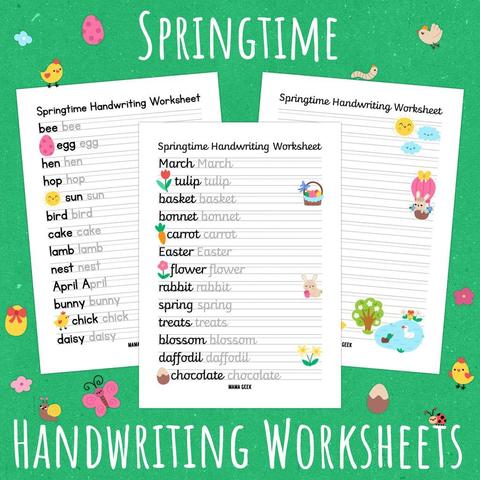
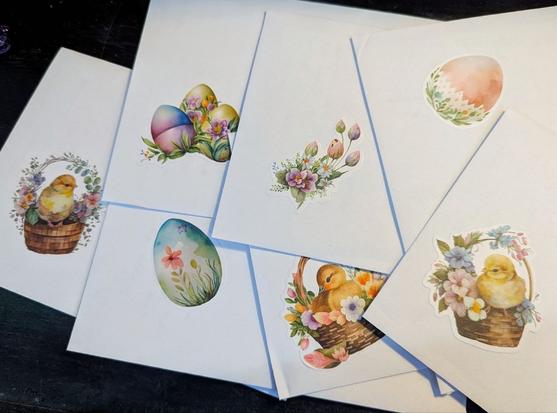
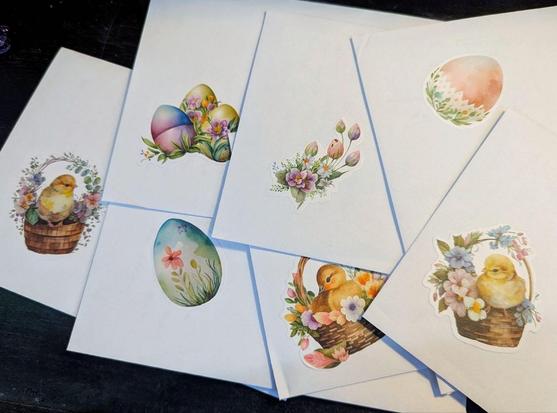
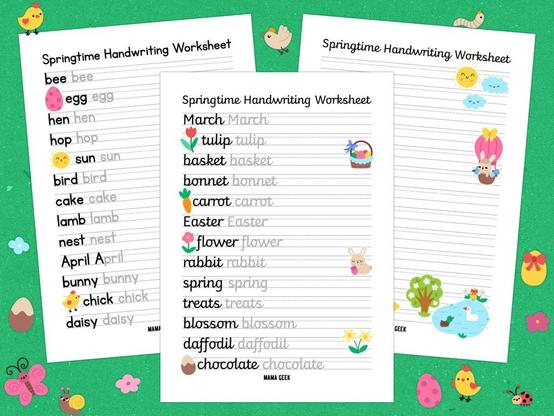
ZoeThis set of worksheets includes a selection of springtime words to practise, along with a blank lined sheet for writing your own words.
Read the full article: Springtime Handwriting Worksheets – Free Printable
▸ https://bit.ly/4lq3A50
This set of worksheets includes a selection of springtime words to practise, along with a blank lined sheet for writing your own words.
Read the full article: Springtime Handwriting Worksheets – Free Printable
▸ https://bit.ly/4lq3A50
The Funeral of Handwriting: What We Lose When the Hand Stops Moving
In 2010, the Common Core State Standards Initiative dropped cursive instruction from its recommended curriculum. The decision arrived without ceremony. No public debate, no period of mourning, no recognition that a cognitive practice stretching back to the Sumerian reed stylus was being retired from American education. Forty-one states adopted the standards. Cursive, along with its slower sibling manuscript handwriting, began its institutional death.
The loss registers first in the brain. Karin James, a cognitive neuroscientist at Indiana University, published research in 2012 demonstrating that children who practiced letter formation by hand showed activation in the left fusiform gyrus, the reading circuit of the brain, that children who typed the same letters did not. The hand, moving across the page, recruits neural networks that the keyboard bypasses entirely. Virginia Berninger’s longitudinal studies at the University of Washington reinforced this finding: children who wrote by hand produced more words, generated ideas faster, and composed more complete sentences than those who typed. The hand thinks its way through language.
The argument here has nothing to do with sentiment about fountain pens and wax seals. The motor act of forming letters creates a proprioceptive feedback loop that anchors memory and comprehension in ways that tapping a glass screen cannot replicate. A 2014 study by Pam Mueller and Daniel Oppenheimer, published in Psychological Science under the title “The Pen Is Mightier Than the Keyboard,” showed that students who took longhand notes outperformed laptop note-takers on conceptual questions, even when the laptop group had more recorded material. Speed worked against understanding. The hand’s slowness forced selection, compression, and interpretation in real time, while the keyboard encouraged transcription without cognition.
The cultural history tells a parallel story. In the nineteenth century, Platt Rogers Spencer developed the Spencerian method, a system of penmanship that became the standard American hand from the 1850s through the turn of the century. Spencer did not conceive of handwriting as a mechanical skill. He understood it as moral training. The discipline of forming graceful, consistent letterforms was a discipline of the self: patience, attention, proportion, restraint. When Austin Norman Palmer replaced Spencerian script with his own method around 1900, he stripped the moral philosophy but kept the premise that handwriting shaped character. Both men would have found the idea of abandoning handwriting instruction incomprehensible, the equivalent of canceling arithmetic because calculators exist.
The legal and institutional architecture of Western civilization was built on the handwritten document. Wills, contracts, treaties, confessions, correspondence, medical notes, field observations, laboratory records: for centuries, the handwritten text carried an evidentiary weight that print could not match. A signature functions as an assertion of identity and intention, a mark that forensic examiners can trace to a single human hand. The typed name carries no such specificity. As handwriting recedes from common practice, an entire system of authentication rooted in the irreducible individuality of the body recedes with it.
The counterargument writes itself: nobody needs cursive to function in a digital economy. Keyboards are faster. Screens are ubiquitous. Communication has moved to platforms where handwriting has no utility. All of this is true, and all of it misses the point. Efficiency has never been the right lens for evaluating a cognitive practice. Running is less efficient than driving; we do not therefore recommend the abolition of legs.
What is happening is a form of cognitive amputation performed in the name of convenience. The connection between the hand and the brain’s language centers, between the body and the act of composition, between the slow, resistant, physical work of making meaning and the frictionless digital surface that asks nothing of us but a tap, is being severed by policy and indifference. The children who will never learn cursive will still read and write. They will compose texts and emails and reports. What they will lack is the knowledge of what they are missing, which is the particular cruelty of amputation: the phantom limb aches, but only if you once had the limb.
A growing number of American states have passed legislation mandating cursive instruction, swimming against the Common Core current. Louisiana’s Act 300 in 2016 was among the earliest. These legislative acts respond to accumulating evidence that the hand’s retirement has consequences the brain cannot absorb on its own. The neuroscience keeps arriving, and it keeps pointing in the same direction: the hand and the mind developed together, over millennia, and separating them carries costs that no efficiency calculation can account for.
The funeral of handwriting is the funeral of a particular kind of thinking: slow, embodied, resistant to acceleration, irreducibly personal. Every word written by hand carries the tremor of the individual body, the pressure of the moment, the angle of fatigue or excitement or care. The keyboard produces uniform characters regardless of who strikes the keys. Uniformity offers comfort, and the comfort has a price measured in capacities we can no longer name.
#commonCore #composition #cursive #education #handwriting #institution #pen #penmanship #research #states
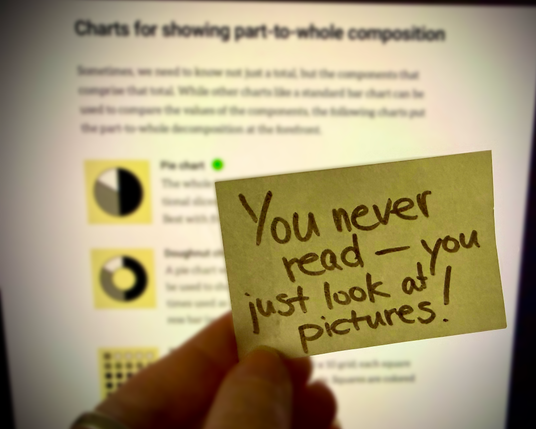
You never read – you just look at pictures!
#PostIt #handwriting #dataVisualisation #yellow #photography
https://pixelfed.social/p/creohn/944970219962092882
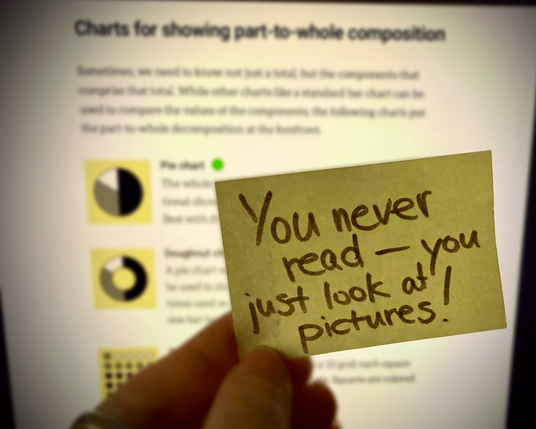
You never read – you just look at pictures! #PostIt #handwriting #dataVisualisation #yellow
My seasonal handwriting worksheets continue this month with a set all about spring and Easter, following on from my Valentine’s, Christmas, and Halloween sets.
Read more 👉 https://bit.ly/4lq3A50
 David Boles
 Magic Cauldron
 Magic Cauldron
 creohn 💥
 DANA
DANA
 S Koren