Write a Story That Heals Humanity: A Guest Post by Madison Rachel
Hey, all!
I am SO excited to welcome Madison Rachel, a Christian author of thrillers currently on subs with her agent for her debut novel, to share about the importance of knowing our purpose for writing and how it shapes our stories.
I really hope you’ll find Rachel’s post as encouraging as I did. Please join me in welcoming her on the blog today!
Write a Story That Heals Humanity
The neighbor boy crouched on my driveway, holding his puppy whose face was inflated like a balloon. Two fang marks pierced her forehead. The boy asked if I knew anything that could help.
I told him to wait and ran to my garden. The snake had bitten the puppy a good while earlier, and I worried that it might be too late by the time I finished making medicine. I ran barefoot into the mulch, collected fistfuls of plantain leaves (the weed, not the fruit), & blended them with water into a paste.
I hurried to rejoin them and clumped handfuls of the leaves onto the black lab puppy’s face. We tied a bandanna around her head like Little Red Riding Hood to keep the leaves in place, and then waited.
Within 30 to 45 minutes, the swelling had substantially decreased. By the end of the day, she was almost completely recovered.
But imagine the story had gone differently. Imagine the neighbor boy called & asked, “Hey Madi, what’s that plant you like to use?” without mentioning the need for it at the moment.
I would not have hurried. I would not have helped. And the dog might not have made it.
But because the NEED of the situation was so evident, a dog’s life was saved.
Understanding NEED is the first step to making anything a priority. We put effort into something if we understand how important it is. If we know WHY.
If you’re a storyteller, I want to really challenge your thinking in the next few minutes. You might think of your story as unimportant, so you neglect it, and people who will NEED to read it will never be able to.
I wrote several stories when I was young, but because I didn’t know WHY I was writing, they fell flat & I didn’t even enjoy my own stories very much.
Then, in 2020, I saw a video from 21-time New York Times bestselling author Jerry Jenkins. He emphasized the importance of discovering and verbalizing WHY you are writing, and then writing out of that headspace.
This changed everything for me.
I want to share some of the insights that changed my storytelling mindset so dramatically that I overhauled years of work on a novel & started over. I’ve now invested nearly 8 years in the writing & publishing process, and the novel is now getting good feedback from publishers.
So get a sheet of paper & maybe a box of Kleenex, because we’re about to go deep.
First, we need to understand why stories matter.
Ted Dekker, in his interview “Sell Out,” said, “Write a story that heals humanity.” He said that stories give people hope to face their own struggles, because they empathize with the characters and can see themselves in their challenges.
This absolutely rattled my entire paradigm about storytelling. Stories are a central means through which HOPE is given. If a person sets your book down and feels inspired, you have accomplished your purpose as a writer. Stories can be medicine for the human soul.
Next, we need to honestly assess ourselves & our work.
- Why are you writing your story?
- What are you hoping to accomplish?
- What are you hoping to gain?
- What are you hoping for others to gain?
- Where do you hope writing will take you?
- Is this story a side project or a central task for you?
These answers will provide a solid base for when we go deeper in just a moment.
Next, let’s dive into the two main types of stories: houses and vehicles.
Understanding which category your story fits into helps determine its purpose.
HOUSES: These stories are their own end goal. The point of the story is for it to be read. It’s entertaining in the moment, provides a temporary escape from reality, and is generally enjoyable. These are great for when you want to take a break from thinking and just rest. I would say there is a degree of need for these stories, but they tend to function as “book candy” and don’t stick with readers as long.
VEHICLES: In books like these, the point is not the story. The point is what the story leaves behind. The story is just a vehicle that carries ideas, emotions, and expectations from the writer’s life into the reader’s life. The reader can forget the story for all the writer cares…but the reader’s life will never be quite the same. These are the books that change lives, families, and societies.
Both of these kinds of stories have value for different purposes. Your personality plays a huge role in determining which you prefer to create or to read!
Now that we’ve assessed our intentions and better understand the purpose behind writing, it’s time to lock in on the scary part: the truth about our own writings.
Before you spend any more time on your project, answer this: Do YOU like your story?
If yes, great, stay the course!
If not, then it may be an invitation to make your story more purposeful.
Secondly, does your book have something valuable to offer?
If yes, then the next question is: how can you define and sharpen that purpose to make it even more powerful? If the book is meant to change people’s thinking, how can you make it do that even more effectively? If it’s meant to provide a break from reality and just be funny, how can you make it even funnier?
Or you could say, “No, my story isn’t important.” I would ask then, why are you writing it? Writing a full-length novel is easily going to cost you upwards of 200 hours. Why not either MAKE it become important by saying something you believe matters, or choose a different use of time?
I don’t know your skill level, your life story, or your intentions, but I know you are a unique person. Your sense of humor, the little things that catch your attention, the trigger words that make you freeze when they come up in conversation. Nobody else has ever lived your life, and you have seen good things and hard things. A lot has gone into making you who you are.
Because of that, I strongly suspect you are capable of making your book into something that will not only serve as an enjoyable pastime, but will also leave marks on your readers’ lives. What you’ve experienced matters, and you’re capable of a lot more than you think you are.
In closing, understanding and cultivating WHY you write will absolutely revolutionize your storytelling.
It will change your story from aimless to laser-focused. From boring to riveting. From purposeless to hope-inspiring.
That day in 2020 when I saw the video by Jerry Jenkins, I wrote out my vision, which included the following:
“I want this story to make people cry. To cut through the barricades around their souls and touch a gentle finger on the most delicate pains and joys they didn’t know were there. To awaken them to what’s possible & what they really need.”
With this new vision, I overhauled my entire novel, at that point something like 20 chapters, and rewrote it.
Where before my novel centered on individual scenes rather than a comprehensive plotline, now the characters are rich with suffering I hurt for in the real world. The story melded into an arc about overcoming, as Dekker said, very difficult circumstances.
And after years of work, the story is something I honestly love and am proud of. It’s brought some of my beta readers to tears, and I pray it impacts many lives someday.
If you take nothing else from this article, remember this:
Write a story that heals humanity.
The world is hurting. And we, as storytellers, have the power to bring healing through hope.
About the Author
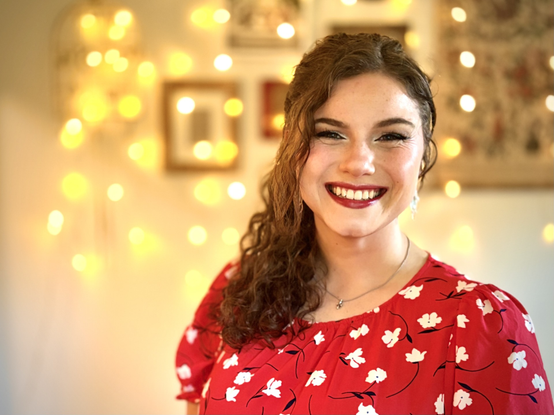
Madison Rachel is a thriller novelist who is hopelessly in love with the sky and practices survival skills. Her writings center on the idea that, no matter how hard life gets, it’s always worth it. Having experienced over 20 years of chronic pain and then being healed, she’s fueled by a passion to share hope with hurting people–to remind them that the dark isn’t the end of the story. She writes to encourage others to keep finding beauty in unexpected places.
Connect with Madison on social media @madisonrachelwriting, and visit her website to find out more and subscribe to her newsletter!
Thanks, Madison!
I definitely suggest following Madison if you’re on social media–I’m so excited to watch her journey to publication, and she has a truly incredible testimony. Please join me in thanking her for sharing with us today!
Do you see your stories as houses or vehicles? What would you say is your purpose for writing? How does your purpose in writing shape how and what you write?
Leave a like if this post was helpful, and subscribe to receive future posts to your inbox!
#authorFeature #authorSPurpose #guestAuthor #GuestPost #MadisonRachel #Purpose #storytellers #Writing IndieAuthors.Social News
 mymobprice

 Faith, Fiction, & Fairytales