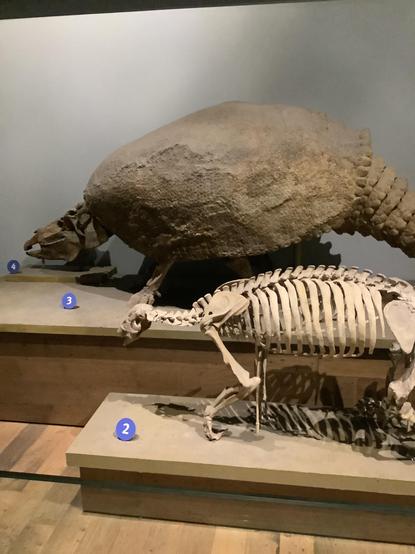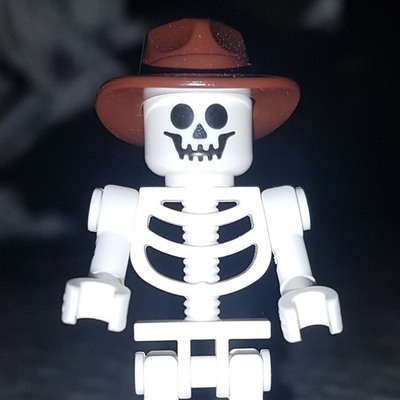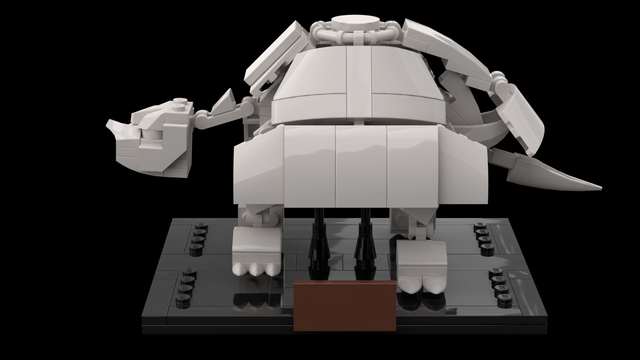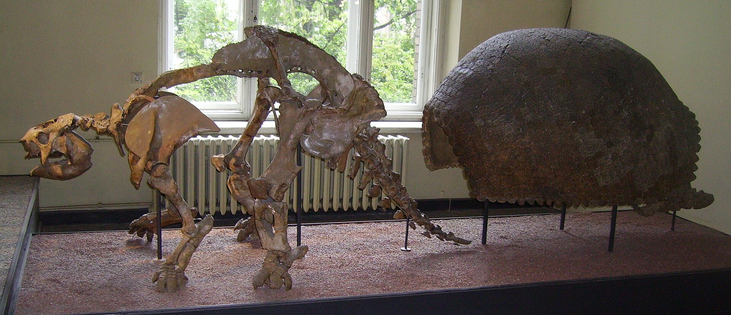
This weeks #Lego #FossilFriday is #Glyptodon
In 1814, Uruguayan priest, scientist, soldier, and later politician Dámaso Antonio Larrañaga wrote about the discovery of several fossils, including Glyptodon. He wrongly identified them as part of Dasypus (Megatherium).
Larrañaga wrote a letter to French scientist Auguste Saint Hilaire about the discovery. In 1823, the letter was reproduced by French scientist Georges Cuviers book Recherches sur les ossemens fossiles.
1/3
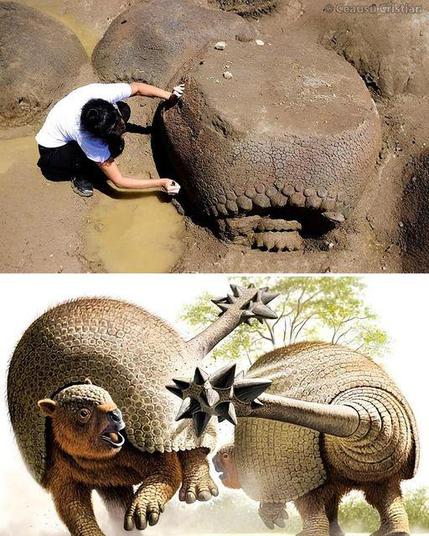
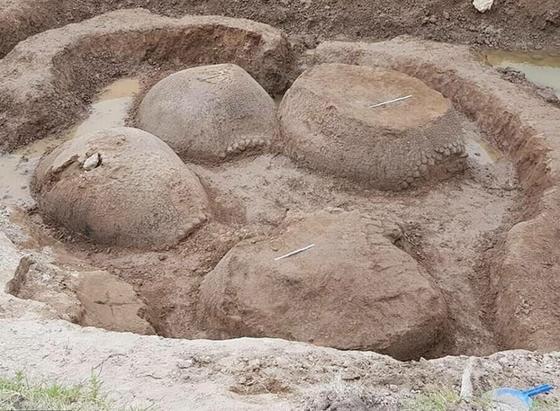
In 2021, an Argentine farmer named Juan de Dios Sota stumbled upon an incredible discovery while working in his field near Rincón de Valle. He found four gigantic Glyptodon shells, which are these amazing armored shells that belonged to prehistoric critters that looked a lot like oversized armadillos. These fossils had been sitting underground for over 10,000 years, dating back to the last Ice Age.
Farmer aus Argentinien findet #Glyptodon in ausgetrocknetem Flussbett - was ist das und was machen die da?
Vor 12.000 Jahren starb das Glyptodon in Südamerika aus. Die Tage bin ich auf ein Foto gestoßen, wo ein Farmer in Argentinien auf die versteinerten Überreste dieser Tiere stieß. Es war nur ein Tweet mit einem Foto, welches meine Aufmerksamkeit weckte. Das Foto zeigt die erhaltenen Panzer ein
@guntrip how do we do this?
#Glyptodon, like mastodon, is a #megafauna named for its teeth. Ridged molars helped glyptodon-or "Carved Tooth"--process low trees and grasses after shearing sustenance with its strong snout.
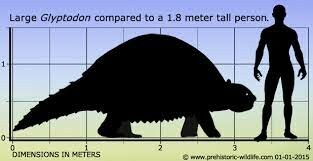
The massive #armadillo weighed in at over 4,000lbs and was around 3m long. Protected from most predators by the bony plates of its shell, glyptodon may have been fed on by sabre-tooth cats, #giant bears, and humans. Its extinction coincides with changing climate and human arrival in its territory.