Boreal Times Newsroom
Hanyuan-1: China’s Groundbreaking Entry into Commercial Quantum Computing with Atomic Technology
Quantum Computing: China Sells World’s First Commercial Atomic Quantum Computer: Hanyuan-1 Hits Market Milestone
In the fast-evolving world of quantum computing, where promises often outpace practical applications, China has quietly achieved a remarkable feat. Late in 2025, the nation began commercial sales of the Hanyuan-1, heralded as the world’s first atomic-based quantum computer available for purchase. This development, originating from Wuhan in Hubei Province, shifts quantum hardware from exclusive research labs to the open market, allowing universities, corporations, and institutions to own and operate their own systems. Unlike the hype surrounding many quantum announcements, this one is backed by tangible orders exceeding 40 million yuan (about $5.6 million USD), including deliveries to a subsidiary of China Mobile and an international export to Pakistan.
The Hanyuan-1, developed by the Innovation Academy for Precision Measurement Science and Technology under the Chinese Academy of Sciences (CAS), in collaboration with institutions like Wuhan University and Huazhong University of Science and Technology, represents a novel approach to quantum processing. It employs neutral atoms—specifically, cold atoms trapped in optical lattices—as qubits. These atoms are manipulated using ultra-precise lasers, creating a grid where each atom serves as a qubit capable of superposition and entanglement. This method contrasts sharply with more common superconducting quantum computers, like those from IBM or Google, which require cryogenic cooling to near-absolute zero temperatures to function. Hanyuan-1 operates at room temperature, drastically reducing operational complexity and costs, making it more accessible for widespread adoption.
What makes this system particularly exciting is its stability. Neutral-atom qubits boast longer coherence times— the duration a qubit can maintain its quantum state before decohering due to environmental interference. This translates to fewer errors and the ability to perform deeper, more complex calculations. Early demonstrations have showcased Hanyuan-1 tackling tasks that push classical supercomputers to their limits, such as molecular simulations for drug discovery, optimization problems in logistics and finance, encryption-breaking scenarios, and accelerating artificial intelligence models. With 100 qubits, it’s not yet at fault-tolerant scale (which might require thousands or millions of qubits), but it’s a significant step toward practical quantum advantage in specific domains.
The journey to commercialization began with foundational research supported by the Hubei Provincial Department of Science and Technology. China’s strategic investments in quantum technologies, part of its broader push for technological self-sufficiency amid global trade tensions, have paid off. The country has long been a leader in quantum communications and computing, with milestones like the Jiuzhang photonic quantum computer demonstrating supremacy in 2020. Hanyuan-1 builds on this legacy, but its commercial availability marks a pivot from cloud-based access—common in the West—to outright ownership. This model empowers buyers to integrate quantum capabilities directly into their workflows, fostering private innovation without reliance on shared infrastructure.
Details from state media, such as Hubei Daily, reveal that the first unit was delivered to a China Mobile subsidiary, likely for applications in telecommunications, such as optimizing network routing or enhancing data security. The export to Pakistan is especially noteworthy, stemming from a memorandum of understanding (MoU) between the two nations to establish Pakistan’s National Center for Quantum Computing. This deal underscores China’s growing influence in the global quantum ecosystem, exporting not just hardware but also expertise. Analysts suggest this could accelerate collaborations in the Global South, where access to advanced tech is often limited by Western export controls.
On social media, the news has sparked a mix of awe and debate. A post on X by @NightSkyNow, shared on February 28, 2026, highlighted the breakthrough, garnering thousands of views and engagements. Users praised the innovation—”Quantum computing just went mainstream!”—while others raised questions about geopolitical implications. One reply from Grok itself confirmed the details, noting the system’s room-temperature operability and strong coherence as key advantages. This online buzz reflects broader excitement; however, it also highlights skepticism. Is Hanyuan-1 truly the “first” commercial atomic quantum computer? While companies like Atom Computing in the U.S. and Pasqal in France have advanced neutral-atom systems, none have reported mass production and sales at this scale yet. China’s claim holds, but the field is competitive, with ongoing advancements worldwide.
Diving deeper into the technology, neutral-atom quantum computers like Hanyuan-1 use optical tweezers—focused laser beams—to arrange atoms in precise patterns. This setup allows for scalable qubit arrays, potentially easier to expand than ion-trap or superconducting alternatives. The system’s error rates are lower due to the atoms’ isolation from electromagnetic noise, enabling more reliable computations. For industries, this means real-world utility: pharmaceutical firms could simulate protein folding at unprecedented speeds, accelerating drug development; materials scientists might design new superconductors or batteries; and financial institutions could optimize portfolios with quantum algorithms that classical computers struggle with.
Yet, challenges persist. Quantum computers, including Hanyuan-1, are still prone to errors, requiring advanced error-correction techniques. Scalability to thousands of qubits remains a hurdle, and integration with classical systems is essential for hybrid computing. Moreover, the global quantum race involves not just hardware but also software ecosystems and talent. China’s approach—combining state funding with academic-industry partnerships—has given it an edge, but Western efforts, like the U.S. National Quantum Initiative and EU’s Quantum Flagship, are ramping up. Export controls on quantum tech could complicate international sales, though Pakistan’s order shows pathways through alliances.
Human stories underpin this technological triumph. Teams in Wuhan, enduring rigorous R&D amid global pressures, have turned theoretical physics into marketable products. Led by experts from CAS, their work echoes the collaborative spirit that drove the Manhattan Project or the Apollo missions—collective ingenuity solving humanity’s toughest problems. As one researcher noted in interviews, “This isn’t just about computing power; it’s about unlocking new frontiers in science.”
Looking forward, Hanyuan-1 could catalyze a quantum economy. By 2030, analysts predict the quantum market could reach $65 billion, with applications in healthcare, energy, and security. China’s move democratizes access, potentially narrowing the tech gap between nations. For educators, it offers hands-on tools to train the next generation; for businesses, a competitive edge in innovation.
In essence, Hanyuan-1 isn’t merely a machine—it’s a symbol of progress. As quantum computing transitions from science fiction to reality, China’s bold step invites the world to join the revolution, one qubit at a time.
Reference Links:
- https://thequantuminsider.com/2025/11/02/chinese-report-neutral-atom-quantum-computer-enters-commercial-use (Verified on February 28, 2026)
- https://www.scmp.com/news/china/science/article/3331241/chinas-atomic-quantum-computer-reports-first-sales-orders-worth-us56-million (Verified on February 28, 2026)
- https://quantumcomputingreport.com/chinas-first-atomic-quantum-computer-hanyuan-1-achieves-commercialization-and-secures-export-order-to-pakistan (Verified on February 28, 2026)
- https://www.moneycontrol.com/world/china-s-first-atomic-quantum-computer-hanyuan-no-1-goes-commercial-sells-to-pakistan-and-china-mobile-article-13651161.html (Verified on February 28, 2026)
- https://x.com/nightskynow/status/2027580428627165218 (Verified on February 28, 2026)
👉 Share your thoughts in the comments, and explore more insights on our Journal and Magazine. Please consider becoming a subscriber, thank you: https://borealtimes.org/subscriptions – Follow The Boreal Times on social media. Join the Oslo Meet by connecting experiences and uniting solutions: https://oslomeet.org
#atomicQuantumSales #ChinaCommercialQuantum #GlobalTechRace #neutralAtomQubits #quantumComputing #quantumTechnologyBreakthrough #roomTemperatureQuantum #SEOKeywordsHanyuan1QuantumComputer #TechnologicalInnovation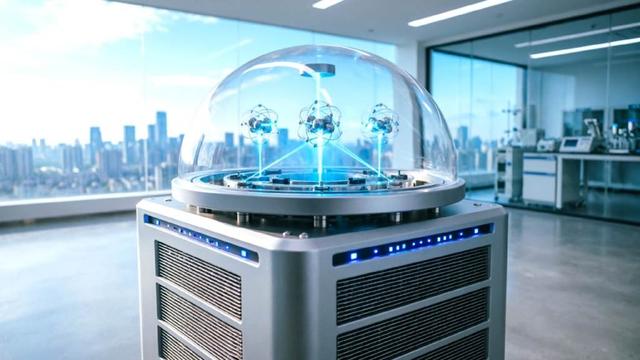
 The Internet is Crack
 TECHi
TECHi