Danheim – Heimferd Review
By Mystikus Hugebeard
Ah, the Viking Age. One of the most mythologized eras in history, and a bottomless well of inspiration for cool things like video games, shows, books, tattoos, and bad things like obsession over ancestral purity, shockingly racist ideologies, and lutefisk. But the best thing of all, and most importantly, music! Which leads us to Danheim (Literally “Danish Home”). Danheim is the solo Nordic folk project by Reidar Schæfer Olsen, and Heimferd is his first full album in four years, which might as well be an eternity. Danheim is usually very prolific, with eight albums released between 2017 and 2021, with about a gazillion singles released during and after those 4 years. Furthermore, Danheim is one of the more well-known Nordic folk artists; he has numerous collaborations with, to name a few, Gealdýr, Sigurboði, Heldom, and has, like Wardruna, been featured on the History Channel’s Vikings. In other words, Danheim is something of a titan of the genre—is Heimferd worth the wait?
Danheim’s music, and by extension Heimferd, is a sonic extension of the version of the Vikings that has embedded itself within people’s imagination and contemporary media: an intoxicating image of a powerful and mysterious people, plunged into a captivating world of violence and mysticism.1 Most might immediately connect Danheim’s sound to Wardruna (not unjustifiably), but that paints a rather flat picture. The music is cinematic in a way that calls to mind a less avant-garde Heilung, it vibrates with a slightly electronic, tribal weight that, at this point, belongs more to Danheim than any of his peers (but one might still compare it to Vígundr or Heldom), and it’s atmospheric and densely layered like, well, Wardruna. But I believe it’s the simple immediacy of Danheim’s that has made him the Nordic folk titan that he is. It’s just so easy to fall under the spell of electronically augmented droning chants set to the rhythm of deep, beating drums, heard in some form or another in nearly every song on Heimferd.
…and yet, there sadly wafts an air of shallowness across Heimferd. There is an unfulfilled relationship between Heimferd’s sound and its songwriting. Heimferd’s stellar production and the variety of instruments create a captivating soundscape, but so rarely do songs breathe or evolve in a way that gives the songs life. This is felt all throughout Heimferd. “Heljar Skuggar” and “Rúnmyrkr” each utilize engaging, distorted chants in the vein of Heilung, but feel stagnant, without peaks or valleys. Songs are often lacking in stakes or tension, the worst of which is heard in the lifeless “Valvejen” as it flits loosely between tagelharpa melodies and excessive downtime. For songs meant to sound almost hypnotic in their droning, much comes off as forgettable, like “Kominn Dagr” as it switches from monotone chanting into a toothless tagelharpa melody, neither section given ample time to grow or make an impact. Clearly, Danheim places a lot of emphasis on atmosphere, and Heimferd is indeed viking-y at a distance—but up close, there is little to sink your teeth into.
This is not always the case, however, with a handful of songs towering above the rest. The vocal-heavy closer, “Yggdrasil II” (a sequel to “Yggdrasil” from 2018’s Fridr), has a quiet majesty to its rhythmic and beautiful chorus. “Vindfari” is an unassuming song that really sneaks up on you, as the drums march behind a simple chanting melody with a peculiar, percussive vocal delivery to some words that adds unique character to the song. Heimferd’s best song is “Haukadalur,” though. This song moves and breathes like a living thing, as distant haggard exhalations augment a powerful beat which heralds a coarse, dancing tagelharpa. These songs have such richness to their melodies, making the most of Danheim’s accessible and engaging style. It feels as if this has been my experience with every Danheim album: two or three genuinely stellar tracks that speak of an artist capable of amazing things, surrounded by songs that sound great but leave little impression.
Danheim has ever been frustrating for me, and Heimferd reaffirms that feeling. His infectious soundscape sufficiently conjures a Viking-age atmosphere and energy, but with base songwriting that so rarely transforms the music into something lasting or impactful. It’s strange, because my first listen of Heimferd was the most positive one, and I think it’s because Danheim’s style of Nordic folk can be cathartic in a way not many other artists within the genre are. But on each subsequent spin, when I listen closer, probing, pleading for depth, I’m left wanting. Heimferd is the distilled essence of the modern perception of Vikings, but with little drama or tension. It’s fun, but ephemeral.
Rating: Mixed
DR: 7 | Format Reviewed: 320 kbps
Label: Season of Mist
Websites: official | bandcamp
Releases Worldwide: October 31st, 2025
#25 #2025 #Danheim #DarkFolk #Gealdýr #Heilung #Heimferd #Heldom #Neofolk #NordicFolk #Oct25 #Review #Reviews #SeasonOfMist #Sigurbodi #Vigundr #VikingMusic #Wardruna
 VIKINGS vs SAMURAI
 Angry Metal Guy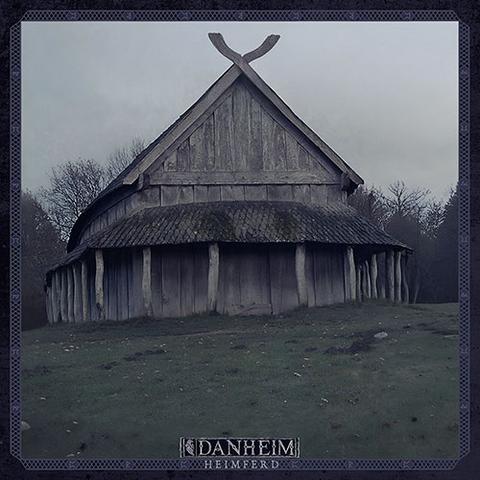


 🏴☠️Ⓐ⛧🌈
 Haamu
Haamu