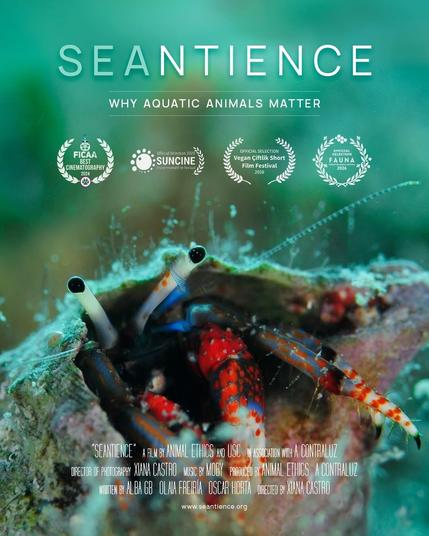
Seantience invites you to discover the complex inner lives of the planet's most overlooked aquatic animals. From shrimp to octopuses, science reveals that their capacity to feel goes far beyond what you might imagine.

🏆 Previously awarded Best Cinematography at FICAA and selected for SUNCINE International Festival
🎥 Directed by Xiana Castro
🎬 Produced by Animal Ethics

Watch it here https://www.youtube.com/watch?v=DfpuhKMN9Vs&t=23s

#Seantience #Sentience #FishWelfare #AnimalEthics #Documentary #AnimalRights #Vegan
Illustrator job description

Google Docs
Respect for Fish: It's Time the Most Abused Animal is Heard - One Green Planet #FishWelfare https://www.onegreenplanet.org/animals/respect-for-fish-its-time-the-most-abused-animal-is-heard/
Respect for Fish: It’s Time the Most Abused Animal is Heard

Despite evidence proving that fish are capable of feeling pain and joy, they are not covered under any existing animal protection laws in the United States.

One Green Planet
Committee on Fisheries | European Parliament Multimedia Centre

European Parliament Multimedia Centre

European Parliament Multimedia Centre
Aquaculture Advisory Council - European Commission Reply to the AAC recommendation on fish welfare in live fish transport

This website presents the activities, working documents and news about the Aquaculture Advisory Council (AAC). The AAC is a balanced stakeholder representative organisation created for consultation on elements of Union policies which could affect aquaculture under Articles 34 and 44 of Regulation (EU) No 1380/2013. The AAC may provide its advice to the European Commission, the European Parliament, the Committee of the Regions, the European Economic and Social Committee, one or several European Union Member States and any other relevant stakeholder, on any new legislative, regulatory or legal measure at European or national level, that is relevant to its objectives and the tasks defined by regulation. The AAC is composed of representatives from the industry and other stakeholders, including environmental NGOs, consumer organisations, etc… with a 60% -40% allocation of the seats in the general assembly and the executive committee (Ex-Comm). The Assembly and Ex-Comm are guided by the advice generated by three working groups. The Working Group 1 focuses on Finfish, the Working Group 2 on Shellfish and the Working Group 3 on Horizontal issues.