 Clanmother
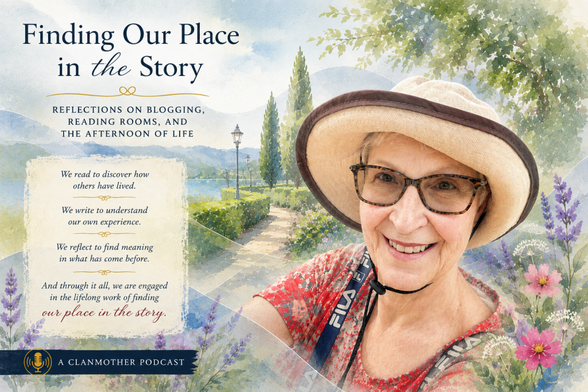
Finding Our Place in the Story
Life is more than a series of events. It is a story, one that unfolds through the books we read, the conversations we share, the places we visit, and the reflections that help us understand who we are becoming. This collection explores what it means to find our place within that larger human story.
The articles, podcasts, and reflections gathered here consider the role of reading, writing, memory, creativity, and personal growth in shaping our lives. They ask questions that many of us encounter as we move through the seasons of life:
How do we make sense of our experiences?
Why do stories matter?
What can books teach us about ourselves?
How do we remain curious and engaged as we grow older?
And how do we contribute our own voices to the ongoing conversation of humanity?
Finding our Place in the StoryThe title of this collection comes from a simple conviction: that each life carries meaning, and that understanding our place in the story is one of the great adventures of being human. I invite you to explore these essays, conversations, and podcasts as fellow travellers on that journey.
If this conversation sparks your interest, I invite you to visit the Collection page Finding Our Place in the Story.
Welcome to the conversation. I’m glad that you are here!
Rebecca
David: Clanmother has been running since 2010, which in internet years makes it practically a geological formation — and Rebecca Budd is still finding new things to say about why any of it matters.
Clara: This episode moves through three territories: what blogging is and why it endures, how we build spaces — physical and virtual — for reading, and what midlife reflection actually asks of us. Let’s start with the practice of blogging itself.
Blogging As A Practice
David: The question underneath “Why Do We Blog?” isn’t really about platform strategy — it’s about what keeps a person returning to the page for fifteen years, and what that sustained act does to the person doing it.
Clara: The post opens with the founding sentence of Clanmother, and the philosophy behind it: “Life can only be understood backwards; but it must be lived forwards.”
David: That Kierkegaard line does a lot of work. It reframes the whole archive — every past post becomes material for understanding the present, not just a record of it.
Clara: The post frames blogging as a reciprocal exchange: you write, others engage, and both sides grow. The phrase used is “a receptive and appreciative audience” — the writer needs listeners as much as listeners need the writer.
David: There’s also a practical claim here that’s easy to miss: that dedicating an hour to what the post calls “the art of blogging” is described as a life-affirming activity, not a productivity hack.
Clara: That framing connects directly to the Reflections on Blogging video embedded in the post — the idea that pausing to reflect on the journey is itself part of the journey. Reading and writing spaces are next, and they carry that same logic of deliberate attention.
Reading Spaces And Rooms
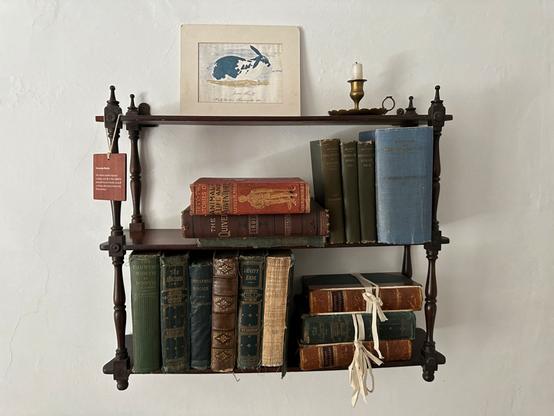
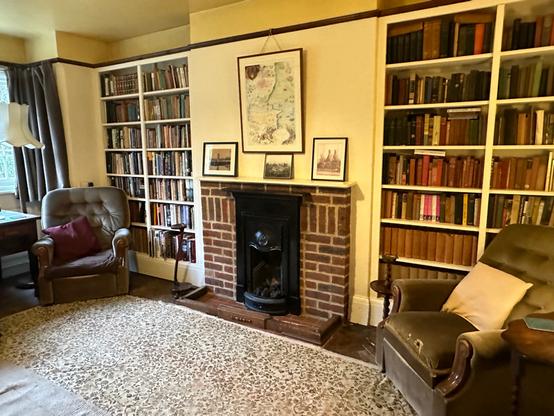
Clara: “What is a Reading Room?” starts from a simple question and immediately expands it — the post argues that a reading room isn’t a place so much as a condition, wherever focused attention and a book coincide.
David: The post puts it directly: “Whenever I have a book in hand, I am in reading room.”
Clara: So the room travels with you. That reframe matters because it democratizes the whole idea — you don’t need a dedicated study with leather chairs and a globe to claim the practice.
David: The post then maps the concept outward — from Thomas Hardy’s cottage and C.S. Lewis’s house at Oxford to Virginia Woolf’s Monks House — physical literary spaces that shaped writers. Then it pivots to online equivalents: Project Gutenberg, the Internet Archive, the Queen’s Reading Room, Open Culture.
Clara: And then to Rebecca’s Reading Room, a virtual space created to document thoughts on books and poetry. The stated goal there is direct: “to encourage a deep and profound awareness of our personal journeys.” The post closes with a line from Gertrude Stein — that a masterpiece “may be unwelcome but it is never dull” — which is really an argument for reading books that challenge you.
David: A reading room, physical or virtual, as a place where you go to be productively unsettled. That sits close to what Jung was saying about midlife.
Midlife Reflection And Growth
David: “The Afternoon of Life” takes Carl Jung’s framework for midlife and asks what it actually feels like to arrive there — not as a crisis, but as a reorientation.
Clara: Jung’s framing is the spine of the post: “Thoroughly unprepared, we take the step into the afternoon of life. Worse still, we take this step with the false presupposition that our truths and our ideals will serve us as hitherto.”
David: The upshot is that the strategies that got you to midlife are not the ones that will carry you through it — and pretending otherwise is what makes the transition hard.
Clara: The post describes Jung’s “afternoon” as a shift from external objectives toward internal introspection — from expansion to what Jung called the descent. A second quote from the post makes this personal: “The privilege of a lifetime is to become who you truly are.” The post holds that not as a consolation but as an active invitation.
David: And the tone isn’t elegiac — the post describes this phase as invigorating, a chance to view past experience with fresh perspective. Which is, quietly, the same argument the blogging post was making about revisiting the archive.
Clara: Blogging, reading, midlife — they’re all versions of the same practice: paying deliberate attention to where you’ve been so you can move forward with more clarity.
David: Kierkegaard, Jung, and Gertrude Stein in one episode. Next time, we find out what other company Clanmother keeps.
#70SThoughts #Clanmother #FindingOurPlaceInTheStory #Podcast