18 years ago, a friend asked us to hold onto a clownfish for "just a few months."

You're looking down at one of our coral propagation troughs. At the top, frag racks hold WYSIWYG corals lined up for their photo shoots. Below them, larger colonies are growing out. And right in the center, swimming through that Aussie Gold Torch? Our permanent guest through three moves—the black and white clownfish who never left.

#TerraReef #Aquaculture #TorchCoral #MotherColonyMonday #Euphyllia #Coral
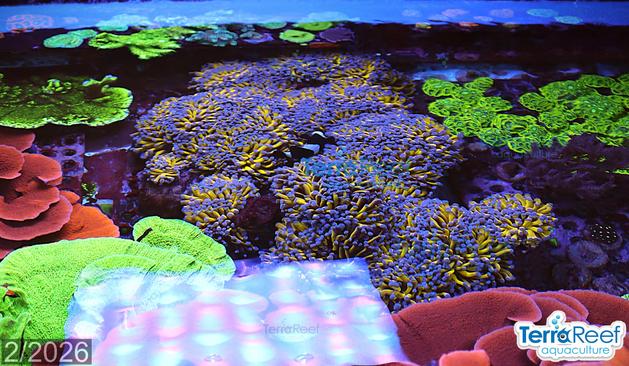
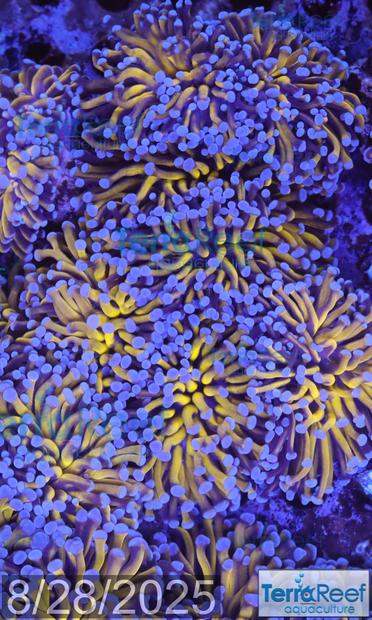
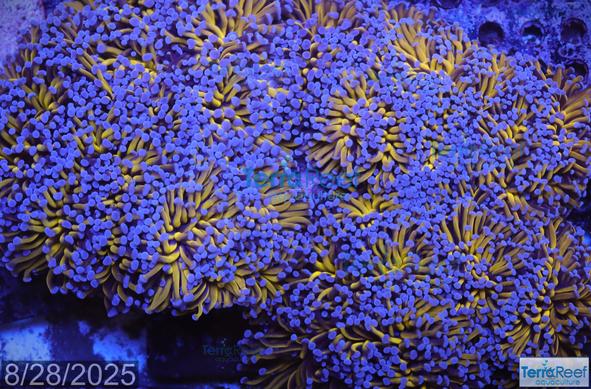
Australian Gold Torch is a very large polyp slow growing coral. They are extremely bright. Pics are some of our mother colonies. Happy Mother Colony Monday!

#TerraReef #Aquaculture #TorchCoral #MotherColonyMonday #Euphyllia #Aquarium #Coral #CoralCollector #Reefer

#Corals' biological clocks can function even without the #algae that nourish them
https://phys.org/news/2022-12-corals-biological-clocks-function-algae.html

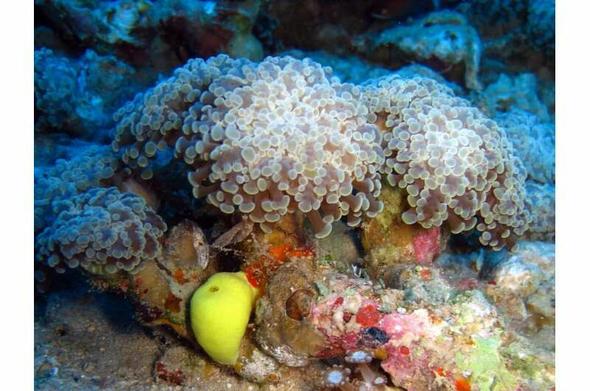
Temporal gene expression patterns in the #coral #Euphyllia paradivisa reveal the complexity of biological clocks in the #cnidarian-algal #symbiosis https://www.science.org/doi/10.1126/sciadv.abo6467

E. paradivisa exhibits tolerance to #CoralBleaching and survives without algae during prolonged darkness... Its #BiologicalClock functions even at a depth of 65 meters underwater and in almost complete darkness.

Corals' biological clocks can function even without the algae that nourish them

The biological clock is an internal and independent mechanism that dictates daily rhythm, thus enabling an organism to gauge daily and seasonal signals and live in sync with the rhythm of nature, while maintaining timing capabilities that are essential to carrying out important physiological and behavioral processes. For corals, includes breaking down sugar and synthesizing fats, opening and closing their hunting tentacles, and more.

Phys.org