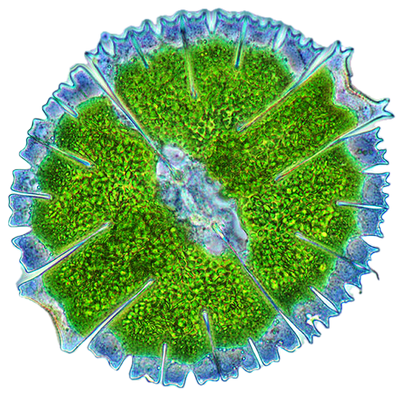
Microscopic chalk discs in oceans play a key role in Earth's #carbon cycle by propagating #viruses https://phys.org/news/2023-03-microscopic-chalk-discs-oceans-play.html

Adsorptive exchange of coccolith #biominerals facilitates viral infection https://www.science.org/doi/10.1126/sciadv.adc8728

Scientists studying armor-plated marine #algae #Emiliania huxleyi have found that the circular, chalk plates the #protists produce can act as catalysts for viral infection, which has vast consequences for trillions of microscopic oceanic creatures and the global #CarbonCycle.

Microscopic chalk discs in oceans play a key role in Earth's carbon cycle by propagating viruses

A Rutgers-led team of scientists studying virus-host interactions of a globally abundant, armor-plated marine algae, Emiliania huxleyi, has found that the circular, chalk plates the algae produce can act as catalysts for viral infection, which has vast consequences for trillions of microscopic oceanic creatures and the global carbon cycle.

Phys.org

Some ‘friendly’ #bacteria backstab their #algae pals. Now we know why. The finding could help explain why some massive #AlgalBlooms end https://www.sciencenews.org/article/bacteria-algae-phytoplankton-symbiosis-backstab

Bacterial lifestyle switch in response to algal metabolites https://elifesciences.org/articles/84400

"The photosynthesizing #plankton #Emiliania huxleyi has a dramatic relationship with its bacterial frenemies. These duplicitous bugs help E. huxleyi in exchange for nutrients until it becomes more convenient to murder and eat their hosts."

Some 'friendly' bacteria backstab their algal pals. Now we know why

The friendly relationship between Emiliana huxleyi and Roseobacter turns deadly when the bacteria get a whiff of the algae’s aging-related chemicals.

Science News
'Friend or foe' bacteria kill their algal hosts when coexisting is no longer beneficial

Scientists have detailed a lifestyle switch that occurs in marine bacteria, in which they change from coexisting with algae hosts in a mutually beneficial interaction to suddenly killing them. The results are published today in eLife.

Phys.org