 Innerworld
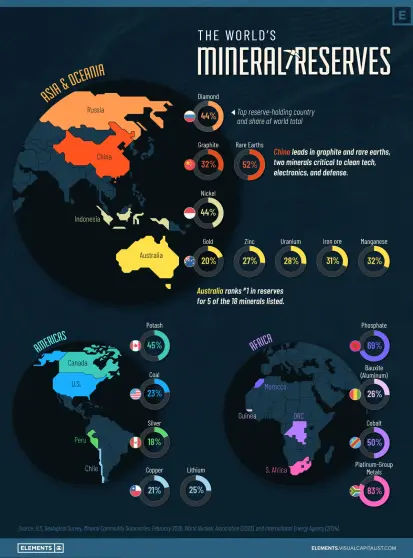
Top reserve-holding country for 18 key minerals
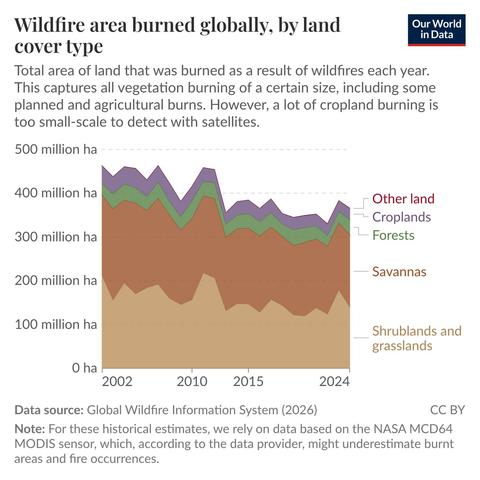
Wildfire area burned globally, by land cover type (2026)
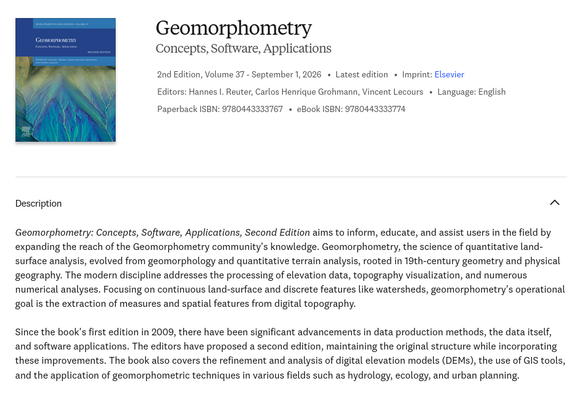
📘 Geomorphometry: Concepts, Software, Applications (2nd ed.) by Reuter, Grohmann & Lecours is coming this fall!
A new edition covering approaches and applications in quantitative terrain analysis and Earth surface processes.
https://shop.elsevier.com/books/geomorphometry/reuter/978-0-443-33376-7

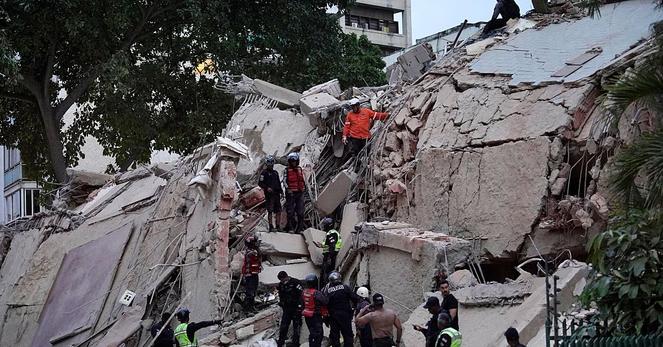
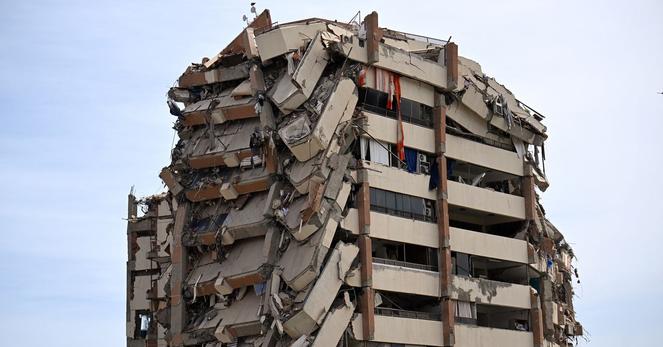
Why Venezuela’s Second Earthquake Was So Damaging to Buildings
💁🏻♀️ TIL: 🌱🔬 A new 3D #climate model suggests #Earth’s photosynthetic #biosphere could survive up to 1.86 billion more years, well past earlier 1 billion year estimates.
Researchers examined how rising #heat and declining #CO2 will squeeze future plant life. Hardiest survivors like CAM #plants and aquatic #algae may persist near the poles.
#earthscience #climate #photosynthesis #astronomy #astrobiology #science #research #biology #botany #solarsystem #sun #evolution
Earth, Sweet Earth ( Science For Everyone) by Ekaterina Radkevich
The book is based on the author’s impressions of her numerous expeditions in the many countries. It is a fascinating narrative rather than a mere record of facts irrespective of how scientifically valid they can be. The book is bound to be appreciated as a piece of absorbing reading by anyone who cares to increase the scope of his or her competence about our sweet home of a planet that must be saved from destruction at all costs.
Ekaterina Radkevich, Corresponding Member of the USSR Academy of Sciences, is one of the most distinguished geologists whose works are well known in her own country and in many other parts of the world. The overwhelming success of her publications is chiefly due to her indefatigable practical activity in the USSR and elsewhere and her unflagging interest in theoretical research which she has been conducting for quite some time at the Institute of Geological Studies in the Far East (Viadivostok).
Note: This book was the last remaining volume in the Science for Everyone Series! This completes volume the SFE series in English.
Many, many thanks to Hassaan Ali who purchased and posted this book to us to complete this series. Much appreciated help!
You can get the book here and here
Follow us on
Twitter https://x.com/MirTitles
Mastadon https://mastodon.social/@mirtitles
Bluesky https://bsky.app/profile/mirtitles.bsky.social
Tumblr https://www.tumblr.com/mirtitles
Internet Archive https://archive.org/details/mir-titles
Fork us on gitlab https://gitlab.com/mirtitles
Contents
How I Became a Geologist (In Lieu of a Preface) 7
Part I. The Earth in the Universe 20
Chapter 1. The Earth as a Cosmic Body 20
Chapter 2. The Planet Earth 29
Chapter 3. The Deep-seated Structure of the Earth 38
Chapter 4. The Development of Views on the Origin of Earth and Other Planets of the Solar System 47
Part II. The History of the Development of the Earth 58
Chapter 5. The Dawn 58
Chapter 6. Life: The Earth’s Chronicle 70
Part III. Geology Everywhere 100
Chapter 7. The Work of the Wind 102
Chapter 8. The Role of Water in the Transformation of Our Planet 113
Chapter 9. The Activity of Subterranean Forces 127
Part IV. The Composition of the Earth’s Crust 147
Chapter 10. Sedimentary Rocks 147
Chapter 11. Magmatic (Igneous) Rocks 159
Chapter 12. Metamorphic Rocks 185
Part V. The Movements of the Earth’s Crust 202
Chapter 13. Mountains: Old and Young 203
Chapter 14. The Deformation of Rocks 208
Chapter 15. Fixism vs. Mobilism 216
Part VI. Mineral Resources 236
Chapter 16. The Mineral Kingdom 236
Chapter 17. Mineral Raw Materials and Technical Progress 258
Chapter 18. The Future of Mineral Raw Resources 280
Chapter 19. How Ores Are Formed 286
Chapter 20. The Science of Metallogeny 308
Chapter 21. In Quest of Ores 328
Chapter 22. At the Metallogenic Map of the Pacific Belt 338
Chapter 23. Mineral Resources of the Seas and the Underwater Storerooms of Mineral Raw Materials 349
Chapter 24. Save Our Earth! 361
To End on a Poetic Note 367
#earthHistory #earthScience #geochemistry #geology #geophysics #historyOfEarth #mineralResources #mining #planetaryScience #plateTectonics #popularScience #rocks #sovietLiterature💁🏻♀️ TIL: 🌍🔀 Two #earthquakes hit northern #Venezuela 39 seconds apart on June 25, 2026 – a magnitude 7.2 foreshock followed by a 7.5 mainshock.
The #USGS classifies this as a “#doublet” – two seismologically distinct quakes from different faults, triggered by stress transfer. Dr. Mark Quigley at the University of #Melbourne explains the rare event along Venezuela’s active plate boundary.
👉 https://www.zmescience.com/science/geology/venezuelas-earthquake-doublet/
#seismology #platetectonics #caribbean #science #geology #earthscience #naturaldisasters #Caracas
Venezuela’s Powerful Earthquakes Were a Rare ‘Seismic Doublet’
💁🏻♀️ TIL: 🌱🔬 A new 3D #climate model suggests #Earth’s photosynthetic #biosphere could survive up to 1.86 billion more years, well past earlier 1 billion year estimates.
Researchers examined how rising #heat and declining #CO2 will squeeze future plant life. Hardiest survivors like CAM #plants and aquatic #algae may persist near the poles.
#earthscience #climate #photosynthesis #astronomy #astrobiology #science #research #biology #botany #solarsystem #sun #evolution
 Jakub Nowosad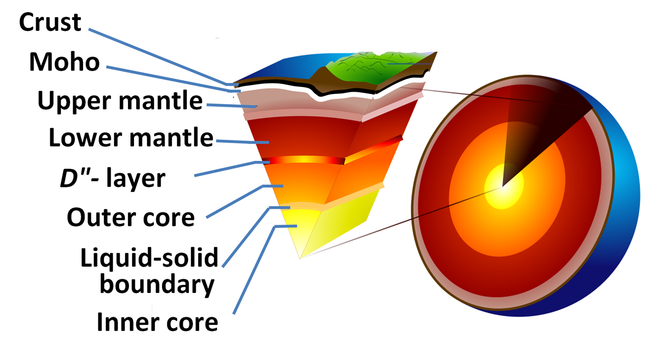
 WIRED - The Latest in Technology, Science, Culture and Business [Unofficial]
 TKSST • seethis.tv 🌈🪐✨
 Mir Books