FT8: The Digital Revolution of Modern Amateur Radio

2,237 words, 12 minutes read time.

FT8 is a digital communication protocol released in 2017 by Joe Taylor, K1JT, and Steve Franke, K9AN, designed to allow radio amateurs to exchange contact information under extreme weak-signal conditions. Operating primarily on High Frequency (HF) bands, FT8 uses a precise 15-second sequence of structured data bursts to transmit call signs, signal reports, and grid squares even when the human ear can hear nothing but static. This mode has fundamentally shifted the landscape of ham radio by enabling reliable global communication during the low points of the solar cycle, ensuring that operators can maintain “workable” signals despite poor ionospheric propagation. Its rapid adoption stems from its efficiency and the fact that it allows modest stations with simple wire antennas and low power to compete with massive “big gun” contest stations.

The technical backbone of FT8 is a specialized form of digital modulation known as 8-slot Frequency Shift Keying (8-FSK). This means the signal shifts between eight distinct tones, each representing a specific piece of data. Because the bandwidth is incredibly narrow—only 50 Hz—multiple conversations can happen simultaneously within a standard 3 kHz single-sideband radio channel without interfering with one another. To make this work, the protocol requires absolute synchronization. Every participating computer must have its internal clock set to within one second of Coordinated Universal Time (UTC). This allows the software to know exactly when to start listening for a message and when to begin transmitting its own response. Without this temporal precision, the sequence breaks down and the data becomes unreadable noise.

The “how” of FT8 is a masterclass in forward error correction and data compression. A standard FT8 message is only 75 bits long, yet it contains everything necessary to confirm a legal and valid contact. Joe Taylor, a Nobel Prize-winning astrophysicist, applied the same principles used to detect faint signals from deep space to the world of amateur radio. By using sophisticated algorithms, the software can reconstruct a message even if a significant portion of the signal is lost to fading or atmospheric interference. This capability allows FT8 to function at signal-to-noise ratios as low as -21 dB. To put that in perspective, an FT8 signal can be decoded when it is significantly weaker than the background noise of the universe itself.

The impact of this mode on the hobby cannot be overstated. Before FT8, many men found themselves frustrated by “dead bands” where hours of calling “CQ” yielded no results. FT8 turned the hobby into a 24/7 pursuit. According to the ARRL (American Radio Relay League), FT8 and its successor modes now account for a massive percentage of all amateur radio activity globally. It has bridged the gap between traditional radio technology and modern computing, appealing to men who enjoy the technical challenge of optimizing a digital interface while still respecting the core physics of radio wave propagation. It is the tool of the modern digital woodsman, carving out a path through the noise of a crowded spectrum.

The Mechanics of the 15-Second Cycle

Understanding the rhythm of FT8 is essential for any man looking to master the digital airwaves. The protocol operates on a rigid 15-second “time slot” system. In the first 12.64 seconds of a slot, the message is transmitted; the remaining time is used for the software to process the data and for the operator to prepare the next response. This “even/odd” sequence ensures that two stations aren’t talking over each other. One station transmits on the even-numbered minutes and 15-second intervals, while the other listens, then they swap. This disciplined structure removes the guesswork and chaos often found in voice or Morse code pile-ups, creating an orderly flow of information that maximizes the use of available airtime.

To get on the air with FT8, an operator needs more than just a radio and an antenna; he needs a bridge between the analog and digital worlds. This is usually achieved through a dedicated USB interface or a built-in sound card in modern transceivers. The software—most commonly WSJT-X—takes the digital data from the computer, converts it into audio tones, and feeds those tones into the radio’s transmitter. On the receiving end, the process is reversed. The radio “hears” a series of chirps and warbles, which the sound card captures and the software decodes back into text on the screen. This synergy of hardware and software is what makes FT8 a true “hybrid” mode of communication.

The software interface provides a “waterfall” display, a visual representation of the radio spectrum where signals appear as vertical blue or yellow streaks. This allows an operator to see exactly where the activity is and find an open “slot” to transmit. It is a highly visual and tactical way to operate. Instead of spinning a dial and listening for a faint voice, you are scanning a digital landscape, looking for the telltale signatures of other stations. For many men, this adds a layer of strategy to the hobby that is deeply engaging, akin to a high-stakes game of electronic chess where the board is the entire planet.

Why Signal-to-Noise Ratio Matters

In the world of radio, the Signal-to-Noise Ratio (SNR) is the ultimate metric of success. It is the difference between the strength of the desired signal and the level of background atmospheric noise. FT8 excels because it is “wideband” in its ability to hear, but “narrowband” in its transmission. Because the tones are so precise and the error correction so robust, FT8 can pull a signal out of a “noise floor” that would render a voice transmission completely unintelligible. This is the primary reason why FT8 is the go-to mode for “DXing”—the art of contacting long-distance stations. It levels the playing field, allowing a man with a 100-watt radio and a wire in his backyard to talk to someone in Antarctica or Japan.

The mathematical genius behind FT8 involves a process called “Costas arrays” and “Low-Density Parity-Check” (LDPC) codes. These are not just buzzwords; they are the tools that allow the software to identify the start of a transmission and fix any bits that were flipped or lost during the journey through the ionosphere. As Joe Taylor noted in his technical documentation for the WSJT-X suite, the goal was to create a mode that was “optimized for the specific characteristics of HF propagation.” By focusing on short, structured bursts rather than long-form conversation, FT8 prioritizes the successful completion of a contact over everything else.

This efficiency does come with a trade-off. FT8 is not a “rag-chewing” mode. You won’t be discussing the weather or your favorite sports team. The messages are strictly limited to the essentials: call sign, signal report (in dB), and location (maidenhead grid square). However, for many men, the thrill is in the “catch.” The satisfaction comes from seeing a distant, rare station pop up on the screen and successfully completing that 60-second digital handshake. It is a hobby centered on the achievement of technical milestones and the collection of digital “QSL” cards that prove you reached the far corners of the earth.

Integration with Modern Computing

The rise of FT8 has coincided with the ubiquity of high-speed internet and powerful home computers. This integration has led to the creation of the “PSK Reporter” network, a massive, real-time map of global radio propagation. When your computer decodes an FT8 signal, it can automatically upload that data to a central server. This allows any operator in the world to see exactly where their signal is being heard in real-time. It is a revolutionary tool for understanding the ionosphere. A man can send out a few “CQ” calls and then check a website to see that he is being heard in Spain, Australia, and Brazil, all within seconds.

This real-time feedback loop has changed the way men approach radio. It removes the mystery and replaces it with data. If you aren’t being heard, you can immediately troubleshoot your antenna or wait for the bands to open up. This data-driven approach appeals to the problem-solving nature of the masculine mind. It turns amateur radio into a laboratory where the results are visible and measurable. You aren’t just shouting into the void; you are probing the atmosphere and receiving instant confirmation of your reach.

Furthermore, FT8 has fostered a global community of “citizen scientists.” By contributing data to these networks, ham operators are helping researchers understand solar cycles and their impact on global communications. As noted in various IEEE publications, the sheer volume of data generated by FT8 operators provides a unique look at the Earth’s upper atmosphere that was previously impossible to obtain on such a scale. When you engage in FT8, you aren’t just playing with a radio; you are part of a global sensor network that monitors the very fringes of our planet’s environment.

The Role of Precision Timing

As mentioned, timing is the lifeblood of FT8. Because the protocol relies on such tight windows of transmission, even a two-second drift in your computer’s clock can make you invisible to the rest of the world. This has led to the widespread use of time-synchronization software like Dimension 4 or Meinberg NTP. For the radio enthusiast, this adds another layer of technical “shack” maintenance. Ensuring that your station is perfectly synced to the atomic clocks in Colorado or via GPS is a point of pride. It represents the discipline required to participate in high-level digital communications.

This requirement for precision also highlights the evolution of the amateur radio station. The modern “shack” is often a clean, streamlined desk featuring a high-resolution monitor and a sleek transceiver. Gone are the days of massive, heat-spewing vacuum tube amplifiers—though those still have their place. The FT8 operator is a digital navigator, managing signal levels, gain settings, and software configurations to ensure the cleanest possible signal. Over-driving the audio, for instance, creates “splatter” that ruins the frequency for others. Mastery of FT8 requires a gentleman’s agreement to maintain a clean signal and respect the shared bandwidth of the community.

The discipline of the 15-second cycle also introduces a meditative quality to the hobby. There is a cadence to it—transmit, wait, decode, respond. It requires focus and patience. You are watching the waterfall, waiting for that specific signal to emerge from the static. When the software finally highlights a successful decode in bright red or green, there is a genuine sense of accomplishment. It is a modern manifestation of the same thrill early radio pioneers felt when they first heard a Morse code signal crackle through their headsets a century ago.

FT8 and the Future of Amateur Radio

While some traditionalists argue that FT8 has taken the “human element” out of radio, the reality is that it has saved the hobby for thousands of men. In an era of high urban noise and restricted antenna space, FT8 allows a man to remain active and competitive. You don’t need a 100-foot tower to be a successful FT8 operator; a simple wire hidden in the attic can often be enough to work the world. It has democratized the airwaves, making the thrill of long-distance communication accessible to anyone with a basic radio and a laptop.

Looking forward, FT8 is just the beginning. The principles of weak-signal digital communication are being applied to even more robust modes like FT4 (a faster version for contesting) and JS8Call (which allows for actual keyboard-to-keyboard messaging). The technology is constantly evolving, driven by the same spirit of innovation that has defined amateur radio since its inception. As we move deeper into the 21st century, the marriage of radio physics and digital signal processing will only grow stronger, ensuring that the airwaves remain a vibrant frontier for exploration and discovery.

In conclusion, FT8 represents the pinnacle of modern amateur radio engineering. It is a mode built on the foundations of advanced mathematics, precise timing, and a deep understanding of the natural world. For the man who is looking to earn his license, FT8 offers a clear path toward global connectivity and technical mastery. It is a testament to the fact that even when the sun is quiet and the bands seem dead, there is always a way to reach out and touch the other side of the planet. The digital revolution is here, and it is chirping across the HF bands in 15-second increments, waiting for the next generation of operators to join the conversation.

Call to Action

If this story caught your attention, don’t just scroll past. Join the community—men sharing skills, stories, and experiences. Subscribe for more posts like this, drop a comment about your projects or lessons learned, or reach out and tell me what you’re building or experimenting with. Let’s grow together.

D. Bryan King

Sources

Disclaimer:

The views and opinions expressed in this post are solely those of the author. The information provided is based on personal research, experience, and understanding of the subject matter at the time of writing. Readers should consult relevant experts or authorities for specific guidance related to their unique situations.

#15SecondCycle #20Meters #40Meters #8FSK #AmateurRadio #amateurRadioLicense #antennaTuning #AtmosphericScience #AudioTones #CATControl #CitizenScience #ComputerRadioInterface #CoordinatedUniversalTime #CostasArrays #DataCompression #dB #Decibel #DigitalHandshake #digitalModes #digitalSignalProcessing #dipoleAntenna #DSP #DXing #ElectronicCommunication #forwardErrorCorrection #FrequencyShiftKeying #FrequencyStability #FT4 #FT8 #GeneralClass #GlobalConnectivity #GPSSync #hamRadio #hamRadioSoftware #hamRadioTech #HFBands #HFRadio #HighFrequency #IcomIC7300 #IonosphericPropagation #JoeTaylor #JS8Call #K1JT #LDPCCodes #LongDistanceRadio #LowPowerRadio #MaidenheadGridSquare #MasculineHobbies #ModernHamRadio #NarrowbandCommunication #NetworkTimeProtocol #NoiseFloor #NTP #OpenSourceRadio #PhysicsOfRadio #psKReporter #QRP #QSLCard #RadioAutomation #radioContesting #RadioEngineering #radioFrequency #RadioModems #RadioNavigation #RadioNetworking #radioPower #radioProtocol #radioShack #RadioSilence #radioWavePropagation #rf #RigBlaster #SignalDecoding #signalToNoiseRatio #Signalink #singleSideband #SNR #solarCycle #solarFlux #soundCardInterface #SpectrumManagement #SSB #TechHobby #technicianClass #TimeProtocols #transceiver #UTCSynchronization #waterfallDisplay #weakSignal #wirelessTechnology #wsjtX #YaesuFT991A

SDXF Programa especial Semana Santa 2026

La Asociación Sueca DX (SDCF) presenta un programa especial a traves de Channel 292.

https://elradioescucha.net/2026/03/18/sdxf-programa-especial-semana-santa-2026/

Resumen Ultimas Escuchas

Resumen de las ultimas escuchas realizadas en Onda Media y Onda Corta.

https://elradioescucha.net/2026/03/17/resumen-ultimas-escuchas-378/

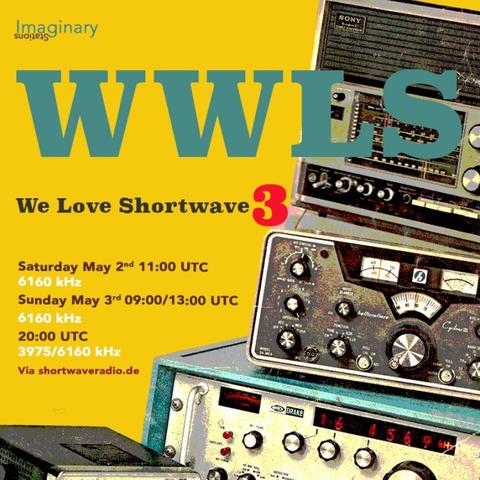
Próximas emisiones de las estaciones imaginarias

Nuevas emisiones para este fin de Semana de Imaginary Stations.

https://elradioescucha.net/2026/03/13/proximas-emisiones-de-las-estaciones-imaginarias-69/

Resumen Ultimas Escuchas

Resumen de las ultimas escuchas realizadas en Onda Media y Onda Corta.

https://elradioescucha.net/2026/03/10/resumen-ultimas-escuchas-377/

Reception report for the week #10 – 2026

One of the more successful DXing weeks!

SHORTWAVE RADIO MONITOR

Próximas emisiones de las estaciones imaginarias

Nuevas emisiones para este fin de Semana de Imaginary Stations.

https://elradioescucha.net/2026/03/06/proximas-emisiones-de-las-estaciones-imaginarias-68/

Keeping up with my radio hunting for new locations. It’s been a successful week with 5 new entities in the log: Republic of Korea, Philippines, Saint Vincent, Republic of Kosovo, and Guinea-Bissau. Huge thanks to operators DS4FWI, J88IH, DUØA, Z62NS, and J51A for the QSOs. 73 to all!
#hamradio #amateurradio #dxing
Has anyone pulled out their old shortwave radio to listen to war traffic? Or is that all done using different methods now.
#do #dxing #shortwave #shortwavelistening

Resumen Ultimas Escuchas

Resumen de las ultimas escuchas realizadas en Onda Media y Onda Corta.

https://elradioescucha.net/2026/03/03/resumen-ultimas-escuchas-376/