DoomsdaysCW
Any excuse to sell more chemicals packaged in non-recyclable #plastic
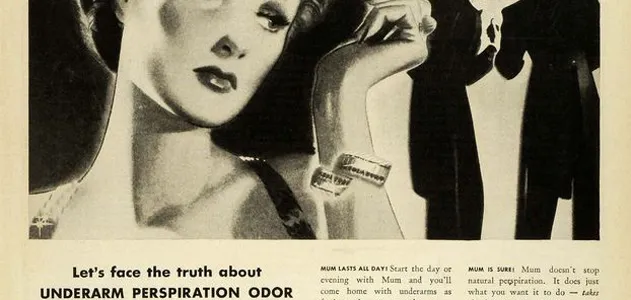
How #Advertisers Convinced Americans They Smelled Bad
A schoolgirl and a former traveling Bible salesman helped turn deodorants and antiperspirants from niche toiletries into an $18 billion industry
by Sarah Everts, August 2, 2012
Before the invention of deodorants and antiperspirants, "most people’s solution to body odor was to wash regularly and then to overwhelm any emerging stink with perfume. Those concerned about sweat percolating through clothing wore #DressShields, cotton or rubber pads placed in armpit areas which protected fabric from the floods of perspiration on a hot day."
Early antiperspirants were made with aluminum chloride (still used in today's antiperspirants), though back then, the aluminum was suspended in acid: "The acid solution meant Odorono could irritate sensitive armpit skin and damage clothing. Adding insult to injury, the antiperspirant was also red-colored, so it could also stain clothing—if the acid didn’t eat right through it first. According to company records, customers complained that the product caused burning and inflammation in armpits and that it ruined many a fancy outfit, including one woman’s wedding dress.
"To avoid these problems, Odorono customers were advised to avoid shaving prior to use and to swab the product into armpits before bed, allowing time for the antiperspirant to dry thoroughly."
#PlasticPollution #AluminumPollution #ToxicChemicals #BodyShaming #BodyOdor #Lumi