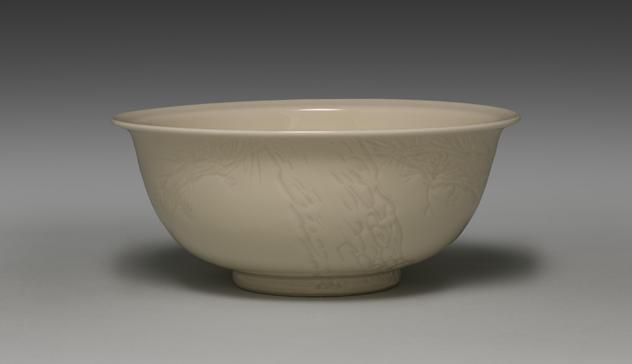
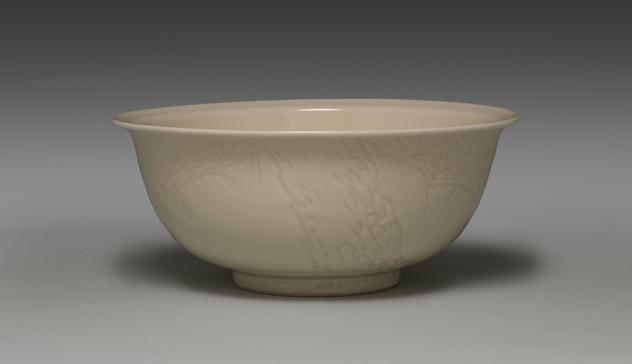
Admire this exquisite Ding ware bowl that melds elegance with poetic history, featuring carved old pine and an inscription by Li Jiao, echoing themes of shelter and tranquility. How do you interpret the connection between nature and artistic expression?
#ClevelandArt #DingWare #ChineseCeramics
https://clevelandart.org/art/2022.209
This stunning Bowl with Old Pine and Poem seamlessly blends art, nature, and history. The Li Jiao inscription invites reflection on resilience and tranquility. How does this piece inspire your thoughts on the connection between art and the natural world?
#ClevelandArt #TangDynasty #DingWare #ArtHistory #Poetry
https://clevelandart.org/art/2022.209
This exquisite Ding ware bowl captures the elegance of the Song Dynasty, merging nature and poetry with its intricate design and kanpakuyū glaze. The inscription evokes a serene world of cranes and pines. What stories do you find in its beauty?
#ClevelandArt #DingWare #ArtHistoryhttps://clevelandart.org/art/2022.209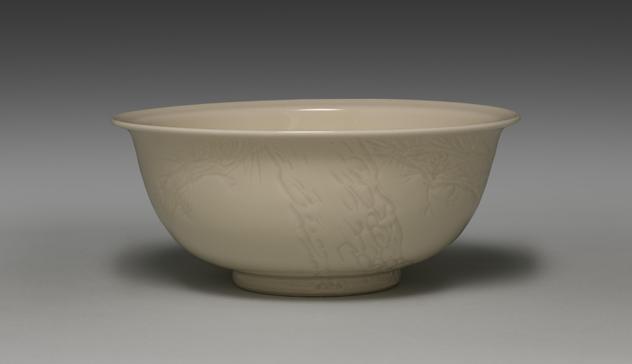

Bowl with Old Pine and Poem | Cleveland Museum of Art
A grand, aged pine is carved into the body of this bowl. The inscription on the reverse side explains the tree’s presence. It is an altered version of two lines from a poem by Li Jiao (646?–715?) called “Pine.” Li Jiao was a senior government official who had a tumultuous career under the reign of Wu Zetian (r. 690–705), as well as those of her sons and grandson during the Tang dynasty (618–907). Although little known today, his work was read in Japan during the Heian (794–1185) and Kamakura periods (1185–1333). An anthology containing his poems, which was lost in China, was passed down across the generations in Japan. The translation of the inscription is as follows (the original characters, written and read from right to left, are shown below from left to right): <br><br>The crane nests in the mastwood tree, <br>the wind flicks at its peaceful branches. <br>鶴樹君子風拂太平枝 <br><br>The mastwood is a pine-like evergreen, and the crane sheltering there is protected from the wind. In the original poem, the characters before “branches” (枝) are rather 大夫, meaning “high official.” This is likely a reference to the title bestowed upon a pine tree by the emperor Qin Shi Huang (r. 221–210 BCE) in thanks for its protection when a fierce rain fell as he ascended Mount Tai to pay his obeisance to the heavens.
This exquisite bowl embodies the fusion of nature and poetry, with an aged pine carved into its form. The inscription offers a glimpse into an era where art and literature intertwined. How does this piece resonate with your understanding of history?
#ClevelandArt #DingWare #ArtHistory
https://clevelandart.org/art/2022.209
Bowl with Old Pine and Poem | Cleveland Museum of Art
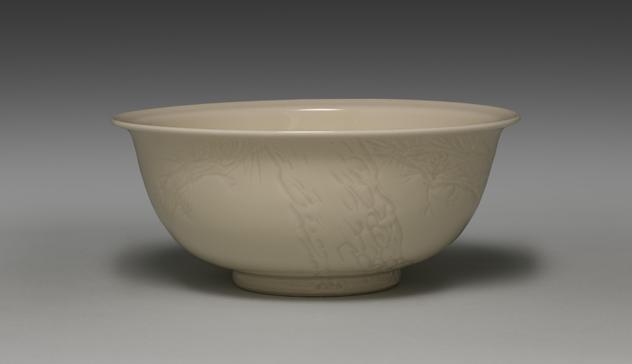
A grand, aged pine is carved into the body of this bowl. The inscription on the reverse side explains the tree’s presence. It is an altered version of two lines from a poem by Li Jiao (646?–715?) called “Pine.” Li Jiao was a senior government official who had a tumultuous career under the reign of Wu Zetian (r. 690–705), as well as those of her sons and grandson during the Tang dynasty (618–907). Although little known today, his work was read in Japan during the Heian (794–1185) and Kamakura periods (1185–1333). An anthology containing his poems, which was lost in China, was passed down across the generations in Japan. The translation of the inscription is as follows (the original characters, written and read from right to left, are shown below from left to right): <br><br>The crane nests in the mastwood tree, <br>the wind flicks at its peaceful branches. <br>鶴樹君子風拂太平枝 <br><br>The mastwood is a pine-like evergreen, and the crane sheltering there is protected from the wind. In the original poem, the characters before “branches” (枝) are rather 大夫, meaning “high official.” This is likely a reference to the title bestowed upon a pine tree by the emperor Qin Shi Huang (r. 221–210 BCE) in thanks for its protection when a fierce rain fell as he ascended Mount Tai to pay his obeisance to the heavens.
 Hidden Gems