Differential Logic • 18

Tangent and Remainder Maps

If we follow the classical line which singles out linear functions as ideals of simplicity then we may complete the analytic series of the proposition in the following way.

The next venn diagram shows the differential proposition we get by extracting the linear approximation to the difference map at each cell or point of the universe   What results is the logical analogue of what would ordinarily be called the differential of but since the adjective differential is being attached to just about everything in sight the alternative name tangent map is commonly used for whenever it’s necessary to single it out.


To be clear about what’s being indicated here, it’s a visual way of summarizing the following data.

To understand the extended interpretations, that is, the conjunctions of basic and differential features which are being indicated here, it may help to note the following equivalences.

Capping the analysis of the proposition in terms of succeeding orders of linear propositions, the final venn diagram of the series shows the remainder map which happens to be linear in pairs of variables.


Reading the arrows off the map produces the following data.

In short, is a constant field, having the value at each cell.

Resources

cc: Academia.eduCyberneticsLaws of Form • Mathstodon (1) (2)
cc: Research GateStructural ModelingSystems ScienceSyscoi

#Amphecks #Animata #BooleanAlgebra #BooleanFunctions #CSPeirce #CactusGraphs #Change #Cybernetics #DifferentialCalculus #DifferentialLogic #DiscreteDynamics #EquationalInference #FunctionalLogic #GradientDescent #GraphTheory #InquiryDrivenSystems #Logic #LogicalGraphs #Mathematics #MinimalNegationOperators #PropositionalCalculus #Time #Visualization
Differential Logic • Part 3 - OeisWiki

Differential Logic • 17

Enlargement and Difference Maps

Continuing with the example the following venn diagram shows the enlargement or shift map in the same style of field picture we drew for the tacit extension


A very important conceptual transition has just occurred here, almost tacitly, as it were.  Generally speaking, having a set of mathematical objects of compatible types, in this case the two differential fields and both of the type is very useful, because it allows us to consider those fields as integral mathematical objects which can be operated on and combined in the ways we usually associate with algebras.

In the present case one notices the tacit extension and the enlargement are in a sense dual to each other.  The tacit extension indicates all the arrows out of the region where is true and the enlargement indicates all the arrows into the region where is true.  The only arc they have in common is the no‑change loop at   If we add the two sets of arcs in mod 2 fashion then the loop of multiplicity 2 zeroes out, leaving the 6 arrows of shown in the following venn diagram.


Resources

cc: Academia.eduCyberneticsLaws of Form • Mathstodon (1) (2)
cc: Research GateStructural ModelingSystems ScienceSyscoi

#Amphecks #Animata #BooleanAlgebra #BooleanFunctions #CSPeirce #CactusGraphs #Change #Cybernetics #DifferentialCalculus #DifferentialLogic #DiscreteDynamics #EquationalInference #FunctionalLogic #GradientDescent #GraphTheory #InquiryDrivenSystems #Logic #LogicalGraphs #Mathematics #MinimalNegationOperators #PropositionalCalculus #Time #Visualization
Differential Logic • Part 3 - OeisWiki

Differential Logic • 15

Differential Fields

The structure of a differential field may be described as follows.  With each point of there is associated an object of the following type:  a proposition about changes in that is, a proposition   In that frame of reference, if is the universe generated by the set of coordinate propositions then is the differential universe generated by the set of differential propositions   The differential propositions and may thus be interpreted as indicating and respectively.

A differential operator of the first order type we are currently considering, takes a proposition and gives back a differential proposition   In the field view of the scene, we see the proposition as a scalar field and we see the differential proposition as a vector field, specifically, a field of propositions about contemplated changes in

The field of changes produced by on is shown in the following venn diagram.


The differential field specifies the changes which need to be made from each point of in order to reach one of the models of the proposition that is, in order to satisfy the proposition

The field of changes produced by on is shown in the following venn diagram.


The differential field specifies the changes which need to be made from each point of in order to feel a change in the felt value of the field

Resources

cc: Academia.eduCyberneticsLaws of Form • Mathstodon (1) (2)
cc: Research GateStructural ModelingSystems ScienceSyscoi

#Amphecks #Animata #BooleanAlgebra #BooleanFunctions #CSPeirce #CactusGraphs #Change #Cybernetics #DifferentialCalculus #DifferentialLogic #DiscreteDynamics #EquationalInference #FunctionalLogic #GradientDescent #GraphTheory #InquiryDrivenSystems #Logic #LogicalGraphs #Mathematics #MinimalNegationOperators #PropositionalCalculus #Time #Visualization
Differential Logic • Part 3 - OeisWiki

Differential Logic • 14

Field Picture

Let us summarize the outlook on differential logic we’ve reached so far.  We’ve been considering a class of operators on universes of discourse, each of which takes us from considering one universe of discourse to considering a larger universe of discourse   An operator of that general type, namely, acts on each proposition of the source universe to produce a proposition of the target universe

The operators we’ve examined so far are the enlargement or shift operator and the difference operator   The operators and act on propositions in that is, propositions of the form which amount to propositions about the subject matter of and they produce propositions of the form which amount to propositions about specified collections of changes conceivably occurring in

At this point we find ourselves in need of visual representations, suitable arrays of concrete pictures to anchor our more earthy intuitions and help us keep our wits about us as we venture into ever more rarefied airs of abstraction.

One good picture comes to us by way of the field concept.  Given a space a field of a specified type over is formed by associating with each point of an object of type   If that sounds like the same thing as a function from to the space of things of type — it is nothing but — and yet it does seem helpful to vary the mental images and take advantage of the figures of speech most naturally springing to mind under the emblem of the field idea.

In the field picture a proposition becomes a scalar field, that is, a field of values in

For example, consider the logical conjunction shown in the following venn diagram.


Each of the operators takes us from considering propositions here viewed as scalar fields over to considering the corresponding differential fields over analogous to what in real analysis are usually called vector fields over

Resources

cc: Academia.eduCyberneticsLaws of Form • Mathstodon (1) (2)
cc: Research GateStructural ModelingSystems ScienceSyscoi

#Amphecks #Animata #BooleanAlgebra #BooleanFunctions #CSPeirce #CactusGraphs #Change #Cybernetics #DifferentialCalculus #DifferentialLogic #DiscreteDynamics #EquationalInference #FunctionalLogic #GradientDescent #GraphTheory #InquiryDrivenSystems #Logic #LogicalGraphs #Mathematics #MinimalNegationOperators #PropositionalCalculus #Time #Visualization
Differential Logic • Part 3 - OeisWiki

Differential Logic • Part 2 - OeisWiki

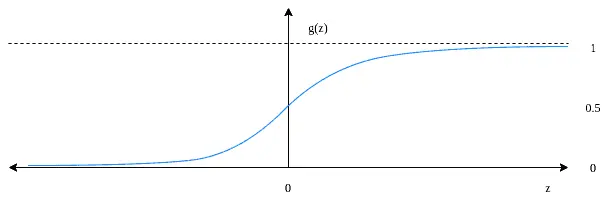
Logistic regression may be used for classification.

In order to preserve the convex nature for the loss function, a log-loss cost function has been designed for logistic regression. This cost function extremes at labels True and False.

The gradient for the loss function of logistic regression comes out to have the same form of terms as the gradient for the Least Squared Error.

More: https://www.baeldung.com/cs/gradient-descent-logistic-regression

#optimization #algebra #linearAlgebra #math #maths #mathematics #mathStodon #ML #dataScience #machineLearning #DeepLearning #neuralNetworks #NLP #modeling #modelling #models #dataDev #AIDev #regression #modelling #dataLearning #probabilities #logisticRegression #logLoss #sigmoid #classification #differentialCalculus #loss

Differential Propositional Calculus • 10

Special Classes of Propositions (cont.)

Let’s pause at this point and get a better sense of how our special classes of propositions are structured and how they relate to propositions in general.  We can do this by recruiting our visual imaginations and drawing up a sufficient budget of venn diagrams for each family of propositions.  The case for 3 variables is exemplary enough for a start.

Linear Propositions

The linear propositions, may be written as sums:

One thing to keep in mind about these sums is that the values in are added “modulo 2”, that is, in such a way that

In a universe of discourse based on three boolean variables, the linear propositions take the shapes shown in Figure 8.


At the top is the venn diagram for the linear proposition of rank 3, which may be expressed by any one of the following three forms.

Next are the venn diagrams for the three linear propositions of rank 2, which may be expressed by the following three forms, respectively.

Next are the three linear propositions of rank 1, which are none other than the three basic propositions,

At the bottom is the linear proposition of rank 0, the everywhere false proposition or the constant function, which may be expressed by the form or by a simple

Resources

cc: Academia.eduCyberneticsStructural ModelingSystems Science
cc: Conceptual GraphsLaws of FormMathstodonResearch Gate

#Amphecks #Animata #BooleanAlgebra #BooleanFunctions #CSPeirce #CactusGraphs #CategoryTheory #Change #Cybernetics #DifferentialAnalyticTuringAutomata #DifferentialCalculus #DifferentialLogic #DiscreteDynamics #EquationalInference #FunctionalLogic #GraphTheory #Hologrammautomaton #IndicatorFunctions #InquiryDrivenSystems #Leibniz #Logic #LogicalGraphs #Mathematics #MinimalNegationOperators #PropositionalCalculus #Time #Topology #Visualization

Où l'on apprend que l'intégrale n'est pas une anti-dérivée (est introduite aussi la notion de manifold):

https://www.youtube.com/watch?v=1lGM5DEdMaw

PS: la notion moderne de forme différentielle est attribuable au mathématicien Français Élie Cartan (1969-1951).

#maths #DifferentialCalculus

Stokes' Theorem on Manifolds

YouTube

@riewarden

The real explanation is that Michael Spivak did the cover illustrations xyrself, and published through xyr own publishing company; and there's no real reason for the covers to make sense for anyone else. They also differ from edition to edition.

Amazon tells me that you've ordered the 2nd edition, not the 3rd.

#DifferentialCalculus #textbooks #MichaelSpivak

#DifferentialLogic and #DynamicSystems • Overview
https://inquiryintoinquiry.com/2019/09/10/differential-logic-and-dynamic-systems-overview/

In modeling #IntelligentSystems, natural or artificial, there is a tension between #DynamicParadigms & #SymbolicParadigms.

#DynamicModels afford a system #QuantitativeDescription, charting its #TimeEvolution via #DifferentialEquations.

#SymbolicModels afford a system #QualitativeDescription, deducing its #LogicalConsequences. So far these tend to be static models, awaiting a logical analogue of #DifferentialCalculus.

Differential Logic and Dynamic Systems • Overview

Inquiry Into Inquiry