 War Fantasy
Roman Army and Society During Dominate
Wars in the late antiquity are led for more-or-less the same reasons as today: resources and profit, which means control of the trade routes (Roman – Persian wars) as well as robbery and/or living space (barbarian migrations). Societal structure determines the exact causes however, but wars also change society itself.
In Rome, the army had been setting the emperors since the beginning of the Principate. Roman emperor was a military dictator, and while this fact had been disguised during the early years of the Principate, it could not remain hidden forever. Ever since Julius Caesar, ruler’s legitimacy is connected directly to his military authority. While Sulla and Marius used army to try and take power by force, Caesar used his military campaigns for propaganda – Commentaries on Gallic War is essential propaganda.
Octavian took authority through military success, but once in power he used the title “primus inter pares” or the “first among the equals”, which gave name to this type of rule – the principate.
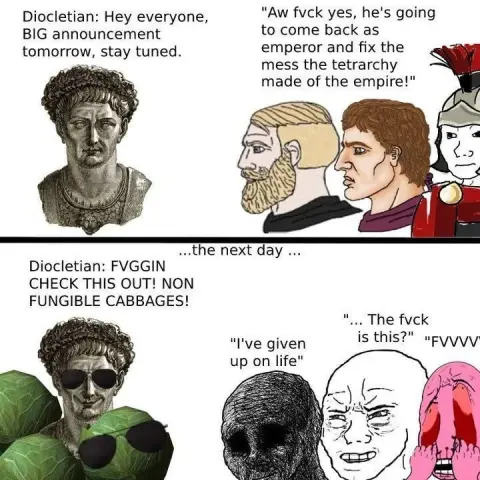
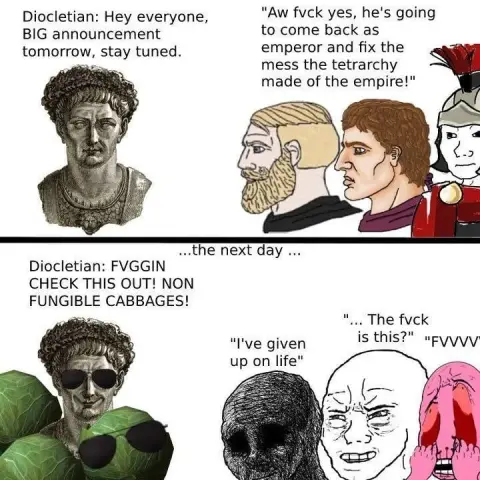
But over time, emperors increasingly lose control of the army, which leads to appearance of military emperors or soldier emperors. These emperors are in power typically for a very short period of time, have gained power by a military coup or murdering the predecessor, and most of them also die violently. Especially the Praetorians, the military unit that Augustus had founded for protection of the imperial person, are more often a threat to the emperor than protection. For this reason Diocletian replaced them with Comitatenses units, the Iovianensis and Herculianensis, which protected Diocletian and his co-ruler Maximian.
Increased pressure means that legions posted along the border can no longer stop the barbarian incursions. As a consequence, units are increasingly posted by depth and cities are fortifying: Salona for example is fortified with help of units from Legio II Italica and Legio III Italica. Following the incursion by Heruli in 268 AD, Athens is also fortified by wall built from ruins.
Persia too is a problem. Every time that Rome’s attention is relaxed in the East, Persia tries to take Mesopotamia. Civil wars and usurpations are increasingly frequent and can be more dangerous than barbarian incursions – Vitelius’ soldiers basically ransacked Italy, and later civil wars were no better.
Army is also used for suppressing the bandits, which further increases maintenance costs – and this means increased taxes. Slave rebellions are increasingly being joined by the coloni and the free peasants.
Finances
Because Imperator was a miltary dictator, he has to ensure army’s loyalty. Major way of doing so is by making sure soldiers are well paid. Roman army was a professional army for a long time, and also had a tendency to rebel if it went unpaid or even just received pay they saw as insufficient. So while legionaries during Augustus received a wage of 900 sestertii per year, Domitian raised this by one third, to 1200 sestertii per year. Army had 30 legions during Domitian – or some 150 000 men – and similar number of auxilliaries who were paid likely at 5/6 the legionary rate. Thus Domitian will have been spending 330 000 000 sestertii per year to pay soldiers. By time of Caracalla, legions alone were receiving some 370 000 000 sestertii per year, and this was without counting wages of the auxilliaries, or the ever more frequent “donatives”, irregular payments for important events which were also increasing over time.
By the time of Maximinus Thrax, legionary wage was 5 400 sestertii – exactly double that of Caracalla. Septimius Severus, Thrax’ immediate predecessor, had an army 33 legions strong, consisting of 20 000 praetorian guard, 182 000 legionaires, 250 000 auxilliaries and 50 000 sailors. Praetorians received sesquiplex stipendum, meaning that their pay was always set at 50% higher than that of legionaires. Auxillia as noted were paid at 5/6 legionary rate. All of this will have combined for total expenses of perhaps 2,5 billion sestertii per year just to pay soldiers.
Retirements were expensive as well – when dismissed from service, legionary would receive 12 000 sestertii, a nobleman 400 000 and a senator 1 000 000 sestertii. Note that all tribunes were noblemen and all legates were senators. An army 30 legions strong as during Domitian will have been dismissing 1,2 legates, 7,2 tribunes and 7 200 legionaries per year. However, fact that only about half of legionaries reached retirement age will have reduced this number to maybe 3 600 legionaries per year, and assumedly 5 – 7 tribunes and 1 legate, resulting in total expenses of 46 200 000 sestertii per year, and perhaps 38 500 000 for auxilliaries’ retirement if it was done in a similar way.
By time of Diocletian however army had increased further, with Diocletian himself raising number of legions to 60. Even assuming that new legions were only 1 000 strong as some authors believe, this will have still increased number of legionaires to . But it is more likely that legions were in fact full 5 000 men strong. Confusion appears to have been caused by the fact that detachments of legions – previously termed vexillatios (vexillationes) – were themselves termed legions by the time of Diocletian. For this reason, same legion could be attested at the same time in several places, and an individual “legion” thousand strong may have been but a detachment of a classical 5 000 strong legion. If legions had in fact retained their paper strength of 5 000 men – a more likely assumption – then 60 Diocletianic legions will have accounted for 300 000 legionaries and a similar number of auxillia, for a total of 600 000 men.
Centurion had wage originally 50% higher than that of a legionary, but by late Empire it had increased to double that of a legionary at least. As for the basic pay, 299/300 AD papyrus from Egypt notes legionary pay of 600 denarii, and that of an auxilliary as 400 denarii plus 200 denarii ration allowance (this means 2 400 sestertii for legionary and 1 600 sestertii for an auxilliary). It should be noted that 600 denarii was merely the basic pay however. By the time of Diocletian, soldiers were receiving much of their pay in kind, and much of the pay was in the donatives. Overall, Diocletian’s soldiers may have received 12 000 denarii worth of pay. Of this, 600 denarii was basic pay, and legionary would receive 1 250 denarii for each celebration of an Augustus, and half that sum for a celebration of a Caesar. With each Augustus and Caesar having three celebrations – birthday, ascension day and consulate – total sum comes out to 6 225 denarii per year just for donatives, or 6 825 with pay. Possibly up to 7 500 as I may have screwed up maths here.
All of this means that 600 000 soldiers will have been receiving 4 billion denarii (16 billion sestertii) per year at the low end or 4,5 billion denarii (18 billion sestertii) at a high end. Total income of Roman Empire at the time was 18 million solidi/denarii. Thus, soldiers’ wages will have consumed 22 – 25% of the total income of the Empire.
Army and Society
Soldiers themselves generally came from lower classes of the society, while legates are mostly senators. Nobles with military education and experience could also become legates or even provincial governors. Most soldiers came from countryside, and primarily from outside Italy. While during early Empire soldiers were sent away from their home province to serve, by the time of the Dominate soldiers were in fact serving largely in their own homelands. This had both advantages and disadvantages. Main disadvantage was that legions were no longer really mobile: soldiers did not want to leave their homes, and so legions became immobile. Soldiers regularly had wives and children, and Septimius Severus made it legal for soldiers to marry. This necessitated formation of the mobile reserve (comitatus) that would serve as an offensive arm of the army. But it was also an advantage, because soldiers were now fighting for their homes and families. Their permanent presence in provinces also increased Romanization of provinces.
To solve this issue, Diocletian split the army onto provincial (limitanienses) and mobile (comitatenses) army. Mobile army was completely professional, with no connection to land and followed emperor on his campaigns. Provincial troops meanwhile used the opportunity to plant even harder roots to whatever places they had settled to.
In the relatively rural West of the Empire, the cities formed around the legionary camps. In the East however legions were predominantly quartered in the already existing cities. Auxilliary units and possibly elements of legions as well were also spread across cities and smaller settlements as well as border forts whose task was to notify legions of incursions. Army also serves as a police force – in Egypt, centurions often served as judges.
Economic impact was significant. More than half a million soldiers required 150 000 tons of wheat per year, as well as many animals, and leather for equipment. These often had to be brought from a significant distance and at great expense, as larger camps could not meet their needs from immediate surroundings.
Land grants continued also during time of Diocletian. Many veterans are settled at the place where they had served their military service, thus helping Romanization. Others return back to their birth places, while few chose neither. Regardless of where they chose to retire however, veterans brought with them significant financial power, privileges, and extensive knowledge of practical matters gained during the military service. They were also an ideal vector of contact between the people and the government. Their citizen status was hereditary, and from the time of Hadrian the veterans were counted as honestiores (gentlemen) and thus, alongside the senators, knights (equites Romani) and the elites (decuriones) were spared physical punishment. They could also attract new recruits into the military by serving as an example of benefits of service. Veterans also helped the economy by becoming shipbulders, weapons traders, brickmakers or other arts based on knowledge gained during the service. Veterans were however rarely politically active, as doing so meant losing the immunity and also spending one’s own wealth for the city’s well being.
Army respected the official gods as well as the local dieties. Military oath (sacramentum) had pronounced religious character. Soldiers themselves were free to follow whatever belief or religion they chose to so long as it did not prevent them from fulfilling their duties and official rituals (latter is the reason why Jews and Christians were mistrusted). Local beliefs were very popular, both from the place of soldiers’ origin as well as places where they served. Cult of Mithras was widespread in the army, as qualities he promoted – bravery and endurance – were militarily significant.
Praetorians often played an important, even decisive role in the politics, mostly by murdering emperors who didn’t pay them enough. For this reason Diocletian replaced them with comitatenses, and even earlier Septimius Severus used legions to provide security instead of the praetorians.
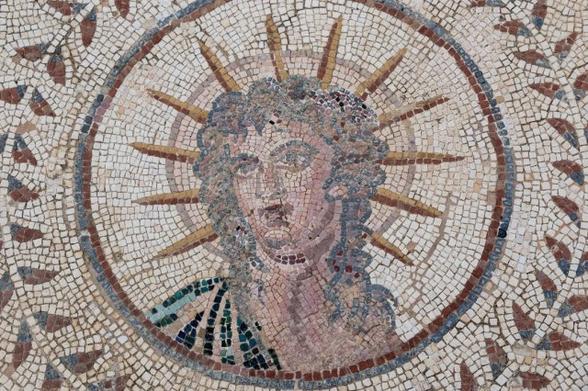
In the Third Century dependance of emperors on the army is even greater, leading to the reign of soldier-emperors – the so-called Thirty Tyrants (though most of them were not tyrants in modern sense). While this helped the Empire repel invaders, it also led to a near constant stream of usurpers. Diocletian attempted to stop the nearly constant civil wars by introducing the dominate, where emperor was also a god (dominus et deus), thus making regicide automatically into sacrilege as well. While he was not the first to do so – Aurelian being the first emperor to declare himself a god, Sol Invictus (the Invincible Sun) – Diocletian was the first to create an elaborate system of worship, as well as to separate the military from civil governance.
Sol InvictusConscription is far more frequent than in earlier times, and possibility of avoiding service for payment was also introduced. Diocletian also decided that veterans’ sons were obliged to serve in the military. In order to ensure supply to the army, Diocletian introduced a caste system which meant that son would inherit father’s job, and would thus not be able to abandon unpleasant jobs necessary for supplying of the army. Recruits entered army generally at an age between 17 and 20 years of age, and served for around 25 years. Early honorable discharge (honesta missio) could be granted earlier based on poor health (missio causaria). This required doctor’s confirmation following a medical examination, and both medical examination and the confirmation were required for soldier’s return to service should he have recovered. Medically discharged soldiers were, as noted, considered to have been honorably discharged, though their privileges were reduced proportionate to the amount of time they had spent in service. Dishonorable discharge (missio ignominiosa) was a punishment for soldiers who had carried out a serious crime or felony. Such soldiers were not allowed to settle in city of Rome or enter the emperor’s service ever again. They were also not allowed to enjoy any of the privileges granted to regularly discharged soldiers. Diocletian introduced a law which required 20 years of service for a soldier to receive all the benefits. Centurions however had no service term limits due to time necessary to gain the rank. L Maximius Gaetulicus, first centurion of Legio I Itallica, had been in service for 57 years by AD 184.
On occasion of discharge from military service, legionaires were granted a document which proved that they had been honorably discharged and granted them rights to their benefits. Many of these were duplicated in metal, to ensure against damage or loss. Document was also presented if veteran wanted to settle somewhere. Civil right certificates which were provided for veterans’ children were also made in metal. From third century, specifically 203 AD, these documents are no longer being provided to auxilliary troops who are Roman citizens anyway. Veterans have benefits of married men regardless of their actual marriage status, and from Claudius onwards these benefits are also extended to soldiers in active service. They are excepted (excused) from public service, taxes on trade and some other taxes, but from third century onwards the tax benefits are no longer extended to veterans’ children.
But seeds of destruction had also been sown at this time. Barbarians are being admitted into the Empire and the army – and no longer only in small groups which would be dispersed and relatively quickly Romanized, as was the case before. Now, barbarians were being admitted as foederati – stable and concentrated groups, in every aspect separate political entities whose leaders retained political and military power. Rich people are making situation worse by raising private armies – bucelarii, which is limiting available resources for state army. Effectiveness of the army itself has not been significantly reduced, but widespread usage of barbarian recruits results in transfer of Roman military technologies, tactics and capabilities – which would then proceed to be used by barbarians against the Empire. Barbarian groups themselves are increasingly organized into national, genetic federations, led by powerful kings. While fewer polities meant that it was easier to negotiate with them, kings’ followers made consistent pressure on their leaders to provide them opportunity for life in the Empire.
All of this would eventually lead to dissolution of the western Empire to the point that nobody really cared about the emperor’s authority any more. By 5th century, Western emperor in Ravenna only retained control over Italy if that, and remained of the Empire was a conglomeration of only nominally subservient barbarian statelets. But the early stages of this transition were noticeable as early as 2nd century, and by the time of Diocletian said transition was in the full swing.
Army and Government
Soldiers made their oath of loyalty directly to the emperor – Roman army was not Roman, but the emperor’s, and soldiers were his employees.
While army as a whole was extremely politically influential, soldiers themselves were apparently not politically motivated by anything except expectations of personal profit or loyalty to a certain leader. They had no class loyalty to the class they originated from (free peasantry), and only really cared that the emperor is an effective war leader – emperor’s personal and administrative qualities were irrelevant to them – and pays them regularly. When Praetorians forced Nerva to execute murderers of the previous emperor, Domitian, they only really cared to show “who is the boss”.
Soldiers themselves would sent their objections to the emperor – example being when soldiers in Germany sent to Claudius complaints of the heavy work that their commanders were forcing them to do. Several auxilliary units from Judaea sent emissaries to Claudius to prevent transfer out of Judaea and won the case. Many emperors gained throne after soldiers declared for them.
Political influence of the army meant that loyalty of the army was key to becoming and remaining an emperor. Best way to retain army’s loyalty was to be a successful commander. While Diocletian was an extremely successful administrator, his success in war was just as important to him living to old age as his reforms were. Emperor also had complete control over foreign policy, though by the time of Diocletian there was no reason for the emperor to declare wars – Empire was at war, no matter what the Emperor wanted.
Political and propaganda importance of military victories can be seen in the emperors taking nicknames after their victories – such as Germanicus, Parthicus, Britannicus and similar. From late second century onwards, adjective Maximus is added at the more important victories. In documents, these epithets are added after other attributes but before the family names.
Developments in relationship of the army and the emperor meant that by the third century the emperor’s battlefield success was a measure of his right to rule. Victories are celebrated on the coins and victory arches. Triumphs, celebrations of victories, are extremely important and are thus exclusive right of the emperors.
This led to increasing number of usurpers and fragmentation of the Empire, as potential candidates based their legitimacy on their ability to protect their territory. Thus Diocletian organized the Tetrarchy – two senior rulers (Augusts) and two junior rulers (Caesars). Each of them had direct authority over a quarter of the Empire, but each Augustus had ultimate authority over one half of the Empire with Caesar as his junior ruler. This system improved rulers’ ability to answer threats, be it invasions or usurpations, and thus improved not only security of the empire but also political and personal security of each ruler. Such division of the Empire was the only permanent solution for the crisis of the Fourth Century – Empire was sick from its size.
#army #dominate #roman #RomanArmy #RomanEmpire #society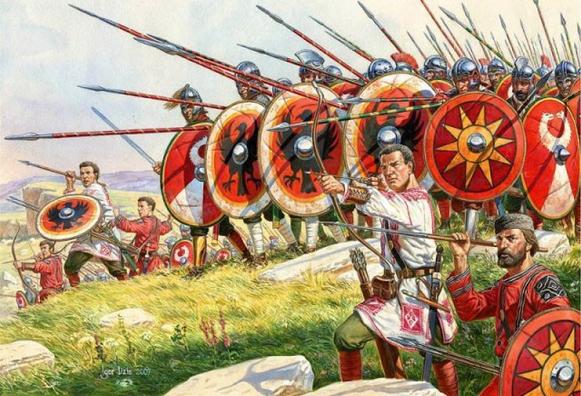
 PugJesus

 John Griogair Bell
 CBC Arts Enterainment
 CBC Top Stories
 Global News
 Global News Okanagan