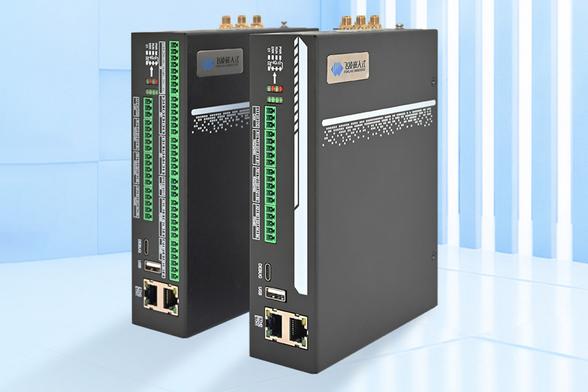
Rockchip RK3506J-based Forlinx FCU1501 fanless industrial IoT gateway offers dual Ethernet, plenty of I/Os and serial interfaces
Forlinx Technology has recently introduced the FCU1501, a rugged, fanless industrial embedded computer and IoT gateway built around the Rockchip RK3506J processor with a tri-core Cortex-A7 and a single Cortex-M0 core. The system is designed for high-reliability data acquisition and protocol conversion in harsh environments. The gateway comes in two variants (basic and extended), which have similar dimensions but differ mainly in interface density. Both models feature up to 512MB DDR3 RAM, 8GB eMMC flash, dual Fast Ethernet, dual-band Wi-Fi & Bluetooth 5.0, and 4G LTE Cat 1 support. Applications include automation, rail transit, and smart manufacturing. The system supports a wide industrial temperature range (-40°C to +85°C) and meets Level 3 EMC standards. Forlinx FCU1501 Specifications: SoC – Rockchip RK3506J CPU 3x Arm Cortex-A7 cores up to 1.5 GHz Arm Cortex-M0 real-time core GPU – 2D GPU only No VPU, no NPU System Memory – 256MB or 512MB DDR3 Storage 256MB NAND
Troubleshooting Sensor Rail and Bracket Mounting Problems
Loose mounting and poor alignment can affect sensor performance. Learn common causes and fixes in our support article.
Read more:
https://zurl.co/HZuCD #Troubleshooting #SensorProblems #Brackets #DINRail #SmidnyaCommon Applications of Sensor Rails and Brackets
See where sensor rails, DIN rails, and brackets are commonly used in conveyors, packaging machines, panels, and more.
Read more:
https://zurl.co/xEQEc #AutomationApplications #SensorRails #DINRail #Brackets #SmidnyaHow to Choose the Right Sensor Rail or Bracket
Choosing the right rail or bracket improves mounting stability, alignment, and sensor performance. Learn the basics in our guide.
Read more:
https://zurl.co/CtuRq #SensorMounting #DINRail #Brackets #Automation #SmidnyaWhat Are Sensor Rails, DIN Rails, and Brackets?
Understand the difference between sensor rails, DIN rails, and brackets, and where they are used in industrial automation.
Read more:
https://zurl.co/gEK9M #IndustrialAutomation #SensorRails #DINRail #Brackets #Smidnya
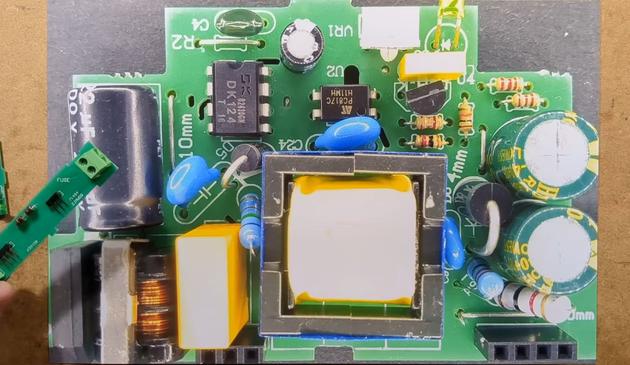
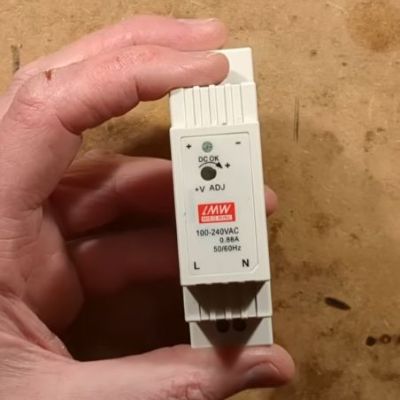
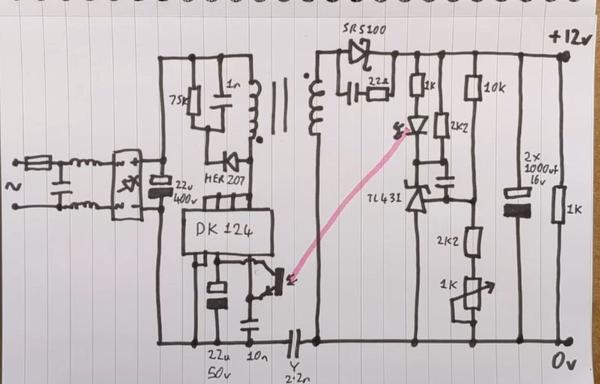
Inside A Fake Mean Well DIN-rail PSU
These days, you can get fakes, bootlegs, and similar for just about anything. While a fake handbag isn’t such a big deal, in the case of a DIN-rail power supply, you’d better make sure …
Modular Contactors & Sensors: The "Invisible Butlers" of Modern Automation
Lighting Control: Occupancy sensors trigger the contactor to switch on entire zones only when needed, saving up to 30-50% in energy costs. How They Work with Sensors:
ModularContactor #ElectricalEngineering #IndustrialAutomation #SmartHomeTech #HVACControl #EnergyEfficiency #ElectricalSwitchgear #AutomationSolutions #DINRail #PowerManagement #ElectricianLife #SensorTechnology

DIN-rail mountable LoRaWAN control terminal offers RS485, analog input, and digital I/Os
The DFRobot LoRaWAN Control Terminal is a compact, DIN-rail mountable industrial IIoT terminal that features long-range LoRaWAN connectivity with local sensing and control capabilities. It’s designed for industrial, agricultural, and building-automation scenarios that need reliable, low-power wireless communication up to 4 km. The terminal supports the standard LoRaWAN protocol (OTAA/ABP, Class A/C) with up to 4 km line-of-sight range and works with private gateways or public networks like TTN. It integrates a 0–10V analog input, optically isolated digital inputs, and RS485/Modbus sensor support, along with a built-in relay output for direct actuation. There's also support for visual rule-based automation for relay switching, RS-485 commands, or uplink messages; the device continues operating offline using preset logic. The unit operates from 12–24V, includes adjustable transmission parameters, and supports firmware upgrades and factory resets. DFRobot LoRaWAN Control Terminal specifications: SoC/Main Controller – TBD Wireless LoRaWAN 863–870 MHz, 16 dBm Tx power (EU, DFR1120-868) LoRaWAN
 cnx-software.com [Unofficial]
 Smidmart



 LinuxGizmos.com [Unofficial]