**60.2% vaccinated—but hesitancy is a biological literacy crisis, not social capital.** Larsson’s study links vaccine doubt to radical life extension’s fate. **#Cryonics #LifeExtension #Nanomedicine #HeadTransplant #FutureMedicine #Transhumanism #CRISPR #Regeneration #NeuralInterface #Longevity #MedicalFrontier #BodyReplacement** Credit: Dr. Brent Allen Jensen.

Full essay: https://telegra.ph/THE-60-BARRIER-IS-NOT-SOCIAL-CAPITALIT-IS-BIOLOGICAL-LITERACY-03-12

## THE 60% BARRIER IS NOT SOCIAL CAPITAL—IT IS BIOLOGICAL LITERACY

By Dr. Brent Allen Jensen The number is specific enough to haunt a policy maker: 60.2% of Zimbabwean youth received at least one dose [S. et al., 2023]. It seems mundane—a metric for public health success in Southern Africa—but viewed through the lens of radical life extension, it functions as a stress test for human destiny itself. This study by Larsson and colleagues reveals that vaccine hesitancy is not merely an emotional barrier; it is a failure to align biological risk assessment with available therapeutic…

Telegraph

**Yeast chromosome I shrunk 21.4%—no cell death.** Chromosomal "immutable law" shattered. Human longevity? Not destiny. **#Cryonics #LifeExtension #Nanomedicine #HeadTransplant #FutureMedicine #Transhumanism #CRISPR #Regeneration #NeuralInterface #Longevity #MedicalFrontier #BodyReplacement** *Dr. Brent Allen Jensen*

Full essay: https://telegra.ph/Chromosome-Topology-Is-Not-Destiny-It-is-Architecture-03-11

## Chromosome Topology Is Not Destiny, It is Architecture

By Dr. Brent Allen Jensen The yeast chromosome I shrank by 21.4% without killing the cell [J. et al., 2023]. We read this statistic as a mere technical triumph of synthetic biology; it is actually an anatomical revelation regarding human mortality itself. For two decades, biogerontology has treated chromosomal integrity as immutable law—the "genome" written in stone by evolutionary necessity. If the authors' fusion strains grew like wild-type despite fusing 1Mb arms to chromosome I [J. et al., 2023], then our…

Telegraph
Researchers at Rice University and Baylor College of Medicine utilized a non-editing #CRISPR technique to safely increase #mitochondrial production in heart cells, improving cellular energy levels without causing cellular burnout or malfunction.
#MolecularBiology #Bioengineering #Genetics #sflorg
https://www.sflorg.com/2026/03/mbio03092601.html
CRISPR-based technique unlocks healing power of mitochondria for heart failure therapy

After a heart attack, the heart struggles to recoup and maintain energy. One third of patients develop heart failure as a result

Desde la revista @muyinteresante comentan algunos aspectos sobre las herramientas #CRISPR de edición genética que aparecen en mi libro #EditandoGenes: recorta, pega y colorea, publicado por @pinolialibros (cuarta edición ya) en 2025.
https://muyinteresante.okdiario.com/ciencia/lluis-montoliu-editando-genes-crispr-sabor-espanol-acento-alicantino.html
Lluís Montoliu, investigador del CSIC: “El descubrimiento de los sistemas CRISPR en procariotas tiene sabor español y acento alicantino”

En su libro 'Editando genes: recorta, pega y colorea' (Pinolia), Lluís Montoliu reconstruye la historia del descubrimiento de CRISPR y reivindica el papel decisivo de la investigación española en una tecnología que hoy está cambiando la biomedicina.

Muy Interesante

✂️ Gene Editing - Feb 2026

• LUMI-lab synthesizes 1,700+ LNPs with 20% gene editing efficacy in lung cells
• Protein2PAM boosts Cas9 PAM cleavage rates 50-fold
• AAVLINK enables full-length protein expression beyond AAV packaging limits
• Fusion peptides improve mRNA delivery and editing outcomes in vivo
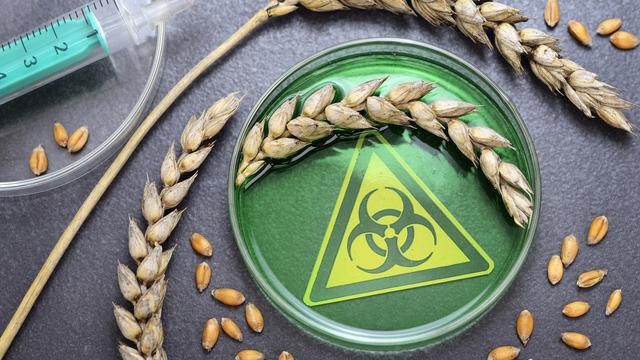
• Transgene-free strigolactone receptor editing confers viral resistance in rice
• GRAPE-LM evolves RNA aptamers in a single screening round

https://pir.sh/4B31yo4azG

#GeneEditing #CRISPR

Gene Editing Research Summary February 2026 - Summarized Science

Summary of key Gene Editing publications highlighting major findings, clinical relevance, and emerging research trends.

In an online survey in Spain (n=500), participants prioritised pesticide reduction when assessing potential benefits of #CRISPR. Two groups emerged: one motivated by environmental #sustainability, the other by health and sensory quality: doi.org/10.1186/s401... #GeneEditing #PlantBreeding #Health

Which traits drive consumer pr...
Which traits drive consumer preferences for gene-edited foods in Spain - Agricultural and Food Economics

This study examines consumer preferences for the potential benefits of CRISPR technology using a best–worst scaling (BWS) approach within an online survey of a representative Spanish sample. The BWS discrete choice experiment focuses on seven key environmental and health-related benefits of CRISPR, using tomatoes as a case study. The selected benefits are derived from science-based information and align with the EU regulatory context, following the European Commission’s 2023 proposal on gene-editing technologies. Estimates from a random parameter logit (RPL) model indicate that pesticide reduction is the most highly valued benefit, followed by water saving and health improvement, thereby highlighting the combined influence of environmental and personal benefits on consumer acceptance of genetically engineered food. The significant standard deviations in the RPL estimates reveal substantial heterogeneity in preferences, which is further examined by identifying two distinct consumer segments. While both segments strongly prioritise pesticide reduction, one is primarily motivated by environmental sustainability outcomes, whereas the other places greater emphasis on health and sensory quality improvements. These findings underscore the need for targeted communication strategies to address distinct consumer concerns, rather than a uniform approach.

SpringerLink

FDA lifted the clinical hold on Intellia’s MAGNITUDE Phase 3 (ATTR-CM). The headline says “resume.”

The real story: a safety reset—tighter selection + heavier liver monitoring + explicit mitigation steps.

Our take: “conditional confidence” is the new normal for one-and-done biology.

https://biotech.industryexaminer.com/crispr-safety-reset-intellia-fda-hold-lift/

#CRISPR #Biotech #ClinicalTrials #BiotechNews #technew

Throwback to one of my favorite lab successes from last year! 🧬

Image 1: The most beautiful pellet. Purified plasmid DNA, still in the wash solution, isolated via midiprep from E. coli that I cloned myself.
Image 2: Pure lab chaos. In the middle of the midiprep.
Image 3: The proof. 3158 ng/µL of isolated clean DNA measured on the Nanodrop. Yes, that is much xD
Image 4: And the happy ending. The gel image shows the successful transformation of the gene into Acetobacterium woodii. The new gene was inserted using CRISPR Cas via homologous recombination. Project goal achieved! Two new A. woodii strains that didn't exist before I created them. Proud parent moment. 🧬✂️

The goal of the project is to use A. woodii to produce bioalcohols like ethanol or 2‑butanol (that's my area) directly from CO₂ in the air. 🌍💚

#LabLife #MolecularBiology #CRISPR #GenomeEditing #Microbiology #Science #Research #Plasmid #Biotechnology

Most people learn about DNA in school. Few understand why its structure is one of the greatest engineering solutions in nature.

DNA is a double helix — two polynucleotide strands wound around a common axis, running antiparallel to each other (one 5'→3', the other 3'→5'). Diameter: 2 nanometers. Each full helical turn spans ~3.4 nm and contains 10 base pairs.

#Genomics #MolecularBiology #Biotechnology #Longevity #AgingResearch #DNA #Genetics #CRISPR #LifeSciences #Bioinformatics #Epigenetics

Master CRISPR technology and gene editing fundamentals to advance biotechnology research skills and innovate future precision medicine solutions.
#CRISPR #GeneEditing #Biotechnology #Genomics #Bioinformatics #MolecularBiology #LifeSciences #PrecisionMedicine #BiotechStudents #ResearchSkills