What is Global Warming? A look at the year 9

stop pollution photos

Global Warming is an issue that has captured worldwide attention in recent years. As the effects of climate change become increasingly evident, it is important to understand the basic concepts to take effective measures. In this article, we will focus on Global Warming from the perspective of ninth grade students. Throughout the year 9, students are expected to acquire greater knowledge on this subject and be prepared to take measures to mitigate it. We will explore the effects of Global Warming, the main causes and the actions that can be taken.

What are the main effects of Global Warming?

Global Warming has a series of negative effects on our planet. One of the most obvious is the increase in temperatures. As the average earth temperature increases, significant changes in climatic patterns are produced. This can lead to more frequent floods, prolonged droughts and more intense storms.

Another important effect of Global Warming is the melting of glaciers and polar caps. This contributes to the increase in sea level, which represents a threat to coastal communities worldwide. In addition, Global Warming also affects marine life, increasing the acidity of the oceans and damaging coastal ecosystems.

What are the main causes of Global Warming?

Global Warming is mainly caused by human activities that emit large amounts of greenhouse gases to the atmosphere. These gases, such as carbon dioxide (CO2) and methane, act as a “blanket” that catches heat inside the earth. Among the main sources of emissions are burning fossil fuels, deforestation and intensive agriculture.

At present, burning of coal, oil and natural gas for energy generation is the main source of CO2 emissions. In addition, transport and industry also contribute significantly to greenhouse gas emissions. Deforestation, on the other hand, plays an important role in reducing the ability of forests to absorb the CO2 of the atmosphere.

Actions to mitigate Global Warming

Despite the challenges involved in Global Warming, there are a number of actions that can be taken to mitigate its effects. First, it is important to promote energy efficiency and promote the use of renewable energy sources, such as solar and wind. This will help reduce greenhouse gas emissions and reduce our dependence on fossil fuels.

Another key measure is the conservation of natural resources, such as the restoration of degraded ecosystems and forest protection. The trees are excellent absorbing the CO2 of the atmosphere, so greater reforestation can have a significant impact on the reduction of Global Warming.

In addition, it is essential to promote education and awareness about Global Warming. Ninth grade students can play an active role in learning more on the subject and educate others. This may include the organization of school events, research projects and awareness campaigns in the community.

Conclusion

Global Warming is a global challenge that requires immediate action. In the year 9, students have the opportunity to learn more on this subject and take measures to mitigate it. Understanding the effects of Global Warming, the main causes and the actions that can be taken is essential for a sustainable future. When working together, we can make a difference and protect our planet for future generations.

prevent pollution hindi

Dive into Gringud.com for a closer look at the role of corporate responsibility in addressing global warming. ?? Discover how businesses can drive positive change! #CorporateSustainability #ClimateLeadership

#ClimateLeadership #CorporateSustainability

What is Global Warming? A look at the year 9

Dive into Gringud.com for a closer look at the role of corporate responsibility in addressing global warming. ?? Discover how businesses can drive positive change! #CorporateSustainability #ClimateLeadership

https://ibizaund.wordpress.com/2025/12/16/what-is-global-warming-a-look-at-the-year-9/

What is Global Warming? A look at the year 9

Dive into Gringud.com for a closer look at the role of corporate responsibility in addressing global warming. ?? Discover how businesses can drive positive change! #CorporateSustainability #Climate…

ECOBLOG

Oslo and São Paulo Win Bloomberg Award for Zero-Emission Transport Policies

Oslo & São Paulo Win 2025 Bloomberg Local Leaders Climate Award for Zero-Emission Transport Policies

The city of Oslo in Norway and the megacity of São Paulo in Brazil received international recognition on November 4, 2025, during the Local Leaders Climate Awards organized by Bloomberg Philanthropies in Rio de Janeiro. Both cities were celebrated in the “Clean, Reliable Transportation” category for implementing some of the most ambitious zero-emission transport policies on the planet. While Oslo was acknowledged for becoming a global pioneer in zero-emission heavy-duty transport, São Paulo earned the prize for the large-scale electrification of its urban bus fleet — one of the biggest programs of its kind in Latin America.

The ceremony took place during the COP30 Local Leaders Forum, just one week before the official start of the United Nations Climate Conference in Belém, Pará. The presence of Oslo’s Mayor Eirik Lae Solvik and high-level representatives from São Paulo highlighted the growing climate partnership between Norway and Brazil, two countries that, despite their geographic and economic differences, share a strong commitment to the energy transition.

Oslo’s winning initiative, titled “Pioneering city for Zero-emission heavy duty transport,” combines regulatory mandates, economic incentives, and infrastructure development to eliminate emissions from trucks, construction machinery, and other heavy vehicles operating within the city. Since 2019, Oslo has required that all new municipal contracts for transport services and construction sites be fulfilled exclusively with zero-emission vehicles.

The city eliminated tolls and congestion charges for electric trucks, introduced generous public procurement subsidies, and rapidly expanded a network of high-power charging stations capable of serving large vehicles. According to the city’s own data, by mid-2025 more than 70 % of new heavy-duty vehicles registered in the Oslo region were fully electric or hydrogen-powered, and the municipality achieved a 90 % reduction in direct emissions from its own logistics and construction activities compared to 2015 levels.

Mayor Eirik Lae Solvik, speaking at the award ceremony in Rio, emphasized the replicability of the model: “We want to show that zero-emission transport is not a future dream — it is happening today. With the right mix of carrots and sticks, any city can make the shift.” He also announced that Oslo is now sharing its technical standards and procurement templates with several Latin American cities, including São Paulo and Bogotá.

São Paulo, the largest city in the southern hemisphere with over 12 million inhabitants, presented its “Electrification of the São Paulo Bus Fleet — Municipal Program for Innovative Acquisition and Financing.” The program, launched in 2021 and accelerated under Mayor Ricardo Nunes, has already replaced more than 2,600 diesel buses with battery-electric models by November 2025, with a public commitment to reach 100 % electric buses on the municipal fleet by 2038. The city created an innovative financing mechanism that blends resources from the municipal budget, national development banks (BNDES), international climate funds (including the Green Climate Fund), and carbon-credit revenue generated by the avoided emissions. Private operators receive longer concession contracts and performance-based payments in exchange for faster fleet renewal.

The impact is already measurable: the electrified lines have reduced particulate matter emissions by up to 96 % and CO₂ emissions by approximately 120,000 tons per year, according to the São Paulo Secretariat of Green Environment and Climate. Passenger satisfaction has also increased thanks to quieter, smoother, and air-conditioned electric buses. The program has become a reference for other Brazilian state capitals and inspired the national “Combustível do Futuro” law currently under discussion in Congress.

The zero-emission transport achievements of Oslo and São Paulo stand out in a year when the Bloomberg Philanthropies Awards received more than 160 applications from 45 countries. The jury highlighted that both cities managed to combine scale, speed, and social inclusion in their policies — a rare combination in urban climate action.

Norway-Brazil Climate Connection Strengthens

The double victory also carries symbolic weight. Norway, through its International Climate and Forest Initiative and the Amazon Fund, is one of the largest international donors to Brazilian environmental policy. At the same time, Brazilian cities are increasingly looking to Norwegian expertise in electrification and circular economy solutions. The presence of the Norwegian Ambassador in Brazil, Odd Inge Kvalheim, at the award ceremony reinforced the message that bilateral cooperation is moving from rainforest protection to urban sustainability.

Other Brazilian winners in the 2025 edition included the states of Piauí (Power of Partnership category), the municipalities of Juiz de Fora (Energy Transition), Barcarena (Healthy Cities), Salvador (Sustainable Waste), and the host city Rio de Janeiro itself, which won in the “Safer Infrastructure” category for its Extreme Heat Response Protocol.

The recognition of zero-emission transport policies in both a Nordic capital of 700,000 inhabitants and a Latin American megacity of 22 million in the metropolitan area demonstrates that ambitious climate action is possible at any scale and income level when political will, innovative financing, and public-private collaboration align.

As the world prepares for COP30 in Belém, the Oslo and São Paulo success stories serve as powerful proof that cities remain the true laboratories of the global energy transition — and that zero-emission transport is no longer a niche experiment, but a mainstream solution ready for rapid replication.

👉 Share your thoughts in the comments, and explore more insights on our Journal and Magazine. Please consider becoming a subscriber, thank you: https://dunapress.org/subscriptions – Follow J&M Duna Press on social media. Join the Oslo Meet by connecting experiences and uniting solutions: https://oslomeet.org

References and Further Reading

  • Official 2025 Local Leaders Climate Awards winners list – Bloomberg Philanthropies
    https://bit.ly/4hEMcY4
  • Oslo Municipality – Zero-Emission Heavy Duty Transport Report (2025)
    https://www.oslo.kommune.no/politikk-og-administrasjon/miljo-og-klima/zero-emission-heavy-duty
  • São Paulo Prefecture – Electric Bus Program Dashboard (live data)
    https://www.prefeitura.sp.gov.br/cidade/secretarias/meio_ambiente/onibus-eletricos
  • C40 Cities Case Study – Oslo Fossil-Free Construction Sites
    https://www.c40.org/case-studies/oslo-fossil-free-construction-sites
  • SPTuris – São Paulo Bus Fleet Electrification Financing Model (2024)
    https://sptrans.com.br/electrificacao
  • Grokipedia entry on Urban Zero-Emission Zones (continuously updated)
    https://grokipedia.org/zero-emission-zones
  • #bloombergPhilanthropies #climateAwards #climateleadership #oslo #saoPaulo #urbanClimateSolutions #zeroEmissionTransport #zeroemission

    Oslo and São Paulo Win Bloomberg Award for Zero-Emission Transport Policies

    🌍 BREAKING: Oslo (Norway) and São Paulo (Brazil) have been awarded by Bloomberg Philanthropies for bold zero-emission transport policies at COP30 pre-event in Rio. A historic Norway-Brazil climate alliance in action! ⚡🚛 #ClimateLeadership #ZeroEmission

    https://dunapress.org/oslo-and-sao-paulo-win-zero-emission-transport/

    Oslo and São Paulo Win Bloomberg Award for Zero-Emission Transport Policies - JM Duna Press

    Zero-Emission Transport: Oslo and São Paulo were honored at the 2025 Bloomberg Philanthropies Local Leaders Climate Awards for pioneering zero-emission heavy-duty transport and bus fleet electrification.

    J&M Duna Press
    Prince William Urges Unity and Courage to Protect the Planet in Powerful COP30 Speech | APT

    YouTube

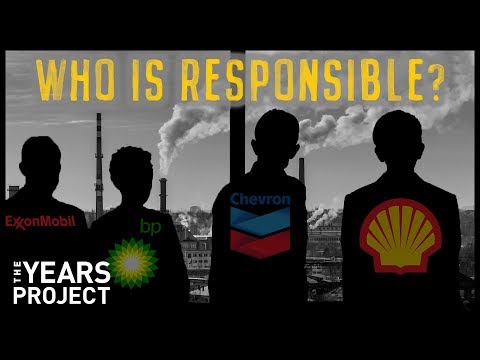
    As we engage this new year, this is a great video (3 minutes long) to watch and ask ourselves, what's changed in the past year. We've known what we know for decades, and these very companies were some of the first to sound the alarm. Now, what are we doing about it?

    https://youtu.be/uEDIDxqxK0E

    #ClimateAction #CorporateSustainability #ESG #ClimateLeadership #NetZero #BusinessAndClimate #SystemsChange

    These Companies Contributed The Most To Climate Change

    YouTube
    Hoekstra’s mano a mano with China wobbles climate summit

    EU’s top climate envoy’s war of words sparks fears of diplomatic discord ahead of COP30.

    POLITICO

    Global Warming impacts on the ecosystem

    summarize environmentalism

    Global Warming is a phenomenon that has been subject to global concern due to its serious repercussions on the environment. One of the aspects most affected by Global Warming is the ecosystem, which is the complex system of interactions between living beings and their surroundings. In this article, we will explore the impacts of Global Warming on the ecosystem and its long -term consequences.

    change in temperatures

    One of the most obvious impacts of Global Warming in the ecosystem is the increase in temperatures. This increase affects organisms at different levels. For example, species that are sensitive to high temperatures can be affected by a decrease in their population or even extinction. In addition, high temperatures can also alter the patterns of reproduction and migration of species.

    In addition, high temperatures can also have an impact on aquatic ecosystems. For example, oceanic currents are affected by the increase in temperature and this can alter marine habitats. In addition, the increase in water temperature can cause the massive death of coral species, which has a significant impact on marine biodiversity.

    Derret of glaciers

    Another important impact of Global Warming in the ecosystem is the melting of glaciers. This not only increases sea levels, but also affects species that depend on glacier ecosystems. For example, polar bears, which depend on glaciers to hunt seals, are affected by the decrease in marine ice. In addition, the melting of glaciers can also affect fresh water ecosystems, since sudden floods and changes in the chemical composition of water can occur.

    alteration of precipitation patterns

    Global Warming also has an impact on precipitation patterns, which can have significant consequences on ecosystems. For example, some regions may experience more frequent and prolonged droughts, which affects the availability of water and the survival of species. Likewise, other regions may experience torrential rains and floods, which can cause significant damage to terrestrial and aquatic ecosystems.

    species extinction

    One of the most alarming impacts of Global Warming in the ecosystem is the extinction of species. Species may not be able to adapt quickly enough to changes in their environment caused by Global Warming, which can lead to its extinction. This not only has an impact at the biodiversity level, but it can also affect ecosystems as a whole. Each species has an important role in the balance of ecosystems, and the loss of a species can have cascade effects throughout the ecosystem.

    CONCLUSIONS

    Global Warming has a significant impact on the ecosystem. The changes in temperatures, the melting of glaciers, the alteration of precipitation patterns and species extinction are just some of the impacts we can observe. It is essential that we take urgent measures to reduce greenhouse gas emissions and mitigate the effects of global heating on the ecosystem. If we do not act now, the consequences can be devastating for the future of our planet and the species that inhabit it.

    tpcg pollution control

    Dive into Gringud.com for a closer look at the role of corporate responsibility in addressing global warming. ?? Discover how businesses can drive positive change! #CorporateSustainability #ClimateLeadership

    #ClimateLeadership #CorporateSustainability

    Global Warming impacts on the ecosystem

    Dive into Gringud.com for a closer look at the role of corporate responsibility in addressing global warming. ?? Discover how businesses can drive positive change! #CorporateSustainability #ClimateLeadership

    https://ibizaund.wordpress.com/2025/10/12/global-warming-impacts-on-the-ecosystem/

    Global Warming impacts on the ecosystem

    Dive into Gringud.com for a closer look at the role of corporate responsibility in addressing global warming. ?? Discover how businesses can drive positive change! #CorporateSustainability #Climate…

    ECOBLOG
    #PapuaNewGuinea’s bold climate policies are earning global praise! With strong commitments and Indigenous leadership, the country is setting a powerful example for climate action. 🌍👏
    🔗 https://abcnews.go.com/International/wireStory/papua-new-guineas-bold-climate-action-earns-praise-125206356?utm_source=mastodon&utm_medium=social&utm_campaign=fedica-Autoposting
    #ClimateLeadership #Sustainability #GlobalAction
    Papua New Guinea's 'bold climate action' earns praise from Guterres

    U.N. Secretary-General Antonio Guterres has congratulated Papua New Guinea on its climate leadership and praised the South Pacific nation for its role in initiating the International Court of Justice's advisory opinion on climate change

    ABC News