@PeterRu
Yes of course - because it would stifle investment if companies were held accountable for lying about the hazards their products cause and continued to market them as perfectly safe for over 50 years since fairly robust data - including by the industry - identified the primary hazard ( more than 100 years after the basic science suggested the hazard. How can we ever make money if we have to be responsible that our products are safe to use as directed? /s

How big are the damages? Just think about:
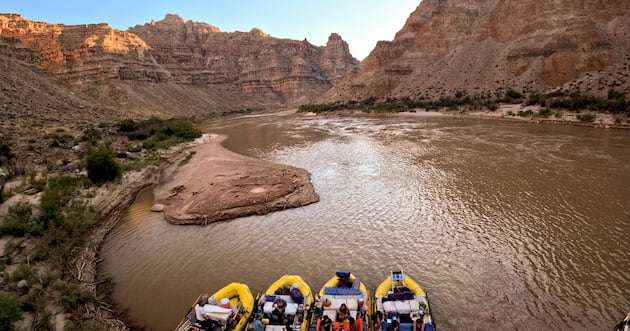
Extreme drought - for example, https://www.deseret.com/environment/2026/03/25/explainer-on-colorado-river-negotiations/

Forest fires

Extreme weather & floods

Agricultural losses

In short: Big, very big-see eg https://www.nature.com/articles/s41586-026-10272-6

#ClimateCrisis #CorporateClimateLies #ClimateDamage #ClimateCost

A guide to the Colorado River water crisis

Facing worsening drought and shrinking river levels, the seven Colorado River basin states remain deadlocked over water cuts. What comes next?

Deseret News

@B123

I appreciate you making that point, because I do agree the cost in lives matters. I would not have this war for that reason.

I was intending to speak narrowly of people's obsession with price, because I think many people complaining about the price WOULD accept casualties in exchange for their own comfort.

The climate issue itself ALSO has a cost in lives, of course. Sadly, many of those casualties would be seen as acceptable by far too many of us ... even if (though we never phrase it that way) our own children may bear that cost.

Denial abounds.

So I'm not even saying the Iranian people should pay that cost ahead of others on Climate, just that climate's a cost everyone will pay if we don't address this. It's easy to try and talk about this in terms of money, not lives, but money is just a proxy for priority. And many lives still hang in the balance in a variety of ways.

Sometimes I hear that we can't afford to do the things we need to do for climate because they're too expensive, which I hear as we needn't or mustn't prioritize this because money tells us that it's not a priority. And that's just not true. Once we get to talking like that, we need to talk about the fact that money is not even serving the societal purpose that it actually needs to.

As proof that I do in fact think of lives as well, I offer this cross-reference to my 2010 essay, The Cost. It illustrates another monetary issue, sadly also tied to the Middle East. But I mention it more because it offers another way to think about the relationship between money and lives in a slightly different way (complementary not competing) than you and I are doing here, by opportunity cost.

All of these different angles matter. And we need not to be nationalistic about these costs. Wars are rarely instigated by the ordinary people of any country. They are mostly indulgences of the Rich and powerful, adequately detached, able to think of lost lives as a budgetable expense because they and theirs are not part of that budget. The Draft was a scary concept, but it gave everyone a stake. Many were able to relax when we move to an "all volunteer" army. But they did not look closely at the dark reasons some are driven to volunteer. And war should not be something one can relax from.

The Cost (my 2010 essay on Iraq War cost)
https://netsettlement.blogspot.com/2010/08/the-cost.html

#climate #ClimateCost #cost #money #lives #TheDraft #war #gasoline #GasPrices #IranWar #IraqWar #OpportunityCost #HealthCare

The Cost

Kent Pitman's blog. Independent, progressive views on Society, Technology, Social Justice and Climate, or sometimes poetry, philosophy, or history.

Ten most costly climate-related disasters this year caused €100bn damage

Californian wildfires were the most expensive financially

The Irish Times
Ocean Damage Nearly Doubles the Cost of Climate Change - Inside Climate News

The global cost of greenhouse gas emissions are nearly double what scientists previously thought, according to a study published Thursday by researchers at the University of California San Diego’s Scripps Institution of Oceanography.  It is the first time a social cost of carbon (SCC) assessment—a key measure of economic harm caused by climate change—has included […]

Inside Climate News

@WBOrcutt @bicmay (2/2) I think the biggest challenges we face are:
a) getting the populace to support addressing the infrastructure barriers and needed changes, given the resistance I see in San Francisco to dedicated bike lanes, zoning changes, funding for transit (especially given all the competing demands). (and I fear the incentives of large corporate interests (eg Amazon, supermarket conglomerates, Uber) coupled with peoples failure to comprehend the #ClimateCost of "convenience" are intrinisic barriers to addressing the infrastructure barriers)
b) Changing diets - Extrapolating from a personal POV, we cook most of our meals, and the cooking routines need to be changed to move to a more plant based diet. For me that is a harder challenge than most of the behavioral changes - not that I object to a low animal protein diet - the barrier is learning to prepare those meals. Old dogs and new tricks sort of problem, I guess. Slowly making progress, much less red meat now, etc

#BarriersToClimateAction

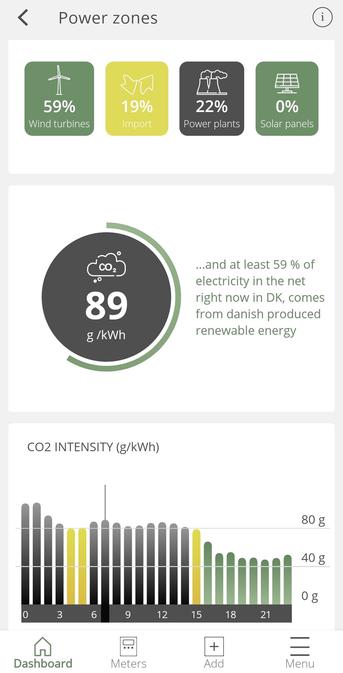
I guess I'll wait with the dishwasher till 15h.. nothing smart with my washer other than me😅

Such an easy way her in #Denmark to use the (yes, free, non foss) [Watts - energieassistent](https://watts.dk/) app for checking current average CO2 emissions per kWh or electricity price. It also connects to the electricity provider to show your consumption.

Are you using something like this? Are you adjusting your behaviour based on it?

#climatecost #climatecatastrophe #smallstepsforclimate

Watts - energiassistent • Brug strøm med grøn omtanke | Hent appen

Få nemt overblik over din elforbrug ⚡ Watts viser dig vejen frem til en grønnere hverdag 🌱 Værktøjer til fuld kontrol over hjemmet, og strømbudgettet.

Watts Energiassistent