 WE AND THE COLOR
Call It Home: The Details That Matter—Book by Amber Lewis
Is Amber Lewis’s Book Call It Home the Interior Design Guide You’ve Been Waiting For?
Honestly, I think that many interior design books give you beautiful rooms and almost nothing else. You flip through the photographs, feel briefly inspired, and then close the cover without any real idea of how to get from where you are to where those pages took you. Call It Home: The Details That Matter by Amber Lewis does something fundamentally different—and that difference is exactly why it deserves a place on your shelf.
Published in October 2023 by Clarkson Potter, this national bestseller runs 288 pages and weighs over three pounds. It’s a proper book. Moreover, it reads like one. Lewis—the founder of Amber Interiors and author of the earlier Made for Living—doesn’t just show you finished rooms. She actually walks you through her thinking, material by material, decision by decision. That’s rare in this genre, and it matters more than you might expect.
The book is available on AmazonSo what makes Call It Home stand out among home decorating books? And is it worth your time and money? The short answer is yes. The longer answer requires unpacking what Lewis actually built here—and why her approach to interior design details reframes the entire conversation around creating a beautiful home.
Call It Home: The Details That Matter—Home Decorating & Interior Design Book from Clarkson Potter The book is available on AmazonWhat Does “Detail-Oriented Interior Design” Actually Mean?
The phrase gets used constantly in design circles, but rarely with any precision. Lewis gives it one. Her entire philosophy centers on what I’d call the Detail Primacy Framework—the idea that a room’s success isn’t determined by its furniture layout or its color palette. Instead, it’s governed by the cumulative weight of small, specific decisions: the bullnose edge on a marble countertop, the pleat style of a drape, the wood grain direction in a floor installation.
This framework has real implications for how you approach a project. If the details drive the outcome, then you can’t make them afterthoughts. You have to bring them to the front of your decision-making process. Lewis structures the book accordingly. She doesn’t bury material choices in a final chapter on “finishing touches.” Instead, she builds the book around eight specific homes she designed—including her own—and uses each one as a vehicle for demonstrating how early material decisions shape everything downstream.
Think of it as a design logic that runs counter to most renovation advice you’ve encountered. The conventional sequence is planning the layout, choosing the furniture, and then picking finishes. Lewis essentially inverts this. She argues that fabric, paint, tile, and flooring should inform the larger decisions, not follow them. That’s a genuinely useful reorientation for anyone who has ever felt paralyzed by the sheer number of choices a renovation involves.
The Eight-Home Structure: More Than a Portfolio
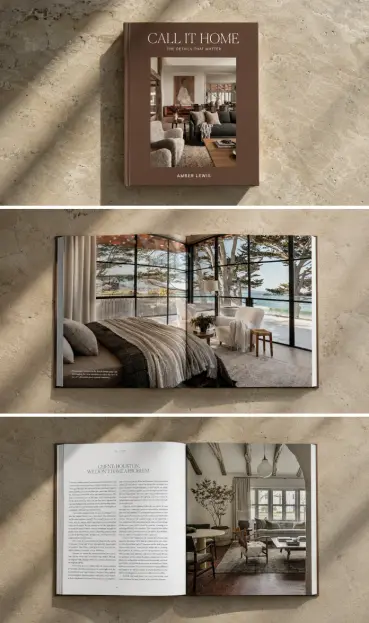
It would be easy to read the eight-home framework as a portfolio showcase—and yes, the photography by Shade Degges is stunning. But the structure serves a more deliberate purpose. Each home gives Lewis a different contextual canvas. Some are mountain retreats. Others are surfside properties. Her own home sits in the mix as well, which adds a layer of honesty to the project that’s hard to fake.
What Lewis demonstrates through this variety is what I’d call Contextual Material Sourcing—a principle she applies consistently but rarely names explicitly. Every home pulls its material palette from its immediate environment. A coastal property uses textures and tones that echo sand, driftwood, and bleached stone. A mountain retreat draws on raw timber, dark iron, and dense wool. The result is a look that feels site-specific and inevitable rather than imposed.
This isn’t just aesthetics. It’s a practical decision-making tool. When you’re overwhelmed by the infinite options at a tile showroom or a fabric house, asking, “What does this place actually look like?” turns out to be a remarkably efficient filter. Lewis makes that process visible in a way that’s genuinely transferable to your own projects.
Furthermore, the personal essays scattered throughout each section add texture that most design books completely skip. You learn about the challenges her team faced, the mistakes she navigated, and the reasoning behind choices that might otherwise look effortless. That transparency is valuable. It demystifies the design process without making it seem ordinary.
Photography That Works as Reference, Not Just Inspiration
Shade Degges shoots these interiors with a precision that matches Lewis’s editorial intent. The more than 200 images in the book aren’t just atmospheric. They’re instructional. You can actually identify the specific details that Lewis describes in the text—the tile grout width, the curtain break on the floor, and the way a plinth block transitions between a baseboard and a door casing.
That level of visual specificity is unusual and genuinely useful. Many readers will use these photographs the way Lewis explicitly suggests: as reference images to bring to their own contractors, tile suppliers, or fabric showrooms. That’s a smart framing, and it positions the book as a working document rather than a coffee table object.
Amber Lewis’s California-Inspired Style, Decoded
Lewis is widely known for her signature California aesthetic—eclectic, laid-back, warm, and tactile. But Call It Home goes further than previous documentation of that style. It gives you the underlying logic rather than just the finished look. Understanding that logic is what separates readers who can apply these ideas from those who simply admire them.
The core of Lewis’s California-inspired style rests on what I’d call the Layered Restraint Principle. She introduces pattern, texture, and material variety in quantities that feel rich but never chaotic. The restraint isn’t minimal—it’s calibrated. A room might have a bold tile floor, a vintage rug, a linen sofa, and a painted plaster wall. Individually, any of these elements could be overwhelming. Together, they hold because Lewis controls the tonal range and material weight with precision.
Practically speaking, this means she pays close attention to the value (lightness or darkness) of each element rather than just its hue. Two patterns can coexist if their values are close. Two materials can compete if their values clash. That’s a simple but underused framework that any decorator can apply immediately.
Additionally, her approach to fabric selection deserves specific attention. Lewis treats upholstery as a long-term investment and chooses accordingly, favoring durability and natural texture over trend. She gives you enough specificity about fiber content, weave structure, and performance ratings to actually make informed choices at a fabric showroom. That’s rare, and it’s directly useful.
Home Decorating Book or Renovation Manual? The Answer Is Both
One of the strongest arguments for Call It Home is its genuine range of applicability. Lewis explicitly addresses three different reader situations: decorating a single room, renovating an entire house, and building new construction from scratch. Each requires a different entry point into the design process, and she adjusts her guidance accordingly.
For single-room decorating, her focus on material details is immediately applicable. You don’t need a contractor or an architect. You need to make better choices about flooring, paint, fabric, and trim—and Lewis gives you a decision-making structure for all of them.
For full renovations, the guidance on team assembly is particularly strong. Lewis is frank about the fact that the right contractor relationship is a design variable, not just a logistical one. She shares how she approaches finding and vetting her team, how she communicates material specifications, and how she manages the gap between design intent and construction execution. This is information most design books completely ignore.
For new construction, the sequencing advice becomes critical. Decisions about rough-in plumbing, electrical placement, and structural openings all affect what’s possible with finishes later. Lewis makes that interdependency clear in a way that’s genuinely helpful if you’re early in a build process.
The Interior Design Details That Matter Most, According to Lewis
Lewis is specific enough throughout the book that you can extract a working hierarchy of design details. Based on her emphasis and the weight she gives different choices, here’s how that hierarchy roughly stacks up:
Flooring comes first. Lewis argues—convincingly—that flooring sets the tonal and textural baseline for everything else in a room. Get it wrong, and no amount of furniture or textile layering will fully compensate.
Paint and plaster finishes come second. Lewis is particularly strong on the difference between flat, eggshell, satin, and specialty finishes—not just in terms of sheen but in terms of how they interact with light at different times of day. That time-of-day consideration is underemphasized in most design writing.
Tile selection is third, with specific attention to grout color as a design variable in its own right. Lewis makes the case that grout color can either advance or recede a tile pattern and that most people make the choice too quickly.
Fabric and upholstery close the hierarchy—not because they matter less, but because they’re more replaceable than the fixed elements above them. Lewis treats this replaceability as a reason to take more risks with textiles than with tile.
What Call It Home Gets Right That Most Interior Design Books Don’t
The home decorating book market is crowded. Distinguishing a genuinely useful book from a beautiful but ultimately decorative one requires asking a specific question: after reading this, can you actually do something you couldn’t do before? With Call It Home, the answer is consistently yes.
Lewis introduces what I’d call the Decision Sequencing Method—a practical framework for approaching a design project that prioritizes fixed elements before flexible ones, structural decisions before decorative ones, and site context before personal preference. This sequence isn’t revolutionary, but articulating it clearly and demonstrating it across eight projects makes it teachable in a way that most design intuition isn’t.
The book also earns points for intellectual honesty. Lewis doesn’t pretend that every project was easy or that every choice was right the first time. The personal essays include genuine admissions of difficulty, adjustment, and revision. That honesty makes the guidance more credible, not less.
Furthermore, Lewis doesn’t aestheticize poverty. She acknowledges that the homes in this book represent a significant investment. But she’s also thoughtful about which elements of her approach are budget-scalable and which are not. That distinction matters for readers who are working with real constraints.
Who Should Buy This Book?
Anyone planning a renovation in the next two years should own this book. The decision-making frameworks Lewis provides will save you money by helping you avoid costly material changes mid-project. They’ll also save you time by giving you a clearer vocabulary to communicate with architects, contractors, and suppliers.
Aspiring interior designers and design students will find it valuable as a case study collection. Eight complete projects with full material transparency and personal narrative are a substantial body of documented professional practice.
Design enthusiasts who just love beautiful spaces will obviously find plenty to enjoy in Degges’s photography. But this group should know they’re getting significantly more than photography. If they engage with the text seriously, they’ll come away with a fundamentally different understanding of how professional interior designers actually work.
A Forward-Looking Prediction: Why the “Detail-First” Approach Will Define the Next Decade of Interior Design
The broader design culture is moving in Lewis’s direction, and Call It Home is early documentation of that shift. For the past decade, interior design conversation has been dominated by broad aesthetic categories—minimalism, maximalism, Japandi, cottagecore. These categories are useful for mood-boarding but largely useless for making actual decisions in a hardware store or a tile showroom.
The next phase of design literacy—already emerging in professional practice and slowly entering consumer culture—will be material-specific. People will care about the difference between a honed and a polished finish. They’ll understand why curtain header tape affects a room’s perceived ceiling height. They’ll know what “grain direction” means in the context of wood flooring installation.
Lewis is already operating in this space. Call It Home is a primary document of what detail-first interior design looks like at a high level of execution. As the broader conversation catches up, this book’s relevance will increase, not decrease. That’s a meaningful thing to say about a design book in a category where most titles are dated within five years of publication.
The California-inspired aesthetic Lewis has built her reputation on will also continue to influence design internationally. Its emphasis on natural materials, site responsiveness, and casual warmth is directly countercultural to the hyper-polished, heavily staged aesthetic that dominated the previous decade. That countercultural position tends to have staying power.
My Personal Take on Call It Home
I’ve spent time with a lot of interior design books. Many of them are genuinely beautiful. Fewer of them are genuinely useful. Call It Home manages to be both, and that combination is harder to achieve than it sounds.
What I find most valuable is Lewis’s commitment to transparency about process. She doesn’t just show you the finished bullnose edge—she tells you why she chose marble over quartz in that particular context, what the alternatives were, and what would have happened if she’d gone a different direction. That level of reasoning is what separates a design education from a design inspiration.
The book also changed how I look at flooring. Lewis’s argument that flooring sets the entire tonal baseline for a room sounds obvious when you say it out loud, but I hadn’t fully internalized it before reading her explanation. Now I can’t look at a room without registering the floor first. That’s the mark of a book that actually shifts your perception—not just your Pinterest board.
The book is available on AmazonIf I had one critique, it’s that the book occasionally assumes a level of access—to high-end tile showrooms, to experienced craftspeople, to specialty material suppliers—that not all readers will have. Lewis is generally thoughtful about this, but there are moments where a note about alternatives would have been welcome. That’s a minor friction point in an otherwise excellent book.
Frequently Asked Questions About Call It Home by Amber Lewis
Who is the author of Call It Home?
Amber Lewis is the author. She’s the founder and principal of Amber Interiors, a full-service interior design firm based in California. She also authored Made for Living, her earlier book. Call It Home was photographed by Shade Degges, with contributions from Cat Chen.
What is Call It Home about?
Call It Home: The Details That Matter is an interior design book that focuses on the material details behind beautiful home design. Lewis walks through eight homes she designed—including her own—explaining her decision-making process for flooring, paint, tile, fabric, finishes, and more. The book covers decorating a single room, full renovations, and new construction.
Is Call It Home suitable for beginners or only for professionals?
It’s suitable for both. The language is accessible and non-technical. Lewis explains industry concepts clearly enough for beginners while providing enough depth to be genuinely useful for professionals and advanced enthusiasts. The decision-making frameworks she introduces work regardless of experience level.
How many pages does Call It Home have?
The book runs 288 pages and contains more than 200 photographs. It was published by Clarkson Potter on October 17, 2023. The ISBN-13 is 978-0593235522.
What is Amber Lewis’s design style?
Lewis is known for a California-inspired aesthetic that she describes as eclectic and laid-back. It favors natural materials, warm tones, tactile textures, and layered patterns. Her work consistently draws inspiration from each project’s surrounding environment, creating interiors that feel site-specific rather than generically styled.
Does Call It Home include advice on working with contractors?
Yes. Lewis devotes meaningful attention to team assembly and client-contractor communication. She discusses how to find the right contractors, how to communicate material specifications effectively, and how to manage the gap between design intent and construction execution.
How does Call It Home differ from Made for Living?
Made for Living, Lewis’s first book, focused more broadly on her design aesthetic and lifestyle. Call It Home goes deeper into the technical and material specifics of her process. It’s more instructional and more directly applicable to readers working on their own projects.
What types of rooms does Call It Home cover?
The book covers living rooms, kitchens, dining rooms, entryways, bedrooms, and bathrooms. The eight featured homes also include outdoor spaces and transitional areas. The coverage is broad enough to support whole-home projects as well as single-room renovations.
Discover other inspiring books on art and design here at WE AND THE COLOR.
#AmberLewis #book #CallItHome #ClarksonPotter #home #homeDecoration #interiorDesign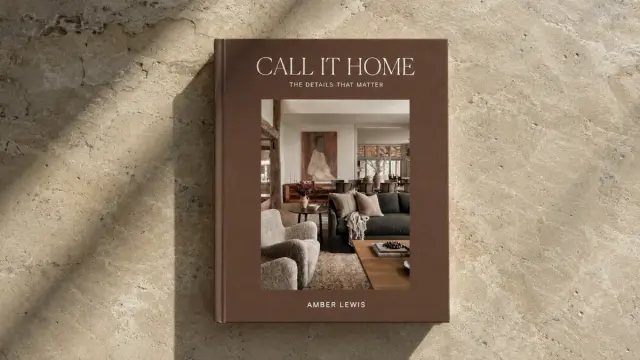

 José Leitão