 WE AND THE COLOR
How to Live with Objects Is the Interior Design Book That Finally Gets It Right
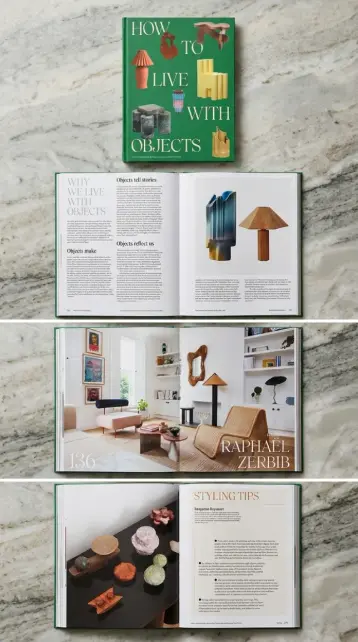
Most interior design books tell you what to buy. Monica Khemsurov and Jill Singer wrote one that asks a far better question: why does any of it matter? How to Live with Objects: A Guide to More Meaningful Interiors, published by Clarkson Potter in November 2022, is not a decorating manual. It’s a manifesto for a more intentional relationship between people and the things they choose to live with. And right now, that message couldn’t be more urgent.
We are living through a profound recalibration of what home means. After years of algorithm-driven aesthetics and “shop-the-look” culture flattening interiors into interchangeable moods, people are starting to push back. The living room is not a brand. Your bookshelf is not a backdrop. Your objects tell the world who you are — or who you’re becoming. Khemsurov and Singer understood this years before it became a cultural conversation.
As cofounders of Sight Unseen, one of the most influential independent design publications in the United States, they have spent over a decade tracking the people who make design objects and the people who live with them. This book distills that experience into 320 richly visual pages. It covers vintage hunting, collecting philosophies, styling principles, and conversations with creatives like artist Misha Kahn and musician Lykke Li about the specific objects that shape their lives.
The book is available on AmazonThis is not a book you read once and shelve. It’s a reference. A point of view. A challenge to look around your home and ask harder questions.
How to Live with Objects: A Guide to More Meaningful Interiors, a book written by Monica Khemsurov and Jill Singer, and published by Clarkson Potter. The book is available on AmazonWhat Does It Mean to Truly Live with Objects?
The phrase “live with objects” sounds passive. You own things. They sit in your space. But Khemsurov and Singer reframe this entirely. Living with objects means entering into a relationship with them. It means choosing things that carry personal meaning, emotional charge, or visual tension that sustains your interest over time.
Think about the last object you bought for your home. Did you buy it because an algorithm suggested it? Because it matched a color palette you saw on Pinterest? Or because something about it genuinely stopped you — its material weight, its strange proportions, its history? The gap between those two motivations is exactly what this book explores.
Khemsurov and Singer introduce what I’d call the Object Intention Gap — the editorial construct that names the distance between acquiring objects by default and acquiring them by design. Most of us furnish our homes in the first mode. We fill space, follow trends, and buy things that look fine together. The result is a home that is comfortable but anonymous, and that uneasy feeling is hard to name until someone names it for you.
This book names it. That alone makes it worth your time.
The Anti-Decorating Philosophy Behind the Book
Khemsurov and Singer have deliberately positioned How to Live with Objects as an anti-decorating book. That framing is precise, and it matters. Traditional decorating is outward-facing. It optimizes for appearance. It asks: Does this look good? The Sight Unseen philosophy is inward-facing. It asks: Does this mean something to you?
This shift is not anti-aesthetic. The book is spectacularly beautiful. Its 320 pages are filled with real homes that are visually arresting, eccentric, and layered with texture and history. But none of them looks like a showroom. They look like someone actually lives there — someone with opinions, obsessions, and taste developed over years of paying attention.
The Sight Unseen Aesthetic Framework
Throughout the book, Khemsurov and Singer operate with what functions as a consistent aesthetic philosophy. I’ll name it here as the Authentic Density Framework — another editorial construct drawn from the book’s recurring arguments. It holds three principles.
First, density matters more than minimalism. A carefully chosen abundance of objects communicates personality far more effectively than an edited-down emptiness. Second, friction is valuable. Objects that slightly clash, that create visual tension, that don’t obviously belong together — these create the sense of a lived-in, thinking space. Third, legibility is the goal. Your home should be readable as yours. A visitor should understand something true about you just by looking at your shelves.
These principles run through every home tour and every interview in the book. They’re not stated explicitly in this language, but they operate like a design grammar beneath the surface.
How to Live with Objects: What the Book Actually Covers
The book is divided into several distinct modes. First, it establishes philosophy — the foundational arguments about why objects matter and how our relationship to them has been warped by consumer culture and social media performance. Then it moves into methodology: how to find objects, how to evaluate them, how to acquire them intentionally.
The vintage-hunting section deserves particular attention. Khemsurov and Singer treat vintage collecting not as a budget alternative to new furniture but as a discipline with its own skills and rewards. They argue that searching for objects — at flea markets, on eBay, through dealers, at estate sales — develops your eye in ways that browsing a retail site never can. The hunt is pedagogical. It teaches you what you actually respond to, separate from what you’ve been told to want.
Object Resonance vs. Object Compliance
Here, I want to introduce another framework that emerges from the book’s logic: the distinction between Object Resonance and Object Compliance. Both are editorial constructs to clarify the authors’ implicit argument.
Object Compliance is buying things that comply with a pre-existing aesthetic plan. You have a mood board. You source objects that fit it. The result is coherent but closed. Object Resonance is buying things that genuinely resonate — that produce a reaction in you that you didn’t entirely predict. The result is messier but alive. Khemsurov and Singer consistently advocate for resonance over compliance, even when it creates visual friction.
This matters practically. It means you should probably trust the ceramic vessel that makes you feel something strange over the lamp that matches your sofa. Furthermore, it means your home can hold contradictions. And it means you don’t need a coherent style identity to have a meaningful interior.
Why Sight Unseen’s Approach Is Different from Traditional Interior Design Advice
Most interior design content operates on the assumption that aesthetics are learnable formulas. Layer textures. Various heights. Use odd numbers. These rules are not wrong, exactly. But they treat the home as a visual problem to solve rather than a relational space to inhabit.
Sight Unseen’s editorial perspective has always pushed against this. Since Khemsurov and Singer launched the magazine, they have focused on the story behind objects and the people who make and collect them. That human-centered lens is fully present in this book. Every home tour includes conversations with the residents. Every object has a context. The book communicates, consistently, that design objects are not inert — they carry meaning, history, and intention.
The Role of Creatives in the Book’s Narrative
The interviews with figures like Misha Kahn and Lykke Li are not celebrity endorsements. They’re case studies. Khemsurov and Singer use them to demonstrate how creative people — people who think professionally about form, material, and meaning — actually live with objects in practice.
The results are instructive. These are not pristine, curated environments. They are densely layered, sometimes chaotic, deeply personal spaces where every object has earned its place. That portrait of intentional living is more useful than any styling tip. It shows you what it looks like when someone has genuinely developed their relationship to objects over time.
How to Use This Book as a Collecting Guide
One of the most practically useful aspects of How to Live with Objects is its guidance on developing a collecting practice. Khemsurov and Singer are not prescriptive — they don’t tell you what to collect or how much to spend. Instead, they give you a framework for making better decisions.
The core argument is that collecting develops your eye. The more objects you evaluate, handle, research, and compare, the more calibrated your sense of quality, originality, and personal resonance becomes. This is what distinguishes a collector from a shopper. A shopper makes decisions based on availability and price. A collector makes decisions based on accumulated knowledge and genuine desire.
Building an Object Biography
Here I want to introduce one more original concept drawn from the book’s logic: the Object Biography. This editorial construct describes the history of ownership, use, and meaning that an object accumulates over time. Khemsurov and Singer are deeply attentive to this. They advocate for objects that have lived — vintage pieces, handmade items, things that carry the evidence of their making or their past.
An Object Biography makes a piece more meaningful to live with. You know something about where it came from. You can trace its material, its maker, and its journey to your shelf. That knowledge changes how you perceive the object. It becomes a node in a larger story rather than a static possession.
This is why the book argues for slowing down the acquisition process. The more you know about an object before you acquire it, the richer your relationship to it will be.
The Broader Cultural Significance of Meaningful Interiors
It would be easy to read How to Live with Objects as a design book and miss its cultural argument. But the book is making a point about identity, authenticity, and resistance to consumerism that extends well beyond interior design.
We are surrounded by systems designed to homogenize our taste. Algorithmic recommendation engines surface the same objects to millions of people simultaneously. Fast-furniture brands offer the illusion of style at the cost of individuality. Social media rewards aesthetics that photograph well over those that actually function as lived environments. Against all of this, Khemsurov and Singer argue for the radical act of developing your own eye.
The Post-Algorithm Interior
I’d predict that the Post-Algorithm Interior will become a defining aesthetic movement of this decade. This is my own editorial forecast, not a claim made explicitly in the book, but it builds directly on the authors’ logic. As AI-driven recommendations grow more powerful, the homes that resist algorithmic curation will become more culturally significant. The ability to furnish a space with genuine personal intention will be increasingly rare — and increasingly valued.
Khemsurov and Singer’s book arrives at exactly the right moment to prepare us for this shift. It gives us the vocabulary, the methodology, and the inspiration to build homes that are authentically ours.
Who Should Read How to Live with Objects
The book explicitly addresses collectors, design lovers, and complete novices. That range is genuine. You don’t need a background in design to benefit from this book. You need curiosity and willingness to pay attention to your own responses.
That said, certain readers will find it particularly resonant. If you’ve ever walked into someone’s home and felt immediately that you understood something true about them — that’s the experience this book teaches you to cultivate in your own space. If you’ve ever bought a “safe” piece of furniture and quietly regretted it, this book will help you understand why and what to do differently next time.
It’s also genuinely useful for people working with limited budgets or spaces. Khemsurov and Singer are explicit that intentional living with objects has nothing to do with how much you spend. Some of the most compelling homes in the book are built around flea market finds and inherited pieces. The principle is always the same: choose things that mean something to you, and learn to display them in ways that honor that meaning.
How to Live with Objects: My Take as a Design Critic
Personally, I find this book significant for a reason that goes slightly beyond its practical content. It’s one of the very few interior design books that treats the reader as a thinking person with their own developing taste, rather than as a consumer who needs to be pointed toward better purchases.
The design publishing space is crowded with books that are essentially extended product catalogs — beautiful objects photographed in beautiful rooms, with shopping information attached. There’s nothing wrong with that genre, but it doesn’t actually change how you think. How to Live with Objects tries to change how you think. That’s a harder and more valuable project.
I can imagine that some readers will want more systematic guidance — clearer principles, more explicit frameworks, step-by-step processes for building a collection. Khemsurov and Singer resist that kind of prescription, which is philosophically consistent but occasionally frustrating if you’re looking for concrete starting points. Then again, the resistance to formula is the whole point.
What stays with me most is the book’s core argument that your home is not an aesthetic project — it’s a biographical one. The objects around you are, collectively, a portrait of who you are. They deserve the same care and intentionality you’d bring to any other form of self-expression. That’s a genuinely useful idea. And it’s delivered here with intelligence, warmth, and extraordinary visual power.
The book is available on AmazonBook Details: How to Live with Objects
Title: How to Live with Objects: A Guide to More Meaningful Interiors
Authors: Monica Khemsurov and Jill Singer
Publisher: Clarkson Potter
Publication Date: November 15, 2022
Pages: 320
ISBN-13: 978-0593235041
Dimensions: 9.29 x 1.3 x 12.24 inches
Frequently Asked Questions About How to Live with Objects
What is How to Live with Objects about?
How to Live with Objects: A Guide to More Meaningful Interiors is a book by Monica Khemsurov and Jill Singer, cofounders of the design magazine Sight Unseen. It argues for a more intentional approach to acquiring and living with objects, focusing on personal meaning, emotional resonance, and the development of a genuine collecting eye. The book includes home tours, interviews with creative people, and practical guidance on vintage hunting and object styling.
Who are Monica Khemsurov and Jill Singer?
Monica Khemsurov and Jill Singer are the cofounders and editors of Sight Unseen, one of the most influential independent design publications in the United States. Both were formerly editors at I.D. magazine and have contributed to publications including T: The New York Times Style Magazine, Elle Décor, W, and others. They are also curators and creative consultants based in New York City.
Is How to Live with Objects a decorating book?
Khemsurov and Singer explicitly position it as an anti-decorating book. Rather than prescribing aesthetic formulas, the book focuses on developing your own eye and building a meaningful relationship with the objects in your home. It prioritizes personal resonance over visual coherence or trend-driven choices.
Is this book useful for people on a limited budget?
Yes. The authors are explicit that intentional living with objects has no required price point. Many of the homes featured in the book are furnished with vintage finds, inherited pieces, and handmade objects. The focus is on the quality of your engagement with objects, not on how much you spend on them.
What makes an object worth having, according to the book?
Khemsurov and Singer argue that an object is worth having when it produces genuine personal resonance — when it carries meaning, emotional charge, or visual interest that sustains your attention over time. This is distinct from objects acquired to fill space, match a trend, or complete an aesthetic plan. The book encourages readers to develop this discernment through experience, research, and the practice of intentional looking.
How does this book relate to the Sight Unseen philosophy?
Sight Unseen, the magazine Khemsurov and Singer founded, has always approached interiors through a human-centered lens — focusing on the stories behind objects and the people who make and collect them. How to Live with Objects extends that philosophy into book form. It brings the same depth of attention to individual homes and objects that Sight Unseen has applied editorially for over a decade.
Where can I buy How to Live with Objects?
The book is available from major booksellers, including Amazon, Barnes & Noble, and independent bookshops. It’s published by Clarkson Potter (ISBN-13: 978-0593235041) and available in both hardcover and digital editions.
Find other books on art and design here at WE AND THE COLOR.
#book #bookReview #ClarksonPotter #HowToLiveWithObjects #interiorDesign