The religious right retreated into intentional communities after losing on marriage equality. Now the left is eyeing the same exit. Same move, different team.

https://onlys.ky/the-shrinkening/?utm_source=mastodon&utm_medium=social&utm_campaign=evergreen

#Politics #Activism #CivicLife #Secularism #Democracy

The Shrinkening

For all the energy I put in, my input at the national level has come to nothing. What if I start thinking locally?

OnlySky

Letters That Took Months, and Answers That Never Came

The American Civil War: Civic Life Series (Part 5 of 18)

By Cliff Potts, CSO, and Editor-in-Chief of WPS News
Baybay City, Leyte, Philippines
May 19, 2026

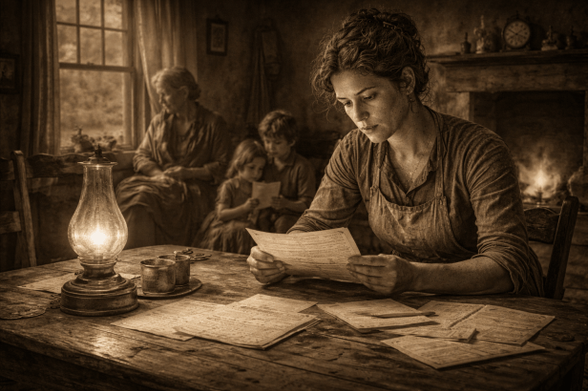
The Civil War moved at the speed of bodies, horses, and paper. For families separated by the conflict, the most persistent companion was not noise or spectacle, but waiting.

Letters were the only reliable bridge between home and front. They carried reassurance, instruction, money, faith, and fear—often all at once. But they also carried delay. A message written in confidence might arrive after circumstances had changed, after battles had been fought, after injuries or deaths had already occurred. Time itself became an adversary.

Writing Into Uncertainty

Civilians wrote without knowing when—or if—their words would be read. They described harvests, illnesses, births, and debts with careful restraint, attempting to protect loved ones from worry while quietly asking for reassurance in return.

This self-censorship was common. Letters softened hardship and minimized fear, not because conditions were manageable, but because emotional stability felt like a duty. To alarm someone already living under threat seemed cruel.

As a result, correspondence often presented a curated version of reality—hopeful, orderly, and incomplete.

Delays as a Daily Condition

Mail routes were disrupted by troop movements, damaged infrastructure, and shifting front lines. Letters might arrive weeks or months late, or not at all. Families learned to measure time not by calendars, but by the absence of news.

Silence took on meaning. A missed letter suggested illness, capture, or death. A sudden gap could provoke panic. Even when messages arrived, they were often outdated, describing circumstances that no longer existed.

Information lag reshaped decision-making. Households acted on incomplete knowledge, making financial and personal choices based on assumptions that might soon be wrong.

The Emotional Economy of the Mail

Receiving a letter was an event. It could steady a household for days. It could also destabilize it. News of injury or hardship at the front might arrive after weeks of anxious speculation, collapsing relief into grief.

The act of waiting demanded emotional regulation. People learned to live with uncertainty as a permanent condition. Anxiety did not disappear; it was managed, rationed, and postponed.

In this way, the war trained civilians in endurance through ambiguity.

Letters as Civic Infrastructure

Beyond personal communication, letters carried civic functions. They transmitted money, instructions, and authorization. Wives sought consent for decisions they were already forced to make. Soldiers requested supplies, documentation, or intervention with authorities.

When letters failed, informal networks stepped in. Neighbors relayed rumors. Newspapers filled gaps with speculation. Churches shared news from the pulpit. None of these substitutes were reliable, but they reduced isolation.

The postal system, strained and imperfect, became a quiet backbone of wartime civic life.

When Answers Never Came

For some families, the waiting never resolved. Letters stopped. Official notices arrived late or not at all. Confirmation of death could take months. Burial locations were unknown. Closure was postponed indefinitely.

This unresolved grief shaped the postwar world. Families learned to live with questions unanswered, with futures altered by absence rather than certainty. The war did not only take lives; it suspended them in limbo.

Looking Back

The Civil War is often remembered through decisive moments and clear outcomes. Civilian life experienced it differently—through delays, silence, and partial information. Letters connected households to the war, but they also reminded people how little control they had over events unfolding far away.

This is the fifth truth of civic breakdown: when communication slows and certainty collapses, people adapt not by knowing more, but by enduring longer.

The war traveled home one envelope at a time. And for many, the most devastating message was the one that never arrived.

References (APA Style)

McPherson, J. M. (1988). Battle cry of freedom: The Civil War era. Oxford University Press.

Faust, D. G. (2008). This republic of suffering: Death and the American Civil War. Alfred A. Knopf.

Mitchell, R. B. (2007). The vacated chair: The northern soldier leaves home. Oxford University Press.

Blight, D. W. (2001). Race and reunion: The Civil War in American memory. Harvard University Press.

Library of Congress. (n.d.). Civil War letters and diaries. Manuscript Division. https://www.loc.gov/collections/civil-war

Library of Congress. (n.d.). Chronicling America: Historic American newspapers. https://chroniclingamerica.loc.gov

#AmericanCivilWar #civicLife #civilianAnxiety #griefAndUncertainty #homeFront #informationDelay #lettersHome #socialHistory #wartimeCommunication

Outside the Default Path: A Pagan Reading of the Federal “Anti-Christian Bias” Report

A reflective Pagan perspective on the federal government’s anti-Christian bias report, exploring how religious freedom can feel very different for Americans outside the cultural mainstream. Through personal experience, civic observation, and reflections on pluralism, this essay examines the difference between protecting faith and centering one faith above others.

https://pagangrove.wordpress.com/2026/05/11/outside-the-default-path-a-pagan-reading-of-the-federal-anti-christian-bias-report/

Running the Farm, the Shop, and the Family Alone

The American Civil War: Civic Life Series (Part 4 of 18)

By Cliff Potts, CSO, and Editor-in-Chief of WPS News
Baybay City, Leyte, Philippines
April 21, 2026

When the men left, absence was immediate. What followed was endurance.

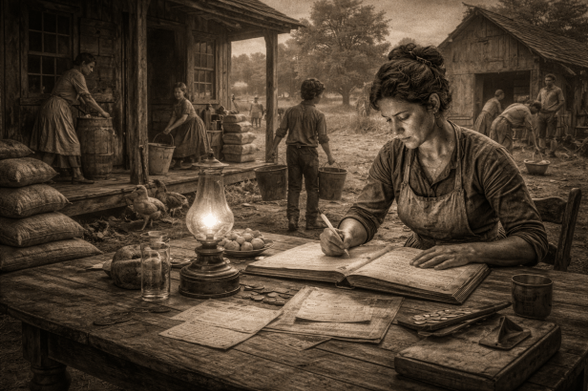
Across the North and South, households discovered that the work did not divide itself neatly along gendered lines once war removed half the labor force. Farms still needed planting and harvest. Shops still had to open. Accounts still had to balance. Children still needed feeding, clothing, and discipline. There was no single role to assume—only many to juggle at once.

For women left behind, the war did not arrive as ideology. It arrived as logistics.

The Triple Burden

Running a household during the Civil War meant carrying three overlapping responsibilities: economic production, domestic care, and emotional management. A woman might spend the morning overseeing field labor, the afternoon bargaining with suppliers or customers, and the evening tending to children while managing correspondence from the front.

These roles were not sequential; they collided. A sick child could derail a day’s work. A late shipment could mean hunger. A missed payment could threaten foreclosure. The margin for error narrowed sharply.

What had once been shared labor became solitary decision-making.

Learning Without Instruction

Few women were formally trained to manage businesses or farms at scale. Skills were acquired through necessity and observation. Ledgers were deciphered. Contracts were negotiated. Tools were repaired or repurposed. Decisions that had once been deferred now had to be made—and lived with.

Letters and diaries from the period show a recurring pattern: early uncertainty followed by grim competence. Pride is rare in these accounts. Fatigue is common. So is the quiet recognition that there was no alternative.

Mistakes carried consequences, but paralysis carried worse ones.

Markets That No Longer Made Sense

Economic conditions shifted unpredictably. Inflation eroded savings. Credit tightened. Prices fluctuated based on rumor as much as supply. In the Confederacy, currency devaluation compounded scarcity; in the North, industrial demand distorted local markets.

Women running shops and farms navigated these changes with limited information. News traveled slowly. Official assurances meant little when goods failed to arrive. Many adapted by bartering, downsizing operations, or prioritizing subsistence over profit.

Commerce became improvisation.

Children as Co-Workers

Family labor expanded downward. Children assumed tasks earlier and more fully than before the war. Older daughters learned to manage households. Sons took on physical labor. Education, where it continued, became secondary to survival.

This shift altered family dynamics. Authority became practical rather than traditional. Respect followed competence. Childhood shortened, not by decree, but by necessity.

The war reshaped not only who worked, but when life stages began.

Emotional Labor Without Relief

Beyond physical and economic demands lay the work of holding families together emotionally. Letters from the front brought reassurance one week and dread the next. Silence stretched into months. Each day required steadiness in the face of uncertainty.

Women were expected to remain strong—not as a slogan, but as a function. Panic would ripple outward. Grief had to be managed privately. Children needed calm explanations for dangers adults barely understood themselves.

This emotional containment was exhausting, and largely invisible.

Community Support, Limited and Conditional

Neighbors helped where they could. Informal networks formed to share labor, tools, and information. But these networks were fragile. Everyone was strained. Aid was uneven. Old resentments surfaced. Political divisions complicated cooperation.

Community resilience existed, but it was thin—stretched across too many needs with too few resources.

The Cost of Holding Everything Together

By war’s midpoint, many households were operating beyond sustainable limits. Exhaustion accumulated. Illness went untreated. Deferred maintenance became permanent damage. The ability to “make do” masked a slow erosion of health and stability.

The war demanded competence without rest and responsibility without recognition.

Looking Back

The Civil War is often framed as a test of armies and governments. It was also a test of households—of how much strain ordinary people could absorb before something gave way.

Women who ran farms, shops, and families alone did not do so to prove a point. They did it because the alternative was collapse. Their labor sustained communities long enough for the war to continue, even as it consumed the foundations of everyday life.

This is the fourth truth of civic breakdown: when institutions remove support, survival shifts inward. Families become systems. Homes become economies. And endurance becomes the quiet currency of war.

McPherson, J. M. (1988). Battle cry of freedom: The Civil War era. Oxford University Press.

Faust, D. G. (1996). Mothers of invention: Women of the slaveholding South in the American Civil War. University of North Carolina Press.

McCurry, S. (2010). Confederate reckoning: Power and politics in the Civil War South. Harvard University Press.

Mitchell, R. B. (2007). The vacated chair: The northern soldier leaves home. Oxford University Press.

Library of Congress. (n.d.). Civil War diaries and letters. Manuscript Division. https://www.loc.gov/collections/civil-war

Library of Congress. (n.d.). Chronicling America: Historic American newspapers. https://chroniclingamerica.loc.gov

#AmericanCivilWar #civicLife #civilianEndurance #familySurvival #homeFront #householdEconomy #socialHistory #wartimeScarcity #womenSLabor
Paul Krugman asks: what if aliens attacked tomorrow? Paul’s “When Extraterrestrials Attacked the… ” uses a sci‑fi frame to probe how democracies can still mobilize fast—without fearmongering or losing rights. https://paulkrugman.substack.com/p/when-extraterrestrials-attacked-the #Politics #Democracy #CivicLife (Sharp work from Krugman.)
When Extraterrestrials Attacked the Stock Market

Actually it was a Substack post, but the reaction was telling

Paul Krugman
Want proof decency survives brutal politics? Paul Krugman’s “American Decency Still Lives” tracks quiet courage and everyday pushback, showing how community norms can outlast cynicism. https://paulkrugman.substack.com/p/american-decency-still-lives #Politics #Democracy #CivicLife (Smart, sharp work from Krugman.)
American Decency Still Lives

When pushed far enough, Americans will do the right thing

Paul Krugman

Social media platforms have become central infrastructure for #CivicLife, #PublicDebate, and elections, yet they were never designed to support trust or democratic deliberation.

In a new blog, Liv Marte Nordhaug, CEO of the #DPGA Secretariat, outlines how #SocialTechnology and #DigitalPublicGoods can help countries reclaim healthier digital public spaces.

Read more:
https://www.digitalpublicgoods.net/blog/cutting-the-gordian-knot-of-social-media

Patriotism and Education Are Traditional American Values

How do patriotism and education shape the American spirit? This article explores the historic connection between national pride and learning—why civic values and schooling have long been woven together in the U.S., and how they influence community, citizenship, and identity.
Read more here: https://www.djoinerbooks.com/patriotism-and-education-are-traditional-american-values/
#AmericanValues #Education #Patriotism #CivicLife

Patriotism and Education Are Traditional American Values

Are patriotism and education traditional American values? Explore the meaning, history, and importance of this idea in U.S. society.

Dennis Joiner

Ghost Democracy: when the rituals remain, but the relationship is gone.
When you can vote, protest, petition… and still be treated like you don’t exist.

I wrote an essay on Alberta’s “Sixth Sense” moment—speaking urgently, only to realize you’re already dead to power.

https://lawrencenault.substack.com/p/ghost-democracy

#Alberta #Canada #Democracy #Politics #CivicLife

Ghost Democracy

When protest becomes ritual, petitions become props, and your voice becomes background noise.

Lawrence Nault

Policy becomes something else entirely when enforcement is determined by politics instead of principle.

History offers a clear record of how selective punishment reshapes societies. 📚🔥

#Politics #History #CivicLife #Brewminate

https://brewminate.com/trumps-new-drug-war-and-the-politics-of-selective-enforcement/

Trump’s Drug War and Selective Enforcement

Trump launches a lethal military drug campaign while granting clemency to traffickers and backing allies later convicted of major drug crimes.

Brewminate: A Bold Blend of News and Ideas