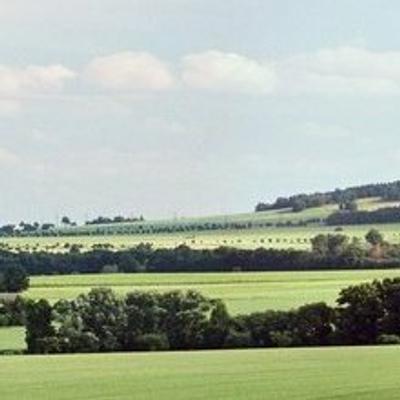
 Landschaftsfotos
Geudeberg bei Pfaffendorf
Ort: Deutschland, Sachsen, Pfaffendorf, Markersdorf
Autor: Bruno Häcker
Lizenz: CC BY-SA 4.0
https://landschaftsfotoportal.senckenberg.de/item/1809
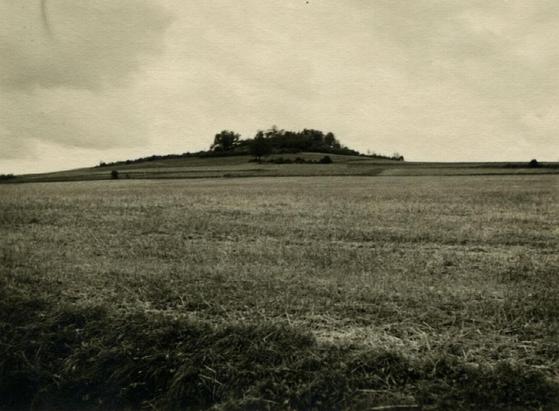
Geudeberg bei Pfaffendorf
Ort: Deutschland, Sachsen, Pfaffendorf, Markersdorf
Autor: Bruno Häcker
Lizenz: CC BY-SA 4.0
https://landschaftsfotoportal.senckenberg.de/item/1809
When our co-founder Jill Tarter visited SkyMapper, she captured exactly why they are building SkySphere:
To watch the sky continuously, globally, and openly — and discover what we did not know to look for.
The unexpected is where astronomy gets exciting.
Watch the preview here: https://youtu.be/S7mjb-UnvlY
#SkyMapper #SkySphere #SETI #Astronomy #CitizenScience #SpaceTech

Bewachsener Kohlenkalkbruch am Geiersberg umgeben von Feldern
Ort: Deutschland, Sachsen, Kunnersdorf
Autor: Bruno Häcker
Lizenz: CC BY-SA 4.0
https://landschaftsfotoportal.senckenberg.de/item/2717
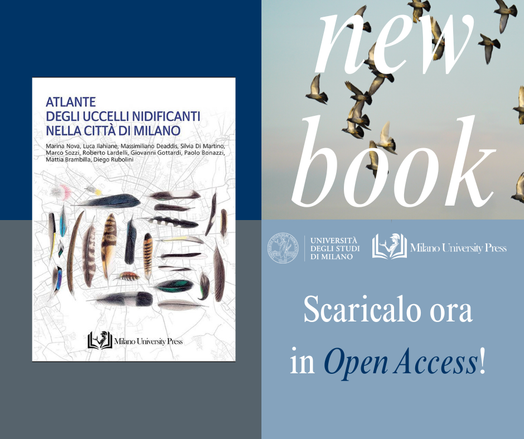
🐦 Oltre quindici anni di #indagini sull’#avifauna nidificante nella città di #Milano, realizzate grazie al contributo di decine di volontari, offrono un quadro esaustivo della #distribuzione di 80 #specie di #uccelli nel periodo 2009-2024, ottenuto armonizzando i #dati raccolti nell’ambito di diversi #progetti di #citizenscience.
👉 Leggilo in #OpenAccess: https://libri.unimi.it/index.php/milanoup/catalog/book/306?mtm_campaign=mastodon
Want to help in Venezuela? We are waiting for the data to be processed so if you ever wanted to be part of International Rescue and be John Tracey up in Thunderbird 5 please keep an eye on the link. I believe we'll be assessing airport damage next.
From zooniverse and Planetary Response Network:
[To start right away, go to https://www.zooniverse.org/projects/alicemead/planetary-response-network-venezuela-earthquake-2026/classify/workflow/32265]
"On 24th June 2026, a 7.5 magnitude Earthquake hit 32km of the coast of Venezuela, this was followed by another 7.2 magnitude Earthquake less than a minute later. The Earthquakes have caused large scale devastation in the region.
This project maps road blockages and infrastructure damage for humanitarian aid to reach those in need in Venezuela. You can join the rescue effort here by volunteering your time to help the recovery operations.
The images for this project have been provided to us by Planet Labs, using 3-metre resolution data.
Mapping road blockages and bridge damage
Firstly, you will be presented with an image of a road. We are looking to see if the road is blocked in any way and at what location. Blockages can include flooding, debris (such as trees, building materials) or a damaged road. If you see a blockage, please mark it with one point at the centre of the damage. Along the roads you may see bridges. We are also asking if the bridge is damaged or blocked due to flooding, debris (such as trees, building materials). If this is the case, then mark the bridge with the “bridge damage” point at the centre of the bridge. This will help us when we come to collect everybody’s markings together to generate a consensus.
Mapping damage to airports and ports
The next series of images will be airports and ports. We are asking if these locations are damaged. For this task we are asking if the infrastructure is damaged by debris or flooding. There are separate point tools for these types of blockages which you can pick from. If you cannot see any damage and you believe the building to be functional, then you can use the functional point. This is extremely helpful to update humanitarian organisations on the status of key infrastructure.
When classifying, please just do your best, and remember that we ask multiple people to examine each image, and we will gather consensus from the crowd. Even if you are uncertain, your best judgment is very valuable!
We need lots of support on the project to classify the data as soon as we can, to ensure data reaches humanitarian organisations as soon as possible. If you can help by making classifications, please click here.
Thanks,
Alice and the Planetary Response Network team"
Its that time of the year again already? I got a newsletter from Project Phoenix, the project that is collecting data on birds relative to wildfire smoke, and it is starting again soon. I'll have to go find my notebook...
(Fyi, if you live on the west coast in the US, you can participate. Also needed, 10 minutes a week and access to the Ebird app or website. The Merlin app or bird ID-ing skills help but are not necessary)
https://www.project-phoenix-investigating-bird-responses-to-smoke.org/instructions
#CitizenScience #Nature #Birding
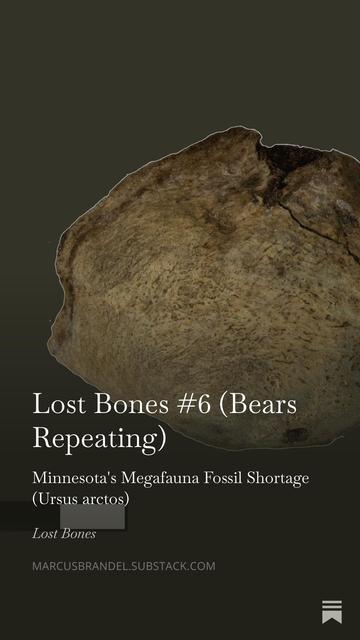
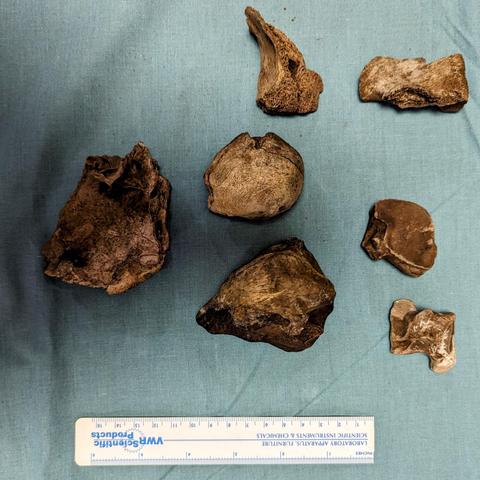
🐻 For #FossilFriday 🐂🦥🐴🐪🐟 a new #LostBones article is out on Substack! This one is a deep-deep dive into brown bear (Ursus arctos) and giant short-faced bears (Arctodus simus) in the Midwest and Surrounding areas.
Please share to get out the word!
See it thru the link in my bio or here: https://marcusbrandel.substack.com/p/lost-bones-6-bears-repeating
#Ursusarctos #Arctodussimus #Bears #GiantShortFacedBears #pleistocene #holocene #paleontology #iceage #fossil #citizenscience #sciencemuseumofmn

 Nap ízeltlábúja - Arthropod of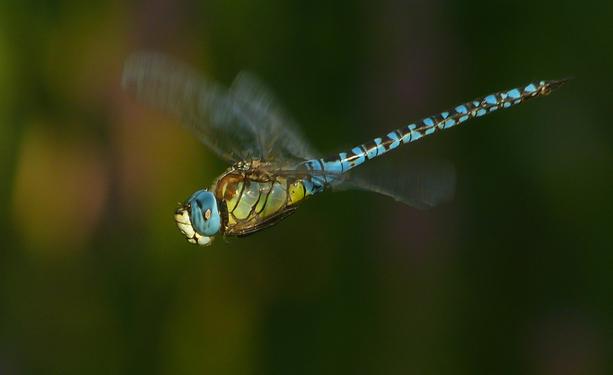
 SETI Institute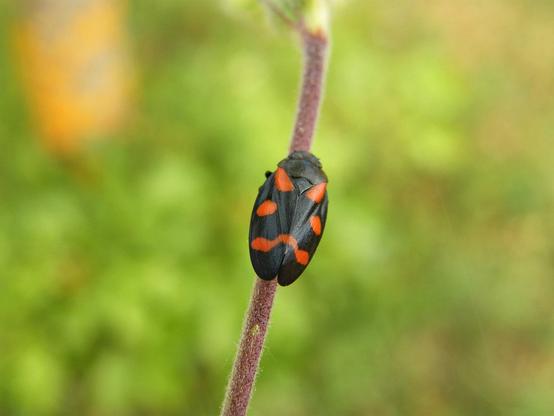
 Milano University Press
 leece
leece
 L. A. (they/them)
 🇨🇦🇨🇦🇨🇦 leastaction
 Marcus Brandel