Supercritical fluids don’t behave like we thought
Schematic illustration of nanoclusters (red) separated in a liquid-like state within a supercritical fluid and the corresponding neutron beam scattering signals. Credit: POSTECH When a substance is subjected to temperatures and pressures that push it past its ‘critical point’ it turns into a supercritical fluid – a state of matter which acts both like a liquid and a gas. On Earth, supercritical fluids (SCFs) exist naturally in the boiling water which bubbles up from seafloor hydrothermal vents. They are used extensively in industrial and engineering applications, such as power plant cooling systems, pharmaceutical processes and high-pressure fuel injection. While it’s long been thought that SCFs exist as a single phase only, simulations have suggested that gas-like and liquid-like subregions may exist under equilibrium conditions with constant temperature, pressure, and concentration. But SCF behaviour under nonequilibrium conditions, which occur in most industrial applications, remains poorly understood. In a new study, researchers compressed krypton gas under high pressure and observed how the resulting SCF scattered neutrons under nonequilibrium conditions. Their findings confirm the existence of liquid-like clusters about 1.3nm in size (roughly 30 krypton atoms) which hang around for more than an hour before disappearing. This is the first experimental proof that SFCs can contain subregions with liquid-like properties under non-equilibrium conditions. “Our findings reveal that these clusters dissolve slowly over extended timescales, offering insights into the non-equilibrium phase behaviour of SCFs and advancing the understanding of their dynamic properties,” the authors write. The research has important implications for the industrial use of SCFs and research into fluid phenomena in extreme environments. “Our findings offer crucial information for improving the use of SCFs in industrial settings,” the authors say. “These phenomena could play a role in SCF CO2 cleaning techniques for semiconductor fabrication, where transient clustering might impact process efficiency. “Beyond industrial applications, non-equilibrium SCF dynamics are also observed in planetary meteorology. “For example, the thick atmosphere of Venus consists of SCFs undergoing complex convective and turbulent flows, where rapid thermodynamic changes influence large-scale atmospheric circulation patterns.” The research is published in Communications Physics.
Supercritical fluids don’t behave like we thought
Schematic illustration of nanoclusters (red) separated in a liquid-like state within a supercritical fluid and the corresponding neutron beam scattering signals. Credit: POSTECH When a substance is subjected to temperatures and pressures that push it past its ‘critical point’ it turns into a supercritical fluid – a state of matter which acts both like a liquid and a gas. On Earth, supercritical fluids (SCFs) exist naturally in the boiling water which bubbles up from seafloor hydrothermal vents. They are used extensively in industrial and engineering applications, such as power plant cooling systems, pharmaceutical processes and high-pressure fuel injection. While it’s long been thought that SCFs exist as a single phase only, simulations have suggested that gas-like and liquid-like subregions may exist under equilibrium conditions with constant temperature, pressure, and concentration. But SCF behaviour under nonequilibrium conditions, which occur in most industrial applications, remains poorly understood. In a new study, researchers compressed krypton gas under high pressure and observed how the resulting SCF scattered neutrons under nonequilibrium conditions. Their findings confirm the existence of liquid-like clusters about 1.3nm in size (roughly 30 krypton atoms) which hang around for more than an hour before disappearing. This is the first experimental proof that SFCs can contain subregions with liquid-like properties under non-equilibrium conditions. “Our findings reveal that these clusters dissolve slowly over extended timescales, offering insights into the non-equilibrium phase behaviour of SCFs and advancing the understanding of their dynamic properties,” the authors write. The research has important implications for the industrial use of SCFs and research into fluid phenomena in extreme environments. “Our findings offer crucial information for improving the use of SCFs in industrial settings,” the authors say. “These phenomena could play a role in SCF CO2 cleaning techniques for semiconductor fabrication, where transient clustering might impact process efficiency. “Beyond industrial applications, non-equilibrium SCF dynamics are also observed in planetary meteorology. “For example, the thick atmosphere of Venus consists of SCFs undergoing complex convective and turbulent flows, where rapid thermodynamic changes influence large-scale atmospheric circulation patterns.” The research is published in Communications Physics.
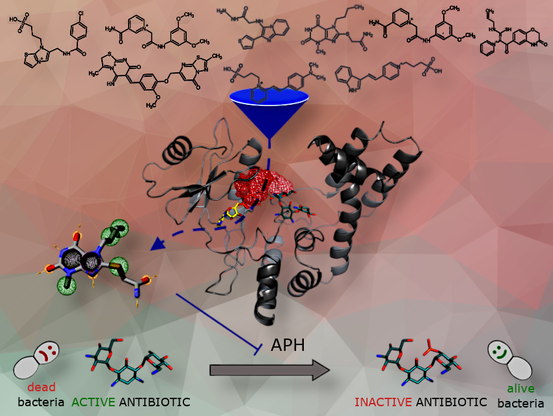
🦠🔬 Corinne Lionne & Elise Kaplan (France) & colleagues discovered a new family of inhibitors that reverse aminoglycoside resistance in Enterococcus—a bacterium causing serious infections! 🚑💊
🎙️ In this #behindthescience interview, they share insights into their research 👇
🔗 https://buff.ly/3EfJusA
#chemistry #chemistryviews #chemviews #chemistryresearch #researcher #anibioticresestance

Overcoming Resistance to Aminoglycoside Antibiotics in Enterococcus - ChemistryViews
Overcoming Resistance to Aminoglycoside Antibiotics in Enterococcus Strains:

Chemistry Europe Award - ChemistryViews
New award to recognize outstanding contributions to chemistry
Synthesis of Zr Zeolitic Metal-Organic Frameworks (Zr ZMOFs): Designing high-performance zirconium ZMOFs with mixed carboxylate linkers for enhanced separation efficiency
https://www.chemistryviews.org/superior-separation-of-hexane-isomers/
#chemistry #chemistryviews #chmviews #chemiverse #research #chemistryresearch #zeolith #zmof #mof

Synthesis of Zr Zeolitic Metal-Organic Frameworks (Zr ZMOFs) - ChemistryViews
Synthesis of Zr Zeolitic Metal-Organic Frameworks (Zr ZMOFs): Designing high-performance zirconium ZMOFs with mixed carboxylate linkers for enhanced separation efficiency
Popular this week in the news section was:
A Trivalent Bis(acyl)phosphide Complex of Uranium
Work by Karsten Meyer, Friedrich-Alexander-Universität Erlangen-Nürnberg (FAU), Erlangen, Germany, and colleagues
Published in Eur. J. Inorg. Chem.
See news: https://www.chemistryviews.org/a-trivalent-bisacylphosphide-complex-of-uranium/
#chemistry #chemistryviews #chemviews #chemiverse #Research #researchvideo #chemistryresearch #chemistryvideo #InorganicChemistry

A Trivalent Bis(acyl)phosphide Complex of Uranium - ChemistryViews
Phosphorus analog of acetylacetonate (acac) supports genuine trivalent uranium complexes

Tips for the Lab - ChemistryViews
Simple instructions on how to successfully pack columns, work under inert atmosphere, or grow crystals
Popular this week: Recycling Consumer-Grade Polyethylene via Hydrogenolysis
Work by Javier Pérez-Ramírez, Swiss Federal Institute of Technology (ETH) Zurich, Switzerland, and colleagues
https://www.chemistryviews.org/recycling-consumer-grade-polyethylene-via-hydrogenolysis/
#chemistry #chemistryviews #chemviews #chemiverse #chemistryvideo #chemistryresearch #polymerrecycling

Recycling Consumer-Grade Polyethylene via Hydrogenolysis - ChemistryViews
Ultrafine ruthenium particles supported on titania promote conversion to light alkanes
 purescience_news
 ChemistryViews