 Carmelite Quotes
Quote of the day, 18 May: Peter Thomas Rohrbach, OCD
Life for the Carmelites in Palestine was becoming increasingly difficult because of almost constant Moslem uprisings, but, as we shall see in the following chapter, the Order had been largely relocated in Europe by the time of [Saint Simon Stock’s] election. One by one, the Carmelite foundations in the Holy Land were destroyed until only the communities at Acre and Mount Carmel remained.
In March of 1291, Bibars led his Mamelukes to the gates of Acre and laid siege on the city [scholars dispute this statement]. The European defenders joined themselves in a heroic defense, but on May 18, after two months of fighting, the walls of Acre fell, and by nightfall the city was in Moslem hands. The Mamelukes, in their frenzy, massacred all the inhabitants and set fire to the city. So systematic was the destruction that forty years later, only a few poor peasants could be found living in the ruins of this once prosperous city.
With the fall of Acre, the Latin kingdom collapsed, and the Moslems proceeded to rid the country of the last vestige of the westerners. They turned up the coast and eradicated the groups at Tyre and Sidon, then turned down the coast again and took the city of Caiffa [Haifa] on July 30.
Upon capturing Caiffa, they immediately climbed Mount Carmel and massacred the Carmelites and destroyed their building. The unreliable chronicle of William of Sanvico claims that the hermits were chanting the Salve Regina when they were set upon by the Moslems.
The massacre of 1291 marked the end of an epoch: the Latin kingdom was forever finished, the westerner was excluded from Palestine for centuries, and no Carmelite was to live on Mount Carmel until Prosper of the Holy Spirit returned the Order to its homeland in 1631.
Peter Thomas Rohrbach, O.C.D.
Chapter I, The Birth of an Order
Rohrbach, P 1966, 2015, Journey to Carith: The Sources and Story of the Discalced Carmelites, ICS Publications, Washington DC.
Featured image: Nuns who are members of the Association of Our Lady of Mount Carmel, representing monasteries in the Holy Land, Egypt, Morocco, and Syria, gathered to pray in the first chapel of the Carmelite Order, located in the wadi ’ain es-siah on the Mediterranean slope of Mount Carmel. There, they read together the Carmelite Rule of St. Albert in observance of the Eighth Centenary of the promulgation of the Rule in 2007. Image credit: Holy Land Carmelites (Used by permission)
#CarmeliteHistory #FallOfAcre #hermits #martyrdom #Muslims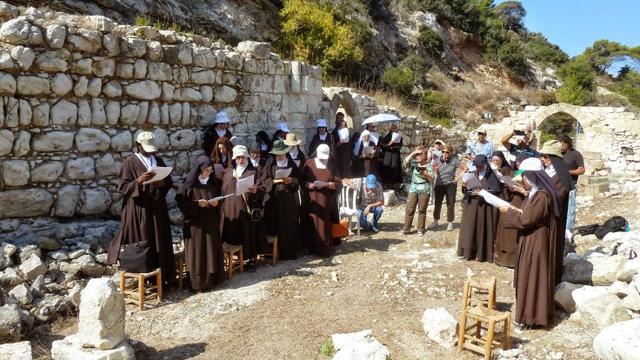
 Carmelite Quotes

