How Might Russia Respond If Its ‘Technical Ally’ North Korea Came Under Attack?

How Might Russia Respond If Its ‘Technical Ally’ North Korea Came Under Attack?

By Andrew Korybko

Each is the other’s ally, but within lesser practical limits than Russia is to its CSTO allies or the US to its NATO ones, which is an important distinction.

Folks were earlier reminded that “Russia Was Never Iran’s ‘Ally’” in the sense of having mutual defence obligations to it like Russia does to the five countries of the Collective Security Treaty Organization (CSTO) that it leads: Armenia, Belarus, Kazakhstan, Kyrgyzstan, and Tajikistan. It also has similar obligations to the former Georgian regions of Abkhazia and South Ossetia. All seven are located within the former USSR, which Russia considers to be its “Near Abroad”, a euphemism for “sphere of influence”.

Unmentioned in the cited analysis above is that Russia has technically had mutual defence obligations to North Korea since the ratification of a relevant pact in late 2024 that updated their Soviet-era one. The document can be read here in Russian while North Korean media summarized it here. It wasn’t included in that analysis due to the implementation differing from what casual observers imagine mutual defence obligations to mean with respect to providing full and limitless support to one’s allies during a crisis.

Article 3 calls on them to consult each other and coordinate “In the event of an immediate threat of an act of armed aggression against one of the Parties”, while Article 4 calls on them to “immediately provide military and other assistance with all means at its disposal” if war breaks out. In practice, North Korea didn’t provide “assistance with all means at its disposal” for helping Russia expel the Ukrainian invaders and their mercenary allies from Kursk, but what it did provide was still deeply appreciated.

The form that it took was supplying ammo, troops, and then sappers (de-miners) afterwards, all of which indisputably helped Russia in the spirit of their mutual defence obligations but of course fell short of providing “all means at [North Korea’s] disposal”, though Russia likely didn’t request maximum support. After all, North Korea must understandably maintain its defences at home, thus explaining why it couldn’t send the bulk of what’s one of the world’s largest standing armies from Asia to Europe.

In any case, the question that some have asked amidst the US-Israeli campaign against Iran is how Russia would respond to a similar US-led campaign against North Korea, the prospects of which are admittedly dim due to its nuclear deterrent but nevertheless still an intriguing thought exercise in this context. As with North Korea, Russia can’t realistically send the bulk of what’s also one of the world’s largest standing armies from Europe to Asia since it too must understandably maintain is defences at home.

It’s possible that fighter pilots and jets could be provided just like during what would then be known as the First Korean War. Some have also speculated that Russia is already sending high-tech military equipment, including that which can be used for ballistic missiles, nuclear submarines, and satellites, to North Korea in the spirit of this pact for deterrence purposes. In the event of an invasion, however, precedent suggests that Chinese troops would intervene instead due to China’s much greater interests.

As such, Russia is expected to provide North Korea with equipment operators like fighter pilots and their assets if it comes under attack, but it’s unlikely to send the bulk of its forces just like North Korea didn’t send the bulk of its own to Kursk. Russia also likely won’t open up a European front for dividing the US’ forces since North Korea didn’t open up an Asian one for that purpose. Each is the other’s ally, but within lesser practical limits than Russia is to its CSTO allies or the US to its NATO ones, which is an important distinction.

Disclaimer: The views expressed in this article are author’s own and do not necessarily reflect the editorial policy of Voice of East.


#China #CSTO #Europe #Geopolitics #NATO #NorthKorea #Russia #USA
@jessicaperthwa.bsky.social
Which also makes it clear the #CSTO is dead.
And cutting Russia off from Iran would be BIG in its impact on Russia.

Vance’s South Caucasus Trip Tightens The West’s Strategic Encirclement Of Russia

Vance’s South Caucasus Trip Tightens The West’s Strategic Encirclement Of Russia

By Andrew Korybko

The timing amidst continued US-mediated talks between Russia and Ukraine suggests that the US expects this ramped-up pressure to raise the chances of coercing concessions from Russia.

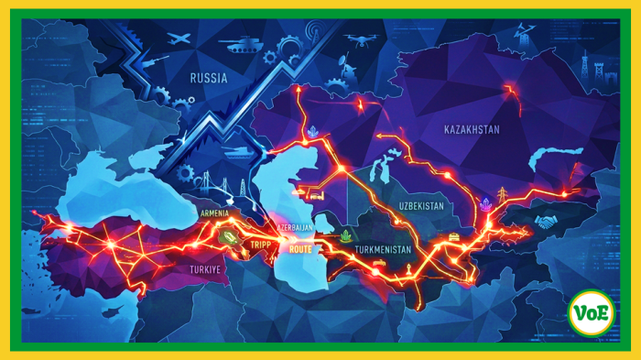
Vice President JD Vance’s trips to Armenia and Azerbaijan were aimed at advancing several interconnected strategic goals. The most immediate was making progress on implementing the “Trump Route for International Peace & Prosperity” (TRIPP), which is the planned trade corridor across southern Armenia unveiled after last August’s White House summit that ended the decades-long Armenian-Azerbaijani Conflict. TRIPP isn’t just economically significant, however, since it’s also highly strategic.

To begin with, it replaces Russia’s plan to pioneer a corridor along the same route that would be guarded by its forces, therefore challenging the Kremlin’s political influence in the post-war South Caucasus. Second, TRIPP serves as the means for optimizing Western logistical access to the resource-rich but landlocked Central Asian Republics on the other side of the Caspian, which is of interest for the US due to its critical minerals. The US signed MoUs with Kazakhstan and Uzbekistan about this last November.

On that topic, Vance proposed the creation of a critical minerals trading bloc during the inaugural Critical Minerals Ministerial that was attended by representatives of more than 50 countries, thus further contextualizing his trip to the South Caucasus a week later. His progress on implementing TRIPP will help to logistically open Central Asia’s critical mineral supply chain for the US. Having explained the political and economic aspects of TRIPP’s strategic significance, it’s now time to segue into the military one.

By replacing Russia’s planned corridor across southern Armenia with one in which the US will have a controlling stake for the next 49-99 years and preventing the Kremlin from monitoring traffic across it, Turkiye can now clandestinely optimize its military-logistics to Central Asia. Four of its five states have some formal relationship with the Turkish-led “Organization of Turkic States” (OTS), while two of its members are also Russia’s CSTO mutual defence allies, Kazakhstan and Kyrgyzstan.

The OTS is increasingly taking on more security responsibilities, which can be interpreted as means of challenging Russia’s security influence along its vulnerable southern periphery. To make matters even more concerning from the Kremlin’s perspective, Kazakhstan announced its plans late last year to produce NATO-standard shells, likely emboldened by TRIPP facilitating the US’, Turkiye’s, and ultimately NATO’s military logistics to it in the event of a crisis with Russia. This was elaborated on here.

Making progress on TRIPP’s implementation, which is assessed to be the purpose of Vance’s trips to Armenia and Azerbaijan, therefore tightens the West’s strategic encirclement of Russia along its entire southern periphery through the political, economic, and military means that this corridor unlocks. Vance undertook his voyage there amidst continued US-mediated talks between Russia and Ukraine, which suggests that this was timed to ramp up pressure on Russia for coercing concessions from it.

Be that as it may, while Trump 2.0 has indeed intensified pressure upon Russia along its southern periphery as explained, along its western one via support for the EU’s militarization, and along the financial front by pressuring India to reduce its import of Russian oil, Russia still insists on achieving its goals in full. If it ever compromises, however, then that would be due to the US’ carrot and stick policy of a proposed resource-centric strategic partnership and the aforesaid tightening encirclement campaign.

Disclaimer: The views expressed in this article are author’s own and do not necessarily reflect the editorial policy of Voice of East.


#Armenia #Azerbaijan #CSTO #Geopolitics #Kazakhstan #OTS #Russia #SouthCaucasus #TheWest #Turkey #Turkiye #USA #Uzbekistan

Belarus’ Dramatic Pivot On Poland Points To A Deepening Rift With Russia

Belarus’ Dramatic Pivot On Poland Points To A Deepening Rift With Russia

By Andrew Korybko

This is arguably the result of growing US influence over Belarus throughout the course of their talks.

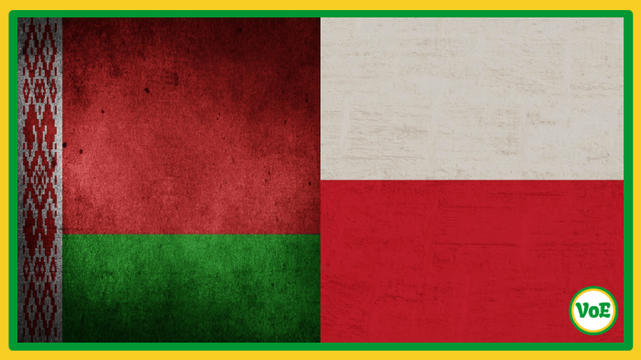
Russia and Belarus coordinate military policy through the CSTO, thus contextualizing why Russia transferred Oreshniks and tactical nukes to Belarus, and are supposed to coordinate foreign policy through their Union State. The second duty isn’t being perfectly fulfilled by Belarus right now, however, as evidenced by its Foreign Minister’s radically changed perception of Poland that directly contradicts Russia’s. Maxim Ryzhenkov shared his country’s new views in an interview with publicly financed BelTA.

In his words, “To be honest, I most of all expect that cooperation will be restored most quickly with Poland. This is a country that sees itself as a genuine regional leader and does everything to achieve that, pursuing a pragmatic policy which does not allow for any room for error. Cooperation with our self-exiled opposition is a dead end for them. I believe that they will come to realize this, put an end to this story, and start building cooperation in the interests of the people on both sides of the border”.

Belarus’ radically changed perception of Poland as a “genuine regional leader…pursuing a pragmatic policy which does not allow for any room for error” directly contradicts Russia’s perception of it as a joint UKUS vassal which practices irresponsible and erroneous policies that have destabilized the region. One year ago, Belarusian President Alexander Lukashenko declared that “Poland pursues the most aggressive and bad policy against Belarus”, yet he obviously no longer thinks so after talks with Trump 2.0:

* 23 June 2025: “Does The US Want To Divide-And-Rule Belarus & Russia Or De-Escalate Continental Tensions?

* 19 October 2025: “The West Wants Belarus To Replace Supposed Russian Vassalage With Actual Polish Vassalage

* 5 November 2025: “How Likely Is It That Poland Gives Belarus A Fair Deal Instead Of A Lopsided One?

Per the last analysis, Lukashenko announced back then that he’s ready for a “big deal” with the US so long as Belarus’ interests are taken into account, which KGB chief Ivan Tertel seconded by telling reporters that “We have every chance of achieving a breakthrough in relations with the United States.” This can only occur if Polish threats to Belarus are reduced, however, perhaps by a deal limiting Poland’s hosting of foreign troops in exchange for Belarus giving back some of its Oreshniks and/or tactical nukes.

The verdict is still out about whether the US is coordinating this with Russia as part of a “New Détente”, wants to provoke differences between it and Belarus through these means, and/or if it’s plotting to lull Belarus into a false sense of security prior to unleashing another round of instability. In any case, it’s notable that Poland and its Eastern Flank allies pledged to accelerate their militarization during their NATO subgroup’s inaugural summit last December, which tangibly threatens Belarus’ national security.

That’s why it was so surprising that Belarus soon thereafter shared a radically changed perception of Poland that directly contradicts its Russian ally’s. This disturbingly hints at an emerging foreign policy divergence that risks widening in ways that facilitate the US’ divide-and-rule plans at both of their expense, especially if it presages a complementary divergence in military policy that could then lead to a crisis in bilateral ties. It’s therefore urgent that they return to being on the same page about Poland.

Disclaimer: The views expressed in this article are author’s own and do not necessarily reflect the editorial policy of Voice of East.


#Belarus #CSTO #DonaldTrump #Geopolitics #NATO #Poland #Russia #UK #USA

Ukrainian Drone Attacks On The CPC Threaten To Upend Kazakhstan And Reshape Russia’s Southern Flank

Ukrainian Drone Attacks On The CPC Threaten To Upend Kazakhstan And Reshape Russia’s Southern Flank

By Andrew Korybko

Continued strikes across 2026 could lead to protracted disruptions that greatly reduce Kazakhstan’s budgetary revenue and result in social spending slashes for next year, which could prompt protests that spiral out of control just like January 2022’s one did for creating a crisis on Russia’s southern flank.

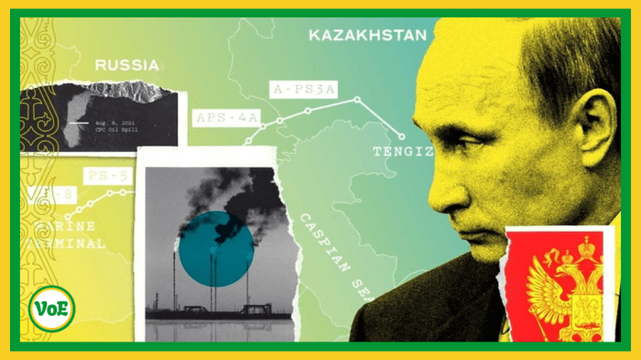
Ukraine once again launched drone strikes against tankers connected to the partially US-owned Caspian Pipeline Consortium (CPC), which transits through Russia and serves as landlocked Kazakhstan’s oil export lifeline via which 80% of such sales are conducted. Energy exports account for around 35% of GDP, 75% of exports, and an estimated 30% of government revenue. With this data in mind, Bloomberg’s report about how Kazakh exports through the CPC plummeted by 45% over the past month is alarming.

If the conflict continues and Ukraine feels emboldened by the US’ recent seizure of a Russian-flagged tanker to keep up the tempo of its strikes against the CPC, be it the export terminal at Novorossiysk and/or tankers, then Kazakhstan’s economic and therefore political stability might be threatened. It was earlier thought that “Ukraine Risked Trump’s Wrath After Bombing Partially US-Owned Oil Infrastructure In Russia” last February, but he did nothing afterwards to coerce it into discontinuing these attacks.

This is in spite of the CPC being partially owned by US energy majors whose profits would be hit by the Kazakh oil export disruptions brought about by continued Ukrainian drone attacks. Moreover, Kazakhstan signed a MoU with the US on critical minerals last November and then joined the Abraham Accords even though it already recognizes Israel, shortly after which it announced plans to produce NATO-standard shells. These should have ordinarily been enough reasons for the US to get Ukraine to stop its strikes.

The fact that Ukraine has continued to attack the CPC despite the aforementioned four interests that closely tie the US to Kazakhstan strongly suggests that Trump 2.0 might be playing a double game. If the conflict drags on, Ukrainian attacks against the CPC are ramped up, and Kazakhstan’s budgetary revenue for the coming year plummets as a result, then social spending for 2027 might be slashed. Protests could follow, thus leading to unrest, which might spiral out of control like what happened in January 2022.

Unlike back then when Kazakhstan requested an intervention from the Russian-led CSTO, it might instead request such from the Turkish-led Organization of Turkic States (OTS). That’s because it might fear that Russia could exploit an intervention to punish it for its NATO-standard shell production and speculation that it allows Ukraine to use its territory to carry out drone strikes inside of Russia. This selfsame fear was recently exacerbated by the Washington Post claiming that Kazakhstan is Putin’s “next stop”.

The deployment of NATO member Turkiye’s troops to CSTO member Kazakhstan, no matter how temporary their mission might officially be, could easily worsen Russian-Turkish tensions given Turkiye’s expected expansion of influence along Russia’s entire southern periphery. Russia could either accept its strategic encirclement, preempt it by cutting Kazakhstan off from the Caspian like a self-exiled Kazakh opposition figure speculated that it’s already plotting to do, or unilaterally intervene to confront Turkiye.

None of these scenarios are ideal for Russia, but they could be catalysed by uncontrollable unrest caused by Kazakhstan slashing social spending if Ukrainian strikes against its oil export lifeline continue across 2026, which can’t be ruled out seeing as how the EU agreed to fund Ukraine for the next two years. A swift end to the conflict through military or political means could offset this sequence of events, however, ergo a compelling reason why Russia might agree to compromise on its maximalist goals.

Disclaimer: The views expressed in this article are author’s own and do not necessarily reflect the editorial policy of Voice of East.


#CPC #CSTO #Geopolitics #Kazakhstan #NATO #Russia #Turkey #Turkiye #Ukraine #USA

Kazakhstan Might Have Just Placed Itself On An Irreversible Collision Course With Russia

Kazakhstan Might Have Just Placed Itself On An Irreversible Collision Course With Russia

By Andrew Korybko

The production of NATO-standard shells hints that Kazakhstan plans to follow in Azerbaijan’s footsteps by having its armed forces conform with the bloc’s standards ahead of what its leadership might have been duped by the West to believe will be an inevitable crisis with Russia after the Ukrainian Conflict ends.

Background Briefing

Sputnik reported in early December that Kazakhstan will build four factories that’ll produce Russian- and NATO-standard shells, which prompted First Deputy Chairman of the Duma Defence Committee Alexei Zhuravlev to harshly condemn this development. In his words, “We try to ignore how a seemingly fraternal republic has swiftly abandoned not only the Russian language but also the Cyrillic alphabet. How they’re creating ‘yurts of invincibility’ while supporting Ukraine.”

He added that “now they’re switching to NATO ammunition standards, clearly intending to abandon Russian weapons in the future, replacing them with Western ones. Astana may not have been the largest buyer of Russian military-industrial complex equipment, but the move itself is certainly unfriendly and must be responded to accordingly. We all know what such cooperation with NATO has meant for Kiev.” This is the latest manifestation of Kazakhstan’s pro-Western pivot that accelerated in recent months:

* 30 September 2023: “Kazakhstan’s Pro-EU Pivot Poses A Challenge For The Sino-Russo Entente

* 2 July 2025: “Why’d Erdogan Decide To Expand Turkiye’s Sphere Of Influence Eastwards?

* 9 August 2025: “The TRIPP Corridor Threatens To Undermine Russia’s Broader Regional Position

* 2 November 2025: “The West Is Posing New Challenges To Russia Along Its Entire Southern Periphery

* 12 November 2025: “A US Think Tank Considers Armenia & Kazakhstan To Be Key Players For Containing Russia

* 13 November 2025: “The US’ Central Asian Minerals Deals Could Put More Pressure On Russia & Afghanistan

* 23 November 2025: “Why’d Kazakhstan Join The Abraham Accords When It Already Recognizes Israel?

* 2 December 2025: “The ‘Community Of Central Asia’ Could Reduce Russia’s Regional Influence

* 19 December 2025: “Turkish Curriculum’s Renaming Of Central Asia To Turkistan Is Turkiye’s Latest Soft Power Flex

In brief, the “Trump Route for International Peace and Prosperity” (TRIPP) will turbocharge the Turkish-led injection of Western influence along Russia’s entire southern periphery by creating a military logistics corridor between NATO member Turkiye and the Central Asian Republics. Kazakhstan and Kyrgyzstan are part of the Russian-led CSTO mutual defence bloc and the Turkish-led “Organization of Turkic States” (OTS) socio-economic one that’s recently begun discussing a joint military structure and drills.

Azerbaijan, whose armed forces completed their conformation to NATO standards in early November, will help those two follow suit through its role in the “Community of Central Asia” (CCA, the newly rebranded annual Consultative Meeting of Heads of State) that it joined later that same month. The CCA is therefore expected to function as the means for the NATO-backed OTS to “poach” Kazakhstan and Kyrgyzstan from the CSTO for irreversibly shattering Russia’s “sphere of influence” in Central Asia.

Grand Strategic Context

The context within which these newly accelerated processes are occurring, which were unleashed by TRIPP (and its origins in turn stem from Nikol Pashinyan seizing the Armenian premiership in 2018 after his successful Colour Revolution that later led to the next Karabakh Conflict), is the Ukrainian peace talks. The US is essentially relying on the Azeri-Turkish Axis (ATA) to jointly pressure Russia along its entire southern periphery for raising the odds of Putin agreeing to a lopsided peace deal in Ukraine’s favour.

He’s thus far refused, but Kazakhstan’s planned production of NATO-standard shells adds a sense of urgency to ending the special operation so as to refocus Russia’s strategic attention towards its entire southern periphery in the hopes of averting the irreversible shattering of its “sphere of influence” there. Ideally, the US would help manage Turkish-Russian tensions in this space through the five means described here as part of a grand deal detailed herehere, and here, but that can’t be taken for granted.

Kazakhstan’s Anti-Russian Plans

Russia must therefore prepare itself for the possibility of an inevitable crisis with Kazakhstan, and also ATA by extension that might then come to involve NATO as a whole due to Turkiye’s membership therein, after it just decided to build NATO-standard shells. Its new factories’ purpose is to stockpile these shells ahead of what Kazakhstan appears to have already concluded will be an inevitable crisis with Russia sparked by the undeclared plan to have its armed forces conform to NATO standards.

The only reason why it’s setting this scenario sequence into motion is because its leadership has been duped by the West (including ATA and Ukraine) to believe that Russia will set its sights on historically Russian territory within Kazakhstan’s Soviet-drawn borders after the special operation ends. Kazakhstan thus no longer wants to be dependent on Russian military-technical equipment and has instead quietly decided to transition to NATO wares instead with ATA’s help.

This is expected to occur in parallel with its armed forces conforming with NATO standards under the cover of closer cooperation within the OTS or at least within the CCA, which includes Azerbaijan with whom it, Kyrgyzstan, Tajikistan, and Uzbekistan now jointly drill and consult each other. Conforming with NATO standards, transitioning to its wares, and stockpiling its shells are meant to help Kazakhstan’s armed forces hold out long enough in a conflict with Russia for more NATO-backed ATA support to arrive.

ATA In Action

If Turkish and/or Azeri troops (respectively formal and informal NATO troops who have mutual defence obligations) aren’t already deployed to Kazakhstan by the time that a crisis erupts, and such an advance deployment could also trigger a crisis, then they’d have to speedily be dispatched there afterwards. The only realistic way in crisis conditions is by air over the Caspian Sea, possibly under the cover of civilian airliners to deter Russia from shooting them down, but another supplementary route is also possible.

Casual observers don’t know that ATA is allied with Pakistan, which can be considered an unofficial member of the OTS, so any troops that they might have already deployed there by that time could be airlifted from there to Kazakhstan. This could also be done under civilian cover to deter Russian jets from shooting them down from their airbase in Kyrgyzstan’s Kant. If Afghan-Pak ties stabilize and the PAKAFUZ railway is built by then, Pakistan could also ship military equipment to Kazakhstan that way too.

As a means for either “deterring” or at least “restraining” Russia, ATA might also try to stir trouble in the North Caucasus, which could provoke a Russian response for invoking their mutual defence obligations and thus draw NATO member Turkiye and “Major Non-NATO Ally” Pakistan into the fray. A multi-front conflict with Turkiye in the Black Sea, Azerbaijan in the North Caucasus, it and Kazakhstan in the Caspian Sea, and Kazakhstan in Central Asia (with aid from ATA and Pakistan) could easily overextend Russia.

Trigger Events

The following events could contribute to sparking the worst-case scenario of a Russian-Kazakh crisis:

* Kazakhstan making tangible progress on conforming its armed forces to NATO standards;

* Its increased import of US, Turkish, Azeri, and/or Pakistani weaponry (all increasingly standardized);

* More drills between its armed forces and the aforesaid countries’;

* Freezing its membership in the CSTO just like already “poached” Armenia has done;

* The deployment of US, Turkish, Azeri, and/or Pakistani advisors/troops (even under PMC cover);

* The passing of Ukrainian-like discriminatory legislation against Kazakhstan’s Russian minority;

* Pogroms against them;

* And/or meddling in the “Orenburg Corridor” amidst the external revival of “Idel-Ural” separatism.

Depending on what happens, Russia’s kinetic response could be framed as preventive or preemptive.

Concluding Thoughts

The Kazakh leadership’s threat perception of Russia that’s responsible for its decision to produce NATO-standard shells is based on the false premise that the Kremlin has revanchist plans for re-incorporating historically Russian land within Kazakhstan. This shows that they never took seriously Russia’s reason for the special operation, namely to neutralize Ukrainian-emanating threats from NATO precisely of the sort that Kazakhstan is now on the path to produce in the same mistaken belief that this will “deter” Russia.

So long as Kazakhstan doesn’t pose a security threat to Russia and treats its minority with respect, Russia doesn’t care what else Kazakhstan does, but its decision to produce NATO-standard shells indisputably poses a latent security threat to Russia as explained. Kazakhstan therefore risks creating the same crisis with Russia that its aforesaid decision and consequent military-strategic trajectory are meant to avert all because it let itself be duped by the US, Turkiye, Azerbaijan, and Ukraine unless it soon changes course.

Disclaimer: The views expressed in this article are author’s own and do not necessarily reflect the editorial policy of Voice of East.


#Afghanistan #Azerbaijan #CentralAsia #CentralAsianRepublics #CSTO #Geopolitics #Kazakhstan #NATO #OrganizationOfTurkicStates #Pakistan #Russia #Turkey #Turkiye #Ukraine #USA

How Can The US Manage Turkish-Russian Tensions In The South Caucasus And Central Asia?

How Can The US Manage Turkish-Russian Tensions In The South Caucasus and Central Asia?

By Andrew Korybko

The essence of these five policy proposals is to preemptively avert another NATO-Russian security dilemma and the rise of associated threats along Russia’s frontiers that could lead to a repeat of their current proxy war in the worst-case scenario for sabotaging the promising Russian-US “New Détente”.

A hypothetical NATO-Russian Non-Aggression Pact (NRNAP), the merits of which were argued here and the contours described here, would require the US to manage Turkish-Russian tensions in the South Caucasus and Central Asia in order to last. In brief, they’re expected to intensify as a result of the “Trump Route for International Peace and Prosperity” (TRIPP) turbocharging the expansion of Turkish influence along Russia’s entire southern periphery, which readers can learn more about herehere, and here.

If Trump 2.0 is sincere about the renascent RussianUS “New Détente”, which he and his team appear to be as suggested by the Wall Street Journal’s report about the megadeals that they’re negotiating with Moscow, then this must be their priority after the Ukrainian Conflict ends. The most optimal way to achieve this would be to include the following five policies into the Turkish dimension of the proposed NRNAP. Each one will now be described and then some concluding thoughts will round out the piece:

———-

1. Allow Russia To Provide Security For TRIPP As Was Agreed To Five Years Ago

The ninth clause of the Moscow-mediated Armenian-Azerbaijani ceasefire in November 2020 stipulates that the FSB’s Border Guards Service will secure the southern Armenian corridor that’s now known as TRIPP. The US should therefore respect this arrangement as a means of managing Turkish-Russian tensions in the South Caucasus by allowing the FSB to ensure that TRIPP isn’t exploited for (re-)exporting Western and/or Turkish military-technical equipment to Russia’s CSTO allies in Central Asia.

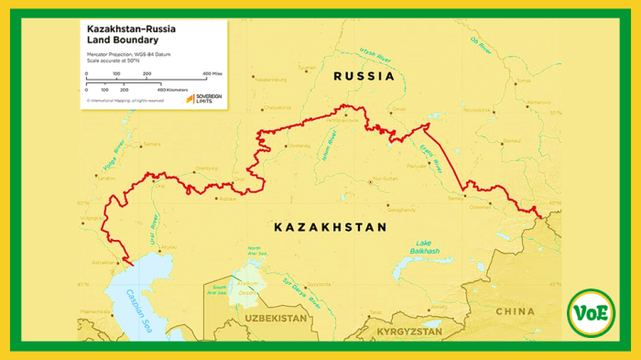
That could lead to their armed forces conforming to NATO standards with time like Azerbaijan’s just achieved, which could provoke a Ukrainian-like crisis, especially if Kazakhstan – which boasts the world’s longest land border with Russia – makes any moves in this direction. The likelihood of this happening would be greatly reduced if Russia was able to ensure that this corridor isn’t used for such military purposes, however, ergo the original reason why the FSB was tasked with fulfilling this role.

2. Prohibit The (Re-)Export Of US Military-Technical Equipment To Russia’s CSTO Allies

Building upon the above, the US should also promise not to export military-technical equipment to Russia’s CSTO allies nor authorize the re-export of such by Turkiye or whoever else (whether through TRIPP or whichever other means), ideally through a legally binding agreement with Russia. From Russia’s perspective, keeping its allies within its military-technical ecosystem is the most effective way of averting the emergence of a conventional security dilemma along the lines of what happened in Ukraine.

It’s with this in mind that Putin proposed a large-scale weapons program to his country’s CSTO allies during the bloc’s latest summit in Kyrgyzstan late last month. If any of them begin to “rebalance” their mutually beneficial military-security ties with Russia, which helps them counter unconventional threats like terrorists and drug gangs, then Russia would naturally suspect that they have ulterior motives. It would look like they’re being exploited as Ukrainian-like proxies against Russia and tensions could spike.

3. Prohibit Any NATO Exercises With Russia’s Southern Neighbours (Except For Azerbaijan)

The preceding proposals segue into the third one of prohibiting any NATO exercises with Russia’s southern neighbours except for Azerbaijan, which is already NATO member Turkiye’s mutual defence ally, but such drills mustn’t take place in Azerbaijan if Trump 2.0 is serious about managing Turkish-Russian tensions. This proposal was first made in Article 7 of Russia’s security guarantee requests to NATO in December 2021, but it only prohibited drills on their territory, not with them like is now being proposed.

Russia fears that the Turkish-led “Organization of Turkic States” (OTS) could one day assume a military-security role that replaces the CSTO’s, thus leading to their overlapping Kyrgyz and Kazakh members ditching the CSTO for the OTS, which would catalyse the earlier described dark scenario sequence. Given that Azerbaijan’s armed forces now conform with NATO standards, they too should be prohibited from drilling with these states, otherwise Baku could advance this process as NATO’s and/or Turkiye’s proxy.

4. Expand The Caspian Pipeline Consortium & Build A Complementary Gas Pipeline

Conor Gallagher’s analysis about how “The Trans-Caspian Pipeline Is Resurrected as the U.S. Plots a Return to Central Asia” draws attention to a re-emerging source of regional tensions. This can be averted by expanding the Caspian Pipeline Consortium (CPC, a Western co-owned oil pipeline across Russia connecting the Caspian and Black Seas) and building a complementary gas pipeline. Relying on this route as opposed to provoking a heated dispute over an undersea Turkmen-Azeri pipeline would be pragmatic.

American energy companies, chief among them Chevron and Exxon (which are already involved in the CPC), would wildly profit while Europe would receive an alternative to Russian energy (that the Kremlin would still profit from too from transit fees) without risking a dangerous regional crisis. To Russia’s credit, it never interfered with the CPC during the special operation, so Trump 2.0 could present its proposed expansion and complementary gas pipeline as a reliable flagship megaproject of their “New Détente”.

5. Replace Competition In Armenia & Georgia With Cooperation For Keeping Turkiye In Check

US meddling in Armenia and Georgia threatens regional stability, the first by turbocharging Turkiye’s rise as a Eurasian Great Power through TRIPP and the second by provoking another special operation if a future pro-Western government attacks Russian troops in Abkhazia and/or South Ossetia. Replacing their competition there with cooperation would unlock the mutual trust required for taking their “New Détente” to the next level while also importantly keeping Turkiye in check to both of their benefit.

While Turkiye helps contain Russia, it might one day become so strong of a Eurasian Great Power through the eastward expansion of its “sphere of influence” that it “goes rogue” and turns against the US. This could break the US’ planned containment of China if Turkiye cooperates closely with it in Central Asia. Brokering a Russian-Georgian Non-Aggression Pact and abandoning pressure on Armenia to kick Russian troops out, after which they’d be allowed to secure TRIPP as proposed, could prevent all of this.

———-

The essence of these five policy proposals is to preemptively avert another NATO-Russian security dilemma and the rise of associated threats along Russia’s frontiers that could lead to a repeat of their current proxy war in the worst-case scenario for sabotaging the promising Russian-US “New Détente”. These two nuclear superpowers can jointly shape the ongoing global systemic transition more effectively than any other duo can to ensure that it’s as stable as is realistically possible under the circumstances.

US management of Turkish-Russian tensions in the South Caucasus and Central Asia, the vast region of eight former Soviet Republics (over half of the former USSR’s constituent members) all along Russia’s southern periphery, is required for this to happen. Anything less greatly risks another outbreak of NATO-Russian tensions that could also abruptly reverse the US’ planned “Pivot (back) to (East) Asia” for more muscularly containing China after the Ukrainian Conflict ends. Trump 2.0 should therefore prioritize this.

Disclaimer: The views expressed in this article are author’s own and do not necessarily reflect the editorial policy of Voice of East.


#armenia #azerbaijan #centralAsia #csto #geopolitics #georgia #nato #southCaucasus #turkey #turkiye #usa

The “Community Of Central Asia” Could Reduce Russia’s Regional Influence

The “Community Of Central Asia” Could Reduce Russia’s Regional Influence

By Andrew Korybko

This new group might foster a stronger sense of shared regional identity among its members, even ethnic in the pan-Turkic sense (Tajikistan being the exception), than the one that they share with Russia through their Imperial- and Soviet-era pasts with all that entails for future policymaking.

The Central Asian Republics (CARs) fall within Russia’s “sphere of influence” for historical, economic, and security reasons. The first stems from their shared history under the Russian Empire and USSR, the second from the Russian-led Eurasian Economic Union (EAEU) in which Kazakhstan and Kyrgyzstan participate, while the third relates to the Russian-led Collective Security Treaty Organization (CSTO) that includes them and Tajikistan. Russia’s influence, however, has waned in recent years.

Its understandable prioritization of the special operation created the opportunity for Turkiye to expand its influence through the “Organization of Turkic States” (OTS) in which Kazakhstan, Kyrgyzstan, and Uzbekistan participate with Turkmenistan as an observer. The OTS began as a socio-cultural integration group that now also promotes economic and even security cooperation, thus challenging the EAEU and CSTO. The US also made major trade inroads there earlier this month during the latest C5+1 Summit.

These developments were greatly facilitated by the US-mediated normalization of Armenian-Azerbaijani ties and the attendant “Trump Route for International Peace & Prosperity” (TRIPP) that was unveiled during their three leaders’ White House Summit in early August. This will essentially lead to Turkiye injecting Western influence along Russia’s entire southern periphery, especially through the expected ramping up of military exports there, which threatens to pose serious latent challenges to Russia.

The latest move on this front was the CARs inviting Azerbaijan to join their annual Consultative Meeting of Heads of State and then rebranding as the “Community of Central Asia” (CCA), coincidentally right after their meeting with Trump. Regional integration is always positive, but in this case, it could also reduce Russia’s regional influence. That’s because all six might deal with Russia as a group instead of individually. This could lead to tougher negotiating stances if they’re emboldened by Turkiye and the US.

Azerbaijan’s inclusion suggests that it’ll share its experiences managing this summer’s tensions with Russia and serve as its Turkish ally’s supervisor within the CCA to align it as closely as possible with the OTS (remembering that non-Turkic Tajikistan isn’t a member). This likely role coupled with the timing of the CCA’s announcement right after the C5+1 and three months after TRIPP’s unveiling suggests that they want to rebalance ties with Russia and could rely on Azerbaijan’s guidance if this results in tensions.

Russia still plays an enormous economic role in the five CARs and ensures three of the CCA’s six members’ security through their membership in the CSTO. Putin also hosted the CARs leaders in early October during the Second Russia-Central Asia Summit where he committed to scaling up investments. Concrete limits therefore exist in terms of how far and fast the CCA could rebalance ties with Russia, so nothing dramatic is expected anytime soon, but some reduction of Russian influence might be inevitable.

That’s because the CCA could foster a stronger sense of regional identity, even ethnic in the pan-Turkic sense (Tajikistan being the exception), than the one that they share with Russia through their Imperial- and Soviet-era pasts with all that entails for future policymaking. This aligns with Turkiye’s interests, which envisages becoming a Eurasian Great Power through its new influence in Central Asia via TRIPP and the OTS, and that in turn advances the US’ grand strategic goal of containing Russia.

Disclaimer: The views expressed in this article are author’s own and do not necessarily reflect the editorial policy of Voice of East.


#armenia #azerbaijan #car #centralAsia #csto #eaeu #eurasianEconomicUnion #geopolitics #kazakhstan #kyrgyzstan #russia #tajikistan #turkey #turkiye #turkmenistan #ussr #uzbekistan

CSTO Signs New Security Roadmap in Bishkek Amid Armenia Boycott and Putin Ukraine Remarks

https://fed.brid.gy/r/https://timesca.com/csto-members-adopt-new-security-agreements-as-armenia-boycotts-bishkek-summit/