DoomsdaysCW
So, some digger bees seem interested in the #BeeNest. Hey, as long as it gets occupied by bees and not mice, I'm all for that!
I've posted about how to build #BumblebeeNests. Maybe put something together before you attempt to move them or disturb the pile? @bob @JimmyB
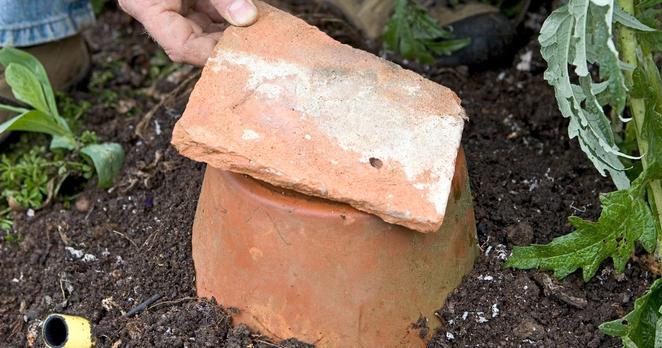
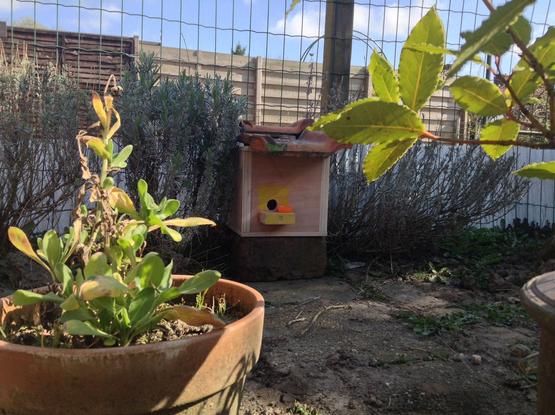
So, one bee nest has been installed [pic 1 shows it uncovered]. I put a broken pot over the hole [pic 2] to keep out the rain, but let's in air. I'll make adjustments if needed...
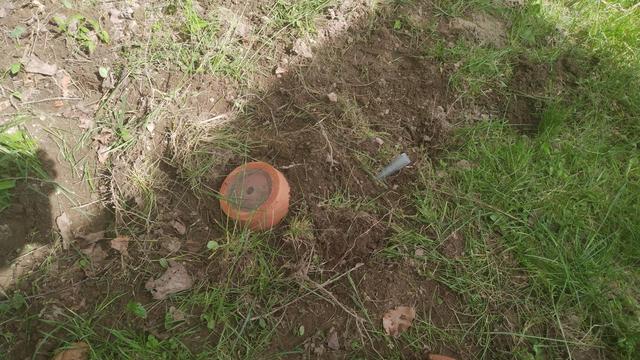
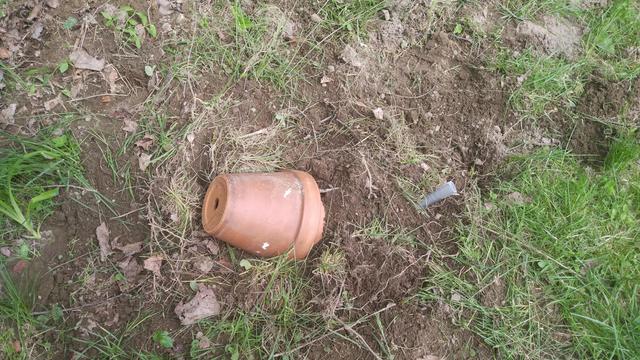
So, I think I'm going to go with a flowerpot design. I know where to find some mouse nest material and think I have all the materials on hand.
[PDF] Making bumblebee nest spaces
"Having bumblebees nesting in the garden is a great way to learn about them. If you have a nest, you may at first just see a single queen carrying food to the nest, which she stores for her future offspring. A few weeks later you should see the first worker bees who will be helping the nests get larger, and hopefully they’ll soon be followed by new queens or males, which should mate with males and queens from different nests before the new queens go into hibernation.
Providing nesting sites for bumblebees can be as simple as just leaving a quiet spot somewhere such as a corner or behind a shed, and letting the weeds and grass grow tall. But if you want to go further than that, you could try making a bumblebee nest space yourself. We have teamed with up with the people at Hartley Botanic to produce this guide for making bumblebee nests. It may seem strange to think about nesting bumblebees in late summer, but if you make one now you may find that mice will use it over the autumn and winter. Bumblebee queens searching for nests actually seek the scent of mice when looking for nests. Having the mice in residence now could increase your chances of having your very own bumblebee nest next year.
So go on and have a go, and let us know if you have made any successful bumblebee nests yourself!"
https://www.bumblebeeconservation.org/news/making-bumblebee-nest-spaces/
Link to PDF:
https://www.bumblebeeconservation.org/wp-content/uploads/2024/07/Making_a_bumblebee_nest.pdf
#SolarPunkSunday #DIYBeeHouses #BeeNesting #BeeHouses #BumblebeeNests #BeeHousePlans
Homemade #BumblebeeNests: Making A Home For Bumblebees
By Darcy Larum
last updated 16 November 2022
" 'To make a prairie it takes a clover and one bee. One clover and a bee, and revery. The revery alone will do, if bees are few.' Emily Dickinson. Sadly, bee populations are declining. Bees are becoming few in numbers. The way things are heading, bees and prairies may someday just be things we see in our daydreams. However, like Emily Dickinson’s one bee, each one person who takes steps to help our pollinators is also helping our prairies and the future of our planets. Honeybee decline has made many headlines in the past few years, but bumblebee populations are declining too. Continue reading to learn how you can help by making a home for bumblebees.
Bumblebee Shelter Info
It may surprise you to learn that there are over 250 species of bumblebees, which mostly live in the Northern Hemisphere, though some are found throughout South America, too. Bumblebees are social creatures and live in colonies, like honeybees. However, depending on species, a bumblebee colony only has 50-400 bees, much smaller than honeybee colonies. In Europe, North America and Asia, bumblebees are very important in the pollination of agricultural crops. Their decline and loss of safe habitats will have devastating effects on our future food sources. In spring, queen bumblebees come out of hibernation and begin searching for a nest site. Depending on species, there are above ground nesters, surface nesters or below ground nesters. Above ground nesting bumblebees usually make their nests in old bird boxes, crevices in trees or in any suitable site they can find several feet above the ground. Surface nesters select nest sites that are low to the ground, such as a pile of logs, cracks in house foundations or other out of the way locations. Below ground nesting bumblebees often nest in the abandoned tunnels of mice or voles.
How to Make a Bumblebee Nest
The bumblebee queen seeks out a nesting site that already has nesting materials, such as twigs, grasses, straw, moss and other garden debris in it. This is why abandoned nests of birds or small mammals are often selected as bumblebee nesting sites. Gardeners who are too tidy about garden debris may actually inadvertently deter bumblebees from nesting in their yards. Bumblebees also prefer a nesting site that is in a partially shaded or shaded location, which is not frequented by people or pets. The queen bumblebee needs to visit about 6,000 flowers to attain the nectar she will need to arrange her nest, lay her eggs and maintain the proper temperature in the nest, so a bumblebee nest needs to be located near plenty of flowers. An easy way to give bumblebees shelter is to leave old bird nest boxes or bird nests in place for bumblebees to move into. You can also make bumblebee nesting boxes with wood. A bumblebee nesting box is very similar in construction to a bird nesting box. Usually, a bumblebee box is 6 in. x 6 in. x 5 in. (15 cm. x 15 cm. x 8 cm.) and the entrance hole is only about ½ inch (1.27 cm.) in diameter or less. A bumblebee nesting box will also need to have at least two other smaller holes near the top for ventilation. These nest boxes can be hung, set at ground level, or a garden hose or tube can be fixed to the entrance hole as a faux tunnel and the nest box can be buried in the garden. Be sure to fill it with organic nesting material before putting it in position. You can also get creative when creating a bumblebee house. One brilliant idea I came across was using an old #TeaPot – the spout provides a tunnel/entrance hole and ceramic tea pot lids usually have vent holes. You can also create a bumblebee house from two #TerraCotta pots. Glue a piece of screen over the drain hole in the bottom of one terra cotta pot. Then attach a piece of hose or tubing to the other terra cotta pot’s drain hole to act as a tunnel for bumblebees. Put nesting material in the terra cotta pot with the screen, then glue the two pots together lip to lip. This nest can be buried or half buried in an out of the way garden spot with plenty of flowers. Additionally, you can also bury a section of hose in the soil so that the center of the hose is buried but with both open ends above the soil. Then place an upside down terra cotta pot over one side of the open hose end. Place a roof slate over the pot’s drainage hole to allow for ventilation but also keep rain out."
Source:
https://www.gardeningknowhow.com/garden-how-to/beneficial/making-homes-for-bumblebees.htm
#SolarPunkSunday #BumblebeeNests #BeeHouses #DIY #DIYBeeHouses
#Pollinators #BeeNesting #BeeHouses #BeeHousePlans
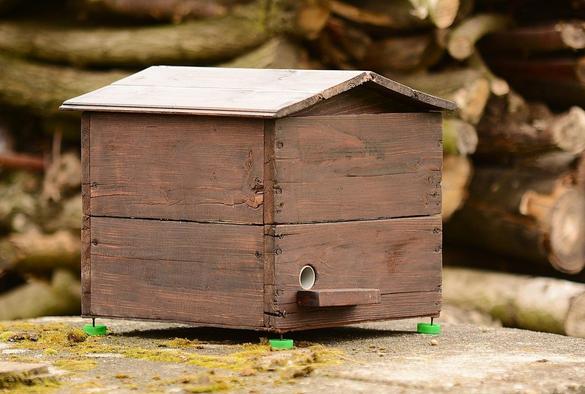
Build a #NestBox for #Bumblebees
by JanW
Excerpt: "Bumblebees can be held in a very wide range of nest boxes, made out a lot of materials. You can keep them in a buried #flowerpot or #teapot, a cardboard box, stone box or styrofoam box, and many more. I will show you how to build just one type of wooden box here. If you are interested in the other types of boxes, then you'll find lots of designs on the internet.
"Bumblebees are not very fussy when they choose a nest, but they like a place with a long entrance (some of them can dig tunnels of more than 2 meters to their nest) or a vestibule.
"The measurements of the box are not an exact science. My boxes are 350mm long, 196mm wide and 170mm high, but you can alter these dimensions to match bits of leftover wood you have lying around. The only things that are important are, that the entry hole should be about 25mm in diameter and that the nest chamber itself should not be smaller than 150mm x 150mm x 150mm.
"I used 18mm plywood for the sides and 9mm plywood for the top and the bottom. Everything is glued and screwed together except for the lid. The lid is held into place by two strips of wood that are glued on the inside of the lid to prevent it from sliding open. A heavy roof tile is put on top to prevent it from blowing off and to protect it against the rain.
On one of the boxes that I build, I added a 'landing pad' for the bumble bees so that they don't have to fly directly into the hole.
"Last thing to do is to cover the ventilation holes with some sort of very fine mesh to prevent the bumblebees from using it as a 'door' and to prevent other animals like ants and wax-moths to come inside. Make sure to fix it properly as bumble bees are very strong. The first queen that I added pushed the mesh away and escaped.
"To give the bumblebees an orientation point, you can paint the entrance around the opening in a bright color. Bumble bees are especially attracted to blue, but can't see a lot of red so that's something to keep in mind."
Learn more:
https://www.instructables.com/Build-a-Nest-Box-for-Bumblebees/
#SolarPunkSunday #DIYBeeHouses #BeeNesting #BeeHouses #BumblebeeNests #BeeHousePlans
Build a Nest Box for Bumblebees
Build a Nest Box for Bumblebees: It is mid-March now and this is the moment, here in the Netherlands, that the bumblebee queens are coming out of hibernation. You can easily recognize them, because they are the only bumble bees flying out there for the moment. All bumblebees die in…
@afewbugs So, you know, maybe our bumblebees would like the pottery nests as well. They had nested in some old drainage pipe that was buried underground, but had some holes that were above ground. I observed them going in and out of there during one of our very dry summers, but unfortunately a sudden and severe rainstorm flooded out the pipe (which is why it was there in the first place).
HT @afewbugs ! 🐝
UK - How to make a bumblebee nest
BBC Gardeners' World Magazine
Monday, 8 July 2019
"Find out how to help bumblebees by creating a simple nest for these important pollinators."
https://www.gardenersworld.com/how-to/diy/how-to-make-a-bumblebee-nest/
#SolarPunkSunday #Bumblebees #BeeNests #Pollinators #BumblebeeNests #Bees #DIY