Fungal electronics
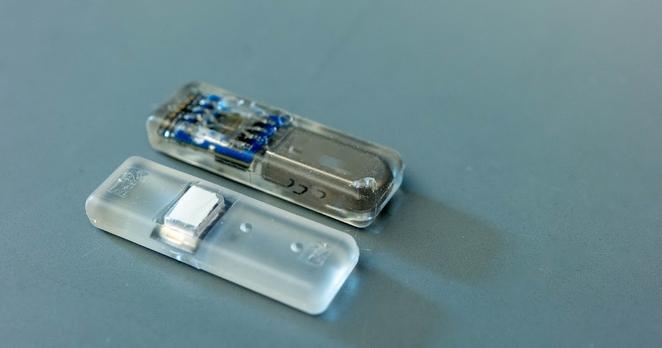
Fungal electronics is a family of living electronic devices made of mycelium bound composites or pure mycelium. Fungal electronic devices are capable of changing their impedance and generating spikes of electrical potential in response to external control parameters. Fungal electronics can be embedded into fungal materials and wearables or used as stand alone sensing and computing devices.
arXiv.orgAt Smidmart, we are at the forefront of the future of measurement technology — where digital voltmeters and ammeters evolve and enter the world of neural research.
know more:
https://zurl.co/tnrUQ #Smidmart #NeuralResearch #FutureTech #VoltageMonitoring #BioElectronics
香菇晶片革命:美國團隊開發永續記憶電阻器,90%準確度開啟神經形態計算新時代
新聞摘要 美國俄亥俄州立大學的研究團隊在今年10月發表了一項突破性研究,證實食用香菇的菌絲體可被培養成為功能完整的記憶電阻器(memristor),用於存儲和處理電腦數據。該研究成果已發表在國際頂級學術期刊《PLOS ONE》上,引發全球科技業界的廣泛關注。
鴻華資料救援New therapeutic brain implants defy the need for surgery | MIT News
What if clinicians could place tiny electronic chips in the brain that electrically stimulate a precise target, through…
#NewsBeep #News #Headlines #Bioelectronics #Brainimplants #brain-computerinterface #CahiraTechnologies #circulatronics #DeblinaSarkar #Latvia #LV #Neuromodulation #ShubhamYadav
https://www.newsbeep.com/230554/

Breakthrough in Bioelectronics: Artificial Neurons Mimic Nature
Scientists create low-voltage artificial neurons that can communicate directly with biological systems, paving the way for more efficient computing.
TechLife
Breakthrough in Bioelectronics: Artificial Neurons Mimic Nature
Scientists create low-voltage artificial neurons that can communicate directly with biological systems, paving the way for more efficient computing.
TechLife🍄 Oh, joy! Researchers have finally cracked the code to power our future with the same fungi that make our overpriced stir-fry taste earthy. Because who wouldn't want their high-frequency
#bioelectronics to double as a garnish? 😂🔌
https://journals.plos.org/plosone/article?id=10.1371/journal.pone.0328965 #fungiinnovation #sustainablefuture #foodtech #researchhumor #HackerNews #ngated
Sustainable memristors from shiitake mycelium for high-frequency bioelectronics
Neuromorphic computing, inspired by the structure of the brain, offers advantages in parallel processing, memory storage, and energy efficiency. However, current semiconductor-based neuromorphic chips require rare-earth materials and costly fabrication processes, whereas neural organoids need complex bioreactor maintenance. In this study, we explored shiitake (Lentinula edodes) fungi as a robust, sustainable alternative, exploiting its adaptive electrical signaling, which is akin to neuronal spiking. We demonstrate fungal computing via mycelial networks interfaced with electrodes, showing that fungal memristors can be grown, trained, and preserved through dehydration, retaining functionality at frequencies up to 5.85 kHz, with an accuracy of 90 ± 1%. Notably, shiitake has exhibited radiation resistance, suggesting its viability for aerospace applications. Our findings show that fungal computers can provide scalable, eco-friendly platforms for neuromorphic tasks, bridging bioelectronics and unconventional computing.

Sustainable memristors from shiitake mycelium for high-frequency bioelectronics
Neuromorphic computing, inspired by the structure of the brain, offers advantages in parallel processing, memory storage, and energy efficiency. However, current semiconductor-based neuromorphic chips require rare-earth materials and costly fabrication processes, whereas neural organoids need complex bioreactor maintenance. In this study, we explored shiitake (Lentinula edodes) fungi as a robust, sustainable alternative, exploiting its adaptive electrical signaling, which is akin to neuronal spiking. We demonstrate fungal computing via mycelial networks interfaced with electrodes, showing that fungal memristors can be grown, trained, and preserved through dehydration, retaining functionality at frequencies up to 5.85 kHz, with an accuracy of 90 ± 1%. Notably, shiitake has exhibited radiation resistance, suggesting its viability for aerospace applications. Our findings show that fungal computers can provide scalable, eco-friendly platforms for neuromorphic tasks, bridging bioelectronics and unconventional computing.
Mushroom Memory Chips: A Sustainable Future
Researchers have made a groundbreaking discovery in bioelectronics, using mycelium to create memory chips. This technology could reduce e-waste and promote sustainability. #FACTOVATE #MushroomMemoryChips #Bioelectronics
https://factovate.com/mushroom-memory-chip/
🌱🧠 Bio-brain breakthrough! UMass scientists build artificial neurons from bacteria nanowires, mimicking real brain cells at ultra-low voltage—20x more efficient than before. Low-power AI & bioelectronics ahead! Read more: https://thedebrief.org/scientists-build-artificial-neurons-from-bacteria-that-communicate-like-real-brain-cells/
@goodnews
#GoodNews #ArtificialNeurons #BacteriaTech #Bioelectronics #ScienceWin

Scientists Build Artificial Neurons from Bacteria That Communicate Like Real Brain Cells
Science, Tech and Defense for the Rebelliously Curious.
The Debrief