Siliziumchips sind am physikalischen Limit:
Biocomputer nutzen jetzt menschliche Hirnzellen zur Datenverarbeitung. Schweizer Labore stellen diese Neuroplattformen via Cloud bereit. Der Energieverbrauch liegt dabei eine Million Mal unter herkömmlichen Chips. Trainiert wird nicht per Code, sondern via Dopamin-Belohnungssystem.

Ist das der nötige Schritt für effiziente KI oder ein ethischer Albtraum? #Biocomputer #FinalSpark #KI
https://www.all-ai.de/news/news24/biocomputer

Biocomputer nutzen menschliche Hirnzellen: Das Ende der klassischen Silizium-Chips?

Erfahre, wie lebende Organoide jetzt Rechenzentren erobern und warum diese Technik den KI-Markt revolutioniert.

All-AI.de

https://www.heise.de/news/CL1-ist-erster-kommerzieller-Computer-mit-menschlichen-Hirnzellen-10312601.html

#biocomputer aus menschlichen Gehirnzellen. Kommerziell verfügbar?
Habe ich erst für einen Fake gehalten.

Bin irgendwie geschockt und fasziniert. Was sagen Ethiker zum Thema. Was wenn ein KI Modell darauf ein Bewusstsein bekommt? Ist es dann menschliches Leben?

Erster Serien-Computer mit menschlichen Hirnzellen ist erstaunlich günstig

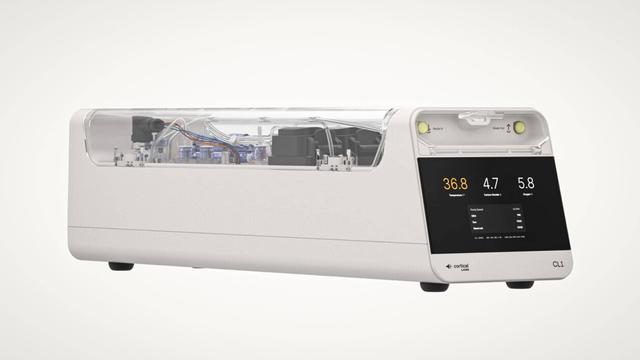
CL1 heißt der erste, kommerziell vertriebene Computer, in dem menschliche Gehirnzellen rechnen. Der Preis ist niedrig, die Lebenserwartung auch.

heise online

Segnate la data di ieri: a Barcellona è stato presentato il primo biocomputer commerciale che utilizza cellule cerebrali umane vive. Il CL1 di Cortical Labs fonde biologia e tecnologia creando un'intelligenza sintetica che impara più velocemente e consuma meno energia dell'AI tradizionale. Un cambiamento incredibile, che potrebbe trasformare la ricerca medica e neurologica, aprendo orizzonti (e nuovi interrogativi etici) nella comprensione del cervello.

#Biocomputer

https://www.futuroprossimo.it/2025/03/cervello-in-scatola-cl1-biocomputer-ai-confini-dellintelligenza/

Cervello in scatola: CL1, biocomputer ai confini dell'intelligenza

Il biocomputer CL1 fonde cellule cerebrali umane e hardware: un'intelligenza sintetica biologica, più dinamica ed efficiente di qualsiasi AI.

Futuro Prossimo
A company in Switzerland known as “Final Spark” has constructed a bizarre hybrid biocomputer that combines lab-grown miniature human brains with conventional electronic circuits. This approach saves an extraordinary amount of energy compared to normal computers, but there is a big problem. The lab-grown miniature human brains keep wearing out and dying, and so scientists have to keep growing new ones to replace them. Stem cells that are derived from human skin tissue are used to create the 16 spherical brain “organoids” that the system depends upon.

[...]
This new bioprocessing platform, called the Neuroplatform, uses small versions of human brains to do computer work instead of silicon chips. The company says it can fit 16 of these mini-brains onto the Neuroplatform and use a fraction of the energy required to power a traditional set up.

The platform, currently adopted by nine institutions, integrates hardware, software and biology to construct a processing system that is energy-efficient and high-performing.

Only a matter of time.......

#Tech #biocomputer
They Are Using Lab-Grown Human Brains That They Have Enslaved Called “Organoids” To Run Computers

They Are Using Lab-Grown Human Brains That They Have Enslaved Called "Organoids" To Run Computers

When I first started researching this, I could hardly believe that it was true. A company in Switzerland known as "Final Spark" has constructed a bizarre hybrid biocomputer that combines lab-grown miniature human brains with

The Most Important News

People freaking out about these little human brain organoids like they're fully fledged beings had better be life-begins-at-conception prolifers or I'm going to lose my mind. In for a penny, in for a pound.

I swear the AI hateboner people love to wave around is gonna stifle actual important conversations about ethics in, well, just about anything even tangentially related.

#brainorganoid #organoid #biocomputer #ai #hateboner

#biotech #biocomputer
World's first bioprocessor uses 16 human brain organoids for ‘a million times less power’ consumption than a digital chip https://www.tomshardware.com/pc-components/cpus/worlds-first-bioprocessor-uses-16-human-brain-organoids-for-a-million-times-less-power-consumption-than-a-digital-chip
World's first bioprocessor uses 16 human brain organoids for ‘a million times less power’ consumption than a digital chip

Swiss startup claims its Neuroplatform is a first for biocomputing.

Tom's Hardware
‘Biocomputer’ combines lab-grown brain tissue with electronic hardware

A system that integrates brain cells into a hybrid machine can recognize voices.

Haben Gehirne in der Petrischale Rechte? Auf Gehirnzellen basierende Computer bieten Chancen, aber auch ethische Herausforderungen. #Hirnorganoid #Neurocomputer #Biocomputer #Neuroethik
https://www.scinexx.de/news/technik/haben-gehirne-in-der-petrischale-rechte/
Haben Gehirne in der Petrischale Rechte?

Wie lassen sich Bio-Computer auf Basis lebender Gehirnzellen verantwortungsvoll erforschen, einsetzen und weiterentwickeln? Diese Frage diskutieren

scinexx | Das Wissensmagazin

Cloneremo il cervello umano in intelligenze organoidi. Cervello umano: quanti gigabyte o terabyte può memorizzare. Quanti dati può conservare il cervello umano e quali sono i rapporti con l'intelligenza artificiale. L'ulteriore evoluzione rappresentata dall'intelligenza organoide. Cos'è e come funziona.

#AlphaGo #biocomputer #cervelloumano #intelligenzaartificiale #intelligenzaorganoide

https://scienzamagia.eu/world-wide-web/cloneremo-il-cervello-umano-in-intelligenze-organoidi

Cloneremo il cervello umano in intelligenze organoidi

Cervello umano: quanti gigabyte o terabyte può memorizzare. Quanti dati può conservare il cervello umano e quali sono i rapporti con l'intelligenza artificia

Gehirnzellen als Biocomputer: Vortrag von australischen Ausnahmewissen­schaftler am 25. April 2023 an der TU Dresden

Im vergangen Oktober veröffentlichte der Neurowissenschaftler Dr. Brett Kagan mit seinen Kolleg:innen von Cortical Labs in Melbourne, Australien, eine wissenschaftliche Sensation: Im Labor …

TU Dresden