 John Rubinstein
Mycobacteria possess a branched and flexible electron transport chain.
In her review in #BiochemSocTrans, Yingke Liang
shows how #cryoEM is helping to reveal the sophistication of mycobacterial respiration, and how it can be targeted to treat #tuberculosis.
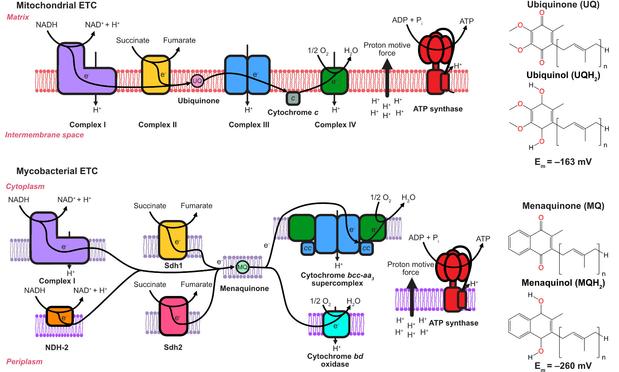
Structural analysis of mycobacterial electron transport chain complexes by cryoEM
The bacterial genus Mycobacterium comprises numerous pathogenic species including M. tuberculosis, the causative agent of the disease tuberculosis. Mycobacteria are obligate aerobes that generate cellular energy through oxidative phosphorylation, the combined activities of the electron transport chain (ETC) and adenosine triphosphate (ATP) synthase. This reliance on oxidative phosphorylation makes the process an attractive target for development of drugs to treat mycobacterial infections. However, targeting the ETC is complicated by the highly branched nature of the chain in mycobacteria and the ability of mycobacteria to alter the expression of ETC constituents in different growth conditions. Here, we review recent characterization of the branched and flexible ETC in mycobacteria, with an emphasis on the structural characterization of mycobacterial ETC complexes by electron cryomicroscopy.