 Bernstein Network
Don't miss out on upcoming funding opportunities and awards for your #CompNeuro research!
Explore our calls page for a comprehensive list 👉 bit.ly/3PCRRPH
Don't miss out on upcoming funding opportunities and awards for your #CompNeuro research!
Explore our calls page for a comprehensive list 👉 bit.ly/3PCRRPH
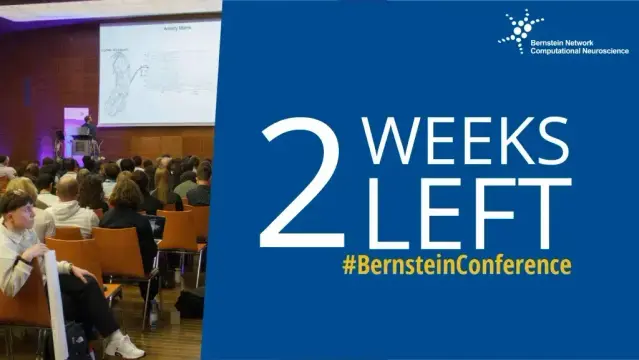
⏳ Two weeks left to submit your Contributed Talk abstracts for the #BernsteinConference 2026!
🗓️ Deadline: May 27, 15:00 CEST
All info and submission 👉 https://bernstein-network.de/bernstein-conference/abstract-submission/
💪 Brain actively adapts to stress
A study including Bernstein member Michael Wibral has found that resilience is subject to active changes in the brain.
Read the whole story 👉️ https://bit.ly/4tpKKxa
@leibnizgemeinschaft #UniMedizinHalle @uni-muenster.de
#BernsteinNetwork #CompNeuro 🧠📈

📢 Attention early-career researchers!
💸 We're offering you 10 travel grants to attend the #BernsteinConference 2026!
🗓️ Deadline: July 1, 17:00 CEST
Eligibility and all information here 👉 https://bernstein-network.de/bernstein-conference/early-career-scientists/travel-grants/
⌛️ Only 48 hours left to send us your Satellite Workshop proposals for the #BernsteinConference 2026!
🗓️ Deadline: April 29, 15:00 CEST
More info 👉 https://bit.ly/40HybkI
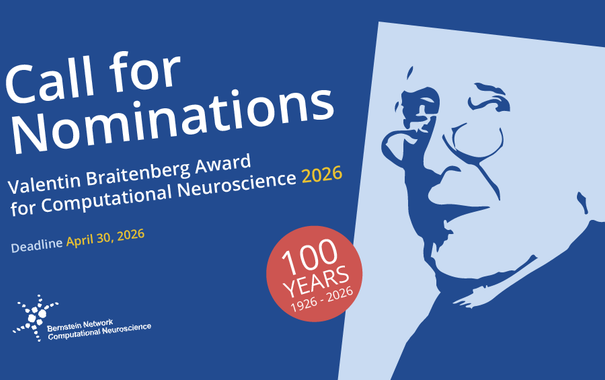
🏆 Last days to nominate someone for the Valentin Braitenberg Award 2026!
🗓️ Deadline: April 30
More information 👉 https://bernstein-network.de/en/network/a...
⏳ One week left to send us your Satellite Workshop proposals for the #BernsteinConference 2026!
🗓️ Deadline: April 29, 15:00 CEST
More info 👉 https://bit.ly/40HybkI
📢 You can now submit your abstracts for the #BernsteinConference 2026!
Submissions can be considered for either contributed talks or poster presentations.
All information and submission form here 👉 https://bernstein-network.de/bernstein-conference/abstract-submission/
⏳ Two weeks left to send us your Satellite Workshop proposals for the #BernsteinConference 2026!
🗓️ Deadline: April 29, 15:00 CEST
More info 👉 https://bit.ly/40HybkI
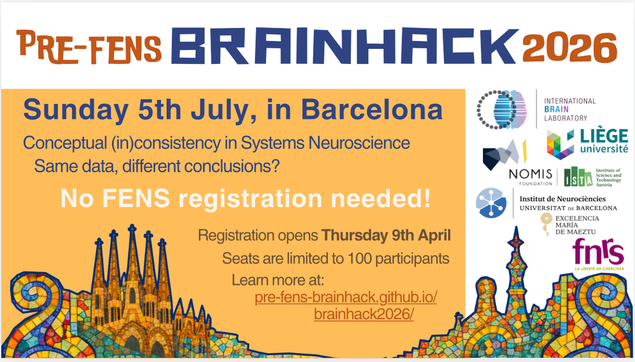
🧠💻 Registration is now OPEN for the Brainhack satellite event at #FENS2026!
Register using this form: https://docs.google.com/forms/d/1cBkxlWjUHNtjiV3iciB5R7ibKe5srLC0XtbHUZ_H7DY/edit
Join on Sunday, July 5th to explore the CON2PHYS concept, highlighting how different analysis choices on the same datasets can produce different outcomes.
✨ Open to everyone; no FENS registration required!
📝 Learn more: https://pre-fens-brainhack.github.io/brainhack2026/
#Brainhack #OpenScience #Neuroscience #FENS2026 #CompNeuro #BernsteinNetwork