allrite rites
Art of the Score: James Horner
You’re here, there’s nothing to fear…
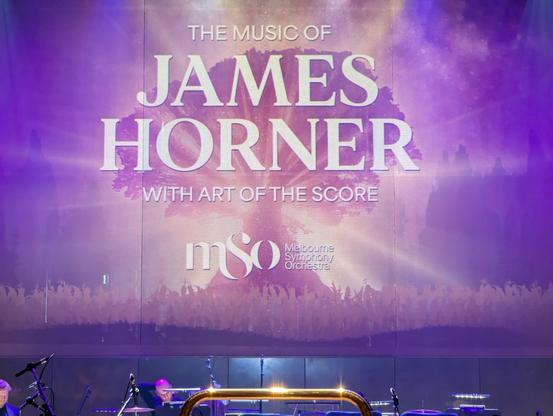
Yes, I’m here, turns out there was nothing to fear to get here (we’ll see on the way back). I’m in Melbourne, just for the day, to hear The Music of James Horner with Art of the Score and the Melbourne Symphony Orchestra.
After presenting the music of John Williams and Hans Zimmer, the Art of the Score team are back to tackle composer James Horner. You don’t hear so much James Horner these days and there’s a good reason for that: He died in June 2015 after crashing his plane. You almost certainly know his music.
James Horner was prolific, composing music for some of Hollywood’s greatest hits as well as many movies you’ve probably never heard of. This concert gives an overview of some of Horner’s more popular music and attempts to give a background into some of what makes them tick.
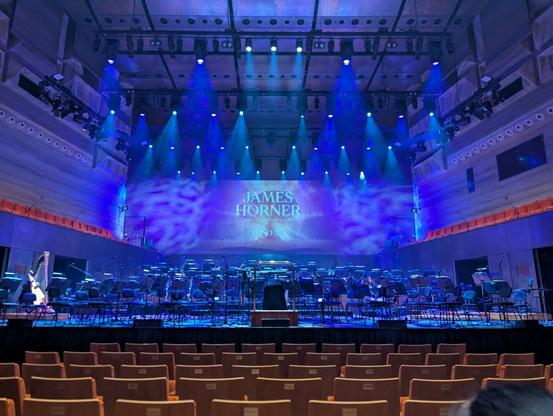
I’m seated eight rows back, dead middle in Hamer Hall, the Melbourne Symphony Orchestra’s home. The stage is packed with instruments, with barely any space left for the presenters. Stylised visuals are projected on to white drapes at the rear. Along with the smoke and lighting effects, the effect is impressive.
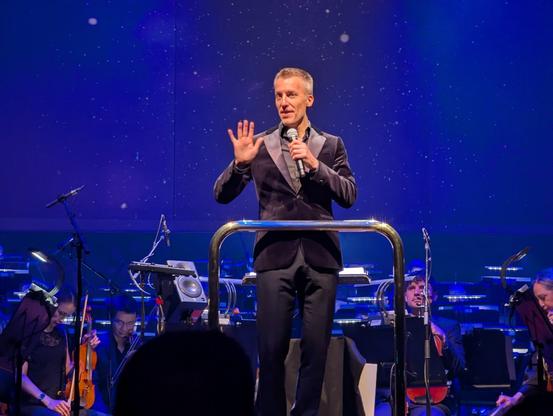
The orchestra emerges, then the conductor, Nicholas Buc, and they launch into the Final Credits from Star Trek II: The Wrath of Khan. I remember seeing the movie at the cinema when I was very young (so traumatic!) and thinking that Horner’s music was rather unimpressive compared to Jerry Goldsmith’s score to the previous entry: Star Trek: The Motion Picture.
Horner’s music is more classically informed, with fewer bold themes than some of his contemporaries. I have long since reappraised his music and Horner’s music forms a significant part of my soundtrack collection.
Listening to The Wrath of Khan live is anything but unimpressive. It’s rich and full and exciting and I am immediately ready for a lot more!
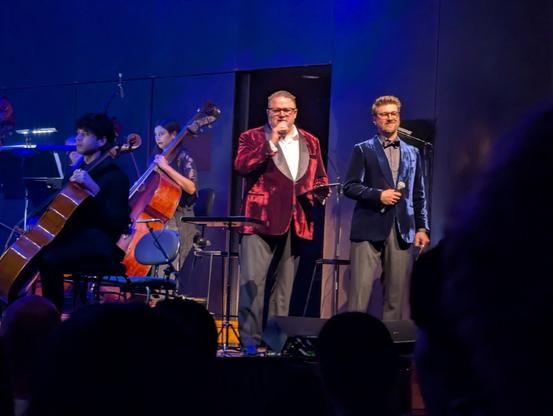
The other two thirds of the Art of the Score trio now join Maestro Buc on stage. Music producer Andrew Pogson and university Professor (and presenter of ABC Classic FM’s Screen Sounds program) Dan Golding introduce themselves and James Horner, who quit a career in academia for Hollywood.
Andrew Pogson and Dan GoldingAnother element of the concert are also welcomed prior to the next piece. On stalls either side overlooking the stage, dressed in pink, are the Australian Girls Choir. The sounding of drums and a lone trumpet sounds as we launch into the Apollo 13: Suite.
Actually, the launch itself is not incorporated into the very martial suite, which is a bit of pity, because it is my favourite out of a great set of tracks. However, we do make a safe splashdown and the choir is superb.
As if the Apollo 13 mission wasn’t danger enough, we now delve into Horner’s “danger motif” and the tritone, the so called “Devil’s interval”. Horner uses a sequence of four notes, including this interval, to signify danger and boy, does he use it a lot.
Stop that Devil worshiping or it’s hammer time!The power of the tritone is illustrated with examples from other composers, including John Williams’ Star Wars and Michael Giacchino paying tribute to Horner with his theme to the Star Trek reboot.
Nowhere is the more danger than back out in space where the Xenomorphs lurk, with a suite from Aliens. Like Wrath of Khan, this is another movie where I came out of the cinema thinking that the score was a bit weak to be of much interest, though again I have changed my opinion since. The quiet passages worth to build suspense and mystery, then the percussion dramatically takes over with Ripley’s Rescue. Percussion is one of Horner’s great strengths and it is ably performed today by the enlarged percussion section at the rear of the orchestra.
There is more work for the percussionists as we take to the air with The Rocketeer: The Flying Circus. I’m familiar with the main theme and did watch the movie once a long time ago, but I’m not sure I’ve ever listened to the full score. The Flying Circus is a swashbuckling sequence and a lot of fun.
It is now time to play one of Horner’s most famous scores, a suite from Braveheart, the story of the Scottish freedom fighter William Wallace, as portrayed by Mad Max, I mean Mel Gibson. That means welcoming guest performer Dr Matthew Horsley and his uilleann pipes, Irish flutes and whistles to the stage.
Check out this pipe!Horner loves his Celtic music, with bagpipes and other Celtic instruments heard in many of his scores, so it’s wonderful to have the real thing performed live here. However, Horner’s choice of the Irish uilleann bagpipes over the Scottish version certainly provoked some discussion. Perhaps he had endured German heavy metal dudes dressed in tartan playing bagpipes before and got turned off. Understandable.
Braveheart is one of those movies I’ve watched once and never want to see again. The ending is so gut-wrenching. Literally. The score is still great, but on reduced play these days because of the memories.
Then it’s a 20 minute interval.
We return with the theme to one of my favourite James Horner scores, Willow. The soundtrack was the first CD I ever bought and I had to get my uncle to copy it to cassette so I could listen to it. Unfortunately, they left out a lot of music and it wasn’t until decades later that I got hold of an extended edition. This time I converted the CD(s) to MP3s!
My parents used to listen to ABC Classic FM all the time and once I heard a theme from Willow playing on the radio, or so I thought. It was different, but Madmartigan’s Theme was there.
It was Schumann’s Symphony No. 3 in E-Flat Minor “Rhenish”, from which Horner borrowed the theme. That brings up another aspect of Horner’s compositions which is not mentioned today, that many of his scores incorporate melodies from classical and folk compositions by others. Horner also reuses a lot of music across many of his scores, which partly explains how he has been so prolific across his shortened career, composing for over 160 movies.
We are treated to a suite of three of these movies with Casper, An American Tail and The Land Before Time, lyrical pieces for children, the last two animated features, that illustrate Horner’s use of a children’s choir. Rather than just harmonising, as they did for Apollo 13, the choir now have a chance to sing lyrics.
My degree was in mathematics, so the next piece, A Kaleidoscope of Mathematics from A Beautiful Mind transcends music for me. Also, I remember buying the CD soundtrack from a shop in St Kilda on a trip to Melbourne, so there’s a connection there too!
The score features a solo female voice, today performed beautifully by guest soprano Amy Lehpamer. Absolutely wonderful!
The following piece Promises and End Credits from The Amazing Spider-man is also a favourite of mine. Horner really captures the essence of our friendly neighbourhood superhero swinging his way through the city, once again using some fantastic percussion.
I’m not going to repeat Andrew Pogson’s segue into Field of Dreams: The Place Where Dreams Come True. This is a quiet piece featuring lovely classical guitar work. The phrase “If you build it, they will come” has sadly become a byline for wasting time on projects where they never come at work. I try to distract myself with the music here.
There is more classical guitar in The Ride from The Mask of Zorro, this time played with a Spanish style in 6/8 or 12/16 time, or in groups of triplets. It’s a real adventure in music!
The final two pieces utilise the entire orchestra and guest performers, playing suites from James Cameron’s blockbusters Avatar and Titanic. And by entire orchestra, it really is the entire orchestra.
If you were to ask me to pick James Horner’s greatest score, I would probably say Avatar. It has gentle wonder, thrills and drama and that is wonderfully captured by this performance. The choir singing in Na’vi and the magic of the alien landscape with the exotic sound of Matthew Horsley on his pipes, leading up to the sheer power of the triumphant final battle featuring incredible rapid off-beat percussion work. For me, this is the highlight of the day and it keeps playing in my head on the flight home.
Then comes what is probably James Horner’s most popular score, his Celtic flavoured music to Titanic. There is Hymn to the Sea, the excitement of Leaving Southhampton and the race to escape the sinking. A little less of Rose than I would have thought, but of course that is being saved up for a special treat.
For after the applause comes an encore. Amy Lehpamer channeling Celine Dion with a perfect performance of My Heart Will Go On from Titanic. What better way to end the concert?
James Horner has composed such a range of scores that it would have been impossible to cover them all in a single concert. There was his electronica phase with cheesy 80’s scores to movies like Commando that don’t really need orchestral treatment. He composed swing style pieces (glad not to hear them) along with some haunting music for the Cocoon movie and its sequel that have a place in my heart. And then there were the jazz inspired scores for movies like Class Action and one of my favourites, Sneakers. There is certainly enough material and commentary for a follow up concert and I hope that the Art of the Score will bring it to Sydney soon so I can share it with the rest of my family!
Although I have been to many concerts featuring his luminaries like John Williams, Hans Zimmer and others, I don’t think that I have ever heard James Horner’s music performed live before. That, along with Horner’s ability to use the entire orchestra and beyond, made this a special event that I thoroughly enjoyed. Bravo to the Art of the Score, the Melbourne Symphony Orchestra, the Australian Girls Choir and the rest of the team for a fantastic concert.
#AmyLehpamer #AndrewPogson #ArtOfTheScore #AustralianGirlsChoir #classicalMusic #Concert #DanGolding #JamesHorner #MatthewHorsley #MelbourneSymphonyOrchestra #music #NicholasBuc #orchestra #piano #reviews