“Indifference to Practically Everything But Rhyme”: the thread about William McGonagall’s elegy to Leith

A classic example of his indifference to practically everything but rhyme“; the withering summary by an Edinburgh Evening News journalist in 2002 when recalling the work The Ancient Town of Leith by the poet and tragedian William McGonagall (or as he liked to style himself later in life; Sir William Topaz McGonagall, Knight of the White Elephant of Burmah). Sir William is a man most associated with the city of Dundee, but was born and would die in Edinburgh and is fondly remembered for his prolific output of universally awful poetry. In the words of Hugh McDiarmid:

McGonagall is in a very special category, and has it all to himself.

Close up of the title of the printed poem, including McGonagall’s signature.

According to his biography by Norman Watson, McGonagall and his wife returned to Edinburgh via Leith in May 1895. Inspired by his new surroundings – and by his perpetual lack of money – he immediately got to work churning out locally-themed broadsides such as “Beautiful Edinburgh“, “New North Bridge Ceremonials” or “Lines In Praise of Professor Blackie“. These he attempted to hawk on the streets to make ends meet and to try and get himself invited into the parlours of polite (and hopefully, paying) society. By the time he penned The Ancient Town of Leith the McGonagalls were resident at 21 Lothian Street (demolished in 1912 to make way for an extension to the Royal Scottish Museum) and his health, finances and reputation were all in terminal decline.

Without further ado, let us take a few minutes to distract ourselves from modern life and enjoy this stellar example of “Sir” William’s absolute commitment to his craft:

THE ANCIENT TOWN OF LEITH
A New Poem
By Sir WILLIAM TOPAZ McGONAGALL
Knight of the White Elephant, Burmah

Ancient town of Leith, most wonderful to be seen,
With your many handsome buildings, and lovely links so
green,
And the first buildings I may mention are the Courthouse and
Town-Hall,
Also Trinity House, and the Sailors’ Home of Call.

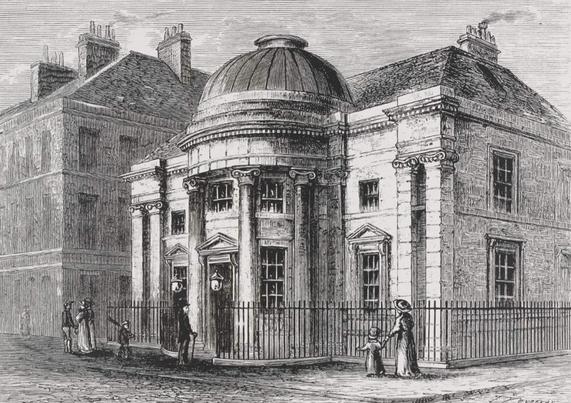
Leith Town Hall and Courthouse. 1829 engraving by J. Henshall after Thomas Hosmer Shepherd. From the Edinburgh and Scottish Collection of Edinburgh City Libraries.

Then as for Leith Fort, it was erected in 1779, which is really
grand,
And which is now the artillery headquarters in Bonnie Scot-
land;
And as for the Docks, they are magnificent to see,
They comprise five docks, two piers, 1,141 yards long
respectively.

Engraving from Leith Miscellany Vol. 1, The Edinburgh Dock, Leith. Edinburgh and Scottish Collection, Edinburgh City Libraries.

And there’s steamboat communication with London and the
North of Scotland,
And the fares are really cheap and the accommodation most
grand;
Then there’s many public works in Leith, such as flour mills,
And chemical works, where medicines are made for curing
many ills.

Illustration of the “Chancelot Roller Flour Mill” in Leith, 1910

Besides, there are sugar refineries and distilleries,
Also engineer works, saw-mills, rope-works, and breweries,
Where many of the inhabitants are daily employed,
And the wages they receive make their hearts feel overjoyed.

Leith, 1881, by Telemaco Signorini. The Kirkgate Provision Store stood on the corner of the Kirkgate and St Anthony Street, now the location of the Lidl supermarket.

In past times Leith shared the fortunes of Edinboro’,
Because if withstood nine months’ siege, which caused them
great sorrow;
They fought against the Protestants in 1559 and in ’60,
But they beat them back manfully and made them flee.

Incident in the Siege of Leith“, engraving from British Battles on Land and Sea, Vol. I, by James Grant and published by Cassells in 1880

Then there’s Bailie Gibson’s fish shop, most elegant to be seen,
And the fish he sells there are, beautiful and clean;
And for himself, he is a very good man,
And to deny it there’s few people can.

1892, landing fish for sale at Newhaven. Photograph by John McKean. Edinburgh and Scottish Collection, Edinburgh City Libraries.

The suburban villas of Leith are elegant and grand,
With accommodation that might suit the greatest lady in the land;
And the air is pure and good for the people’s health,—
And health, I’m sure, is better by far than wealth.

Lady Fife’s House, or Hermitage House, photograph of a painting hanging in Leith Library

The Links of Leith are beautiful for golfers to play,
After they have finished the toils of the day;
It is good for their health to play at golf there,
On that very beautiful green, and breathe the pure air.

“The First International Foursome”, a game of golf reputed to have taken place in 1682 on Leith Links between a pair of English Gentleman and a pair of Scots, one of whom was one James Stuart, Duke of York (later King James VII and II). 1919 Lithograph after Allan Stewart

The old town of Leith is situated at the junction of the River of
Leith,
Which springs from the land of heather and heath;
And no part in the Empire is growing so rapidly,
Which the inhabitants of Leith are right glad to see.

Martello Tower, Leith, Low Water by Robert Norie, 1830s. Edinburgh City Museums

And Leith in every way is in itself independent,
And has been too busy to attend to its own adornment;
But I venture to say and also mention
That the authorities to the town will pay more attention.

Photograph of a banner from 1920 which reads “Leith for Ever!” We protest Against Amalgamation. Edinburgh and Scottish Collection, Edinburgh City Libraries.

Ancient town of Leith, I must now conclude my muse,
And to write in praise of thee my pen does not refuse,
Because the inhabitants to me have been very kind,
And I’m sure more generous people would be hard to find.

Catching up on the news at the Foot of the Walk, outside Woolies in Leith, July 1985. © The Scotsman Publications Ltd, via Scran

They are very affable in temper and void of pride,
And I hope God will always for them provide;
May He shower His blessings upon them by land and sea,
Because they have always been very kind to me.

Oil painting, “The Poet William McGonagall (1830–1902)” by William Bradley Lamond (1857–1924). Dundee Art Galleries and Museums Collection (Dundee City Council) via ArtUK

William McGonagall, “The Poet Laureate of the Silvery Tay” died penniless and largely forgotten at 5 South College Street in Edinburgh in 1902 and was buried in an unmarked grave in Greyfriars’ Kirkyard. A plaque marks the approximate spot, but was not erected until 1999. If you’d like to own this original, signed copy of this magnificent work then it is currently up for auction next week by Lyon & Turnbull: bidding start at only two-hundred and twenty of your hard-earned pounds!

McGonagall’s memorial in Greyfriars’ Kirkyard. CC-by-SA 2.0, Lisa via Wikimedia

If you have found this useful, informative or amusing, perhaps you would like to help contribute towards the running costs of this site – including keeping it ad-free and my book-buying budget to find further stories to bring you – by supporting me on ko-fi. Or please do just share this post on social media or amongst friends.

These threads © 2017-2026, Andy Arthur.

NO AI TRAINING: Any use of the contents of this website to “train” generative artificial intelligence (AI) technologies to generate text is expressly prohibited. The author reserves all rights to license uses of this work for generative AI training and development of machine learning language models.

#1899 #AuctionHouseArtefact #Leith #McGonagall #Poet #Poetry

“Of Very Doubtful Military Significance”: the thread about The Loyal Edinburgh Spearmen

Today’s Auction House Artefacts are a pair of silver Georgian merit medals awarded to Fletcher Yetts of the Loyal Edinburgh Spearmen. Mr Yetts (1759-1832) was the keeper of the City Water Works on the Castlehill. Britain was almost continuously at war with France for between 1793 and 1815 and the quaintly named Spearmen were one of the variety of amateur paramilitary formations raised in Edinburgh during this period in anticipation of a French invasion (or a popular revolution in the French style).

Front and rear views of a George III silver medal of the Loyal Edinburgh Spearmen , dated 6th August 1804. The reverse is engraved “Reward of Merit, 1st Battn., Fletcher Yetts”. Move the slider to compare each side. Photo by Gorringe’s of East Sussex.

The Volunteer Corps Act of 1794 authorised the formation of volunteer paramilitary forces for home defence; the Volunteers. These were an infantry force that generally drew their officers from petty gentry and aspirational middle-class professionals. They were distinct from the volunteer cavalry of the Yeomanry whose members were the country landowners and required to have deep pockets and horses at their disposal – and be competent in their use.

George III silver medal of the Edinburgh Spearmen Artillery Company, dated 1805. The reverse is engraved “presented by Captain Braidwood to Serjt. [sic] Major Yetts as a mark of respect for his Unremitting Attention to the Company”. Move the slider to compare each side. Photo by Gorringe’s of East Sussex.

In Scotland a third force was the Militia, established by the Militia Act of 1797 which empowered the Lords Lieutenant of the Counties to raise by ballot a conscript auxiliary force for service within Scotland. Its ranks were generally drawn from the lowest rungs of society and the Act was so thoroughly unpopular that it provoked widespread rioting across the country. This led to the Massacre at Tranent in August 1797 when eleven men, women and children were killed by Dragoons when protesting against it.

“The Massacre of Tranent”, statue by David Annand in Tranent Civic Square. This represents Jackie Crookston, one of those killed during the anti-militia protests, carrying a drum to call out the slogan of “no militia”. Image via ArtUK

In contrast to the Militia, the ranks of the Volunteers were drawn largely from the lower middle and upper working classes; an attraction of joining being it could exempt one from being drafted into the Militia. Apart from a small number of drill sergeants and drummers, the Volunteers were unpaid but received their weapons and allowances for uniforms from the Government.

“The First Regiment of Royal Edinburgh Volunteers”, a sympathetic caricature of a parade “hereby dedicated to all the Volunteer Corps in Great Britain by their Humble Servant J. Jenkin.” 1802. National Library of Scotland

The Volunteers allowed patriotic and aspirational amateurs to play at being military officers without facing the dangers and hardships of actual military service. There was a steady supply of men keen to sport the over-embellished uniforms – and even finance the units at their own expense – to reap the benefit of the high public status that a uniform conferred in the ballrooms and drawing rooms of the city.

“The Grand Inspection”, caricature satirising Edinburgh volunteer officers being inspected by a lady; the inference being their patriotic service can be reduced to dressing up for her approval. By J. Jenkin, 1805. National Library of Scotland.

By late 1803, there were some 30,000 Volunteers in Scotland (and over 300,000 in the wider UK) but their efficiency varied widely; from semi-competent to completely hopeless. Georgian satirists mercilessly lampooned them, depicting them as physically unfit; poorly equipped, trained and led; over-enthusiastic and thoroughly incompetent.

“St. George’s Volunteers. Charging down the French Bond Street, after clearing the Ring in Hyde Park & Storming the Dunghill at Marylebone”. Colour caricature of 1797 by James Gillrary mocking the Volunteers. In common with other such pieces, the over-enthusiasm, poor training, poor physical condition and ill-fitting and low quality nature of uniforms are highlighted. British Museum 1851,0901.850

In their distinctive blue coats the Royal Edinburgh Volunteers (REV) were one of the first established in the country and were an example of the semi-competent type of unit. A commissioned portrait of them certainly reflected this, Edinburgh caricaturist John Kay took a slightly more humours view of them.

To see ourselves as others see us. Two very different characterisations of the late 18th century Royal Edinburgh Volunteers, both featuring Sergeant Major Patrick Gould (who in his defence was at least recognised in his time as being thoroughly competent).

The Spearmen – in contrast to the REV – showed “all the signs of being a force of very doubtful military significance” (W. A. Thorburn, curator of the Scottish United Services Museum, writing on the subject in the Book of the Old Edinburgh Club, vol. 32). They probably formed as a result of the officer corps of the city’s other Volunteer units being fully subscribed to and thus a further unit was required for those left out. Its stated purpose was to “defend the city, liberties and vicinity of Edinburgh, in case it be found necessary to march the other forces to a distance, and to protect the lives and property of the inhabitants from injury and depredation“. This was a coded recognition that the job of the Volunteers wasn’t really to fight the (real or imagined) threat posed by French invaders but to release regular forces to do so by securing the home front. A secondary and more realistic proposition was quelling popular revolt or opportunistic disorder in the absence of the regulars: to the local authorities and certain sections of society, the Mob invoked far more fear than the French did – as evidenced by their actions at Tranent – and the Toun Rats (the Town Guard of Edinburgh) had proved of dubious worth in the past.

The Edinburgh Town Guard, painting attributed to William Home Lizars in 1800, but Lizars was an engraver and this is likely the work of (or after) John Kay. The sergeant carries a halberd but the men have muskets and bayonets. The drummer carries a short sword. City Art Centre, Edinburgh Museums and Libraries

The nascent Spearmen offered their services to the Crown, to make sure they were officially recognised and their officers Gazetted, and they were admitted as supernumeraries to the existing Volunteer establishment in the city in a letter dated 7th November 1803.

We are well persuaded that every man who can handle a pike and who is not engaged in any volunteer corps, will chearfully [sic] embrace this opportunity of coming forward for the defence of our families and firesides

Scots Magazine, December 1803

The initial plan was to raise two Battallions, each of six-hundred men in ten companies; in theory over 1,200 men. In practice however only one Battallion was ever constituted and its ranks fluctuated between four to five hundred men. They wore scarlet cutaway jackets, blue breeches and a tall beaver hat decorated with feathers (as per the medal at the top of the page and in contrast to the long blue coats and white breeches of the REV). Initially they were armed with nothing more than short pikes and swords for the officers. Their ranks were drawn largely from those exempt from balloting into the militia; the Incorporated Trades of the City and those too old, too young or with too many dependent children.

Mr John Bennet, surgeon to the garrison of Edinburgh Castle and President of the Royal College of Surgeons, was elected as the honourary Lieutenant Colonel Commandant. He had been the surgeon to the Sutherland Fencibles (an earlier, auxiliary military force in the Highlands) from 1779-83 so was an eminent choice. He was later replaced by William Inglis WS Esq. after being found dead in a field in Fife on October 10th 1805, his gun by his side, having suffered a fatal fall from his horse when hunting.

Caricature of John Bennet in his uniform, by J. Jenkin, 1804. National Library of Scotland.

Other officers included Robert Dundas and John Peat, Writers to the Signet (solicitors); William Ranken, a Town Councillor from the Incorporation of Tailors; the lighthouse engineers Thomas Smith and his step-son Robert Stevenson; Francis Braidwood, an upholsterer and cabinet-maker (and allegedly the first man in Edinburgh to wear shoelaces); John Cameron, Deacon of the Tailors and James Newton, Deacon of the Incorporation of Bakers. Their chaplain was the Reverend Alexander Brunton of New Greyfriars Kirk, later the Professor of Hebrew and Oriental Languages at the University of Edinburgh.

“Mr Dundas”, caricature by J. Jenkin, c. 1803. Given the cut of the uniform, with the short coat distinct from the other Volunteer units, and the beaver hat, this may be Major Robert Dundas of the Spearmen. National Library of Scotland.RankNamesLieutenant ColonelJohn Bennet (died October 1805, later William Inglis)MajorRobert Dundas WS (resigned August 1805, replaced by James Farquharson)CaptainsWilliam Ranken; John Simpson; Thomas Smith; Francis James Braidwood; John Cameron; James Newton; Patrick Mellis; Alexander GairdnerLieutenantsJohn Peat; William Braidwood jnr; Charles Ritchie jnr; Robert Stevenson; Thomas Hamilton; Matthew Sheriff; Adam Brooks; John Yule; John Cameron EnsignsJohn Menzies; David Robertson; Andrew Wilson; John Grieve; William Woodburn; John BallantineChaplainRev. Alexander BruntonSurgeonWilliam Farquharson; Thomas Lothian (assistant)Sergeant MajorGeorge NeagleNamed officers holding commissions in the Loyal Edinburgh Spearmen, at the time of its establishment, Gazetted Nov 1803- January 1804.

It was all very Dad’s Army, but at this time the fear of invasion was genuinely held as a result of intense newspaper speculation. Matters came to a head on January 31st 1804 when the Volunteers of Hawick and Teviotdale rose to repel an “invasion” after the lighting of the chain of hilltop warning beacons across the Borders counties. This proved to be a false alarm, the result of an inexperienced but enthusiastic watchman at Hume Castle near Kelso who saw a distant glow on the eastern horizon – actually charcoal burning at Shoreswood in Northumberland, 15 miles away – and thought it was the beacon at Dowlaw being lit.

“A Hilltop Beacon”, William Bell Scott, 1828. National Galleries of Scotland

It was not until the Scottish volunteer companies arrived at Berwick-upon-Tweed the following morning after marching excitedly through the night that the mistake was realised, but a celebration was held never-the-less to mark the efficacy of the warning system and the enthusiasm of the response. It was only a sceptical naval watchkeeper at the St. Abb’s Head signal station that prevented the warning being transmitted all the way to the end of the chain at Edinburgh.

Hey, Volunteers are ye wauking yet? Ho, jolly lads, are ye ready yet? Are ye up, are ye drest, will ye all do your best? To fight Bonaparte in the morning!
Now, brave Volunteers, be it day, be it night; When the signal is given that the French are in sight; Ye must haste with your brethren in arms to unite; To fight Bonaparte in the morning!

Marching song of the Dunfermline Volunteers, to the tune of the traditional “Hey, Johnnie Cope”

Despite the Government’s approval, as supernumaries the Spearmen had to finance themselves. In February 1804 a public subscription was raised to cover the expenses of fitting out the unit, the Caledonian Mercury reporting “there can be little doubt that it will soon exceed the sum required“. The Town Council voted fifty Guineas towards the cause as did the Association for the Defence of the Firth of Forth, the Incorporation of Goldsmiths and the United Incorporations of Mary’s Chapel (the Wrights and the Masons). The Incorporation of Tailors and the Bakers provided thirty each, those of The Hammermen twenty-five, The Fleshers twenty and The Hammermen of Canongate five. A number of town councillors and many of the founding officers also contributed, as did some notable local patrons. A Benevolent Society was set up by the officers to provide “mutual aid of each other in the event of sickness or death” in September of that year and which would later be extended to all the Volunteers of the city.

Public subscriptions to the Loyal Edinburgh Spearmen (L.E.S.), giving a good indication of the demographic of the principal backers. Caledonian Mercury, 9th February 1804

They used as their parade ground the Heriot’s Hospital green, that traditionally used by the other Volunteers in the city and seen in the background of the portrait at the top of the page of Sergeant Patrick Gould. In 1805 they were formally recognised by the Home Secretary, Lord Hawkesbury, as a full member of the Corps of Volunteers. This gave them equal status with the city’s other volunteer units and entitling them to receive Government funding, pay and arms. It is likely at this time they traded in their pikes for Government-issue muskets. To mark the occasion, “this band of citizen warriors had their stand of colours delivered to them on the 12th August 1805″ (the birthday of the Prince Regent, the Prince of Wales). These were provided and presented by the wife of the Lieutenant Colonel Bennet and her daughter Miss Scott of Logie. Chaplain Rev. Brunton consecrated them with “a most impressive prayer” after which the batallion marched out of the city to Duddingston House, the residence of the Earl of Moira, Commander-in-Chief of the Army in Scotland. The Earl inspected the formation after which they returned to the Bennet household on Nicolson Street where “they were regaled by him in a very liberal and handsome style of hospitality“.

The Earl of Moira, Addressing the Loyal Edinburgh Spearmen. John Kay caricature, 1805. In the background is Duddingston House, Moira’s residence in Edinburgh, where the Spearmen marched for inspection following receiving their colours at Heriot’s Hospital

In the event of the Spearmen being called out, they were to assemble upon the Mound as their chosen “alarm post in case of invasion or popular tumult“. In March 1804 a battery of artillery was added, armed with two experimental 6-pounder cannons designed and built by Mr Roebuck of the Shotts Iron Company. The guns were commanded by Captain William Braidwood jnr and were provided with two novel ammunition carts, designed to be pulled by domestic draught horses.

Caricature of an Edinburgh volunteer artillery officer and his piece, which is similar to that shown on the medal at the top of the page. The Spearmen were not the only volunteer artillery in the city, so this may or may not represent Captain William Braidwood. By J. Jenkin, 1805. National Library of Scotland.

The artillery would get the Spearmen into trouble with the law. On Monday 25th September 1805, eager to demonstrate their efficiency and readiness to the city after formally receiving their colours, they marched and drilled through the streets before assembling on the Mound to firing off a number of volleys in salute from the Roebuck Guns. After the third and final blast, Lieutenant Colonel Bennet was apprehended with “violent passion” by John Tait, judge of the City Police Court and superintendent of the newly instituted Police Office. Tait threatened “at your peril remain on this ground a moment and if I ever see you and your Corps on the streets of Edinburgh again, it shall be at your peril“.

“An Eminent Judge… of Broom Besoms!!!”. While this caricature by John Kay represents a well known old peddlar of brooms, it satirises instead John Tait, the Judge of the Police Court and Superintendent of Police, who had accosted the Loyal Edinburgh Spearmen. National Portrait Gallery, London, NPG D16508

Bennet wrote to Sir William Fettes, the Lord Provost and Lord Lieutenant of the City, to complained that he and his men had been prevented by the civilian authorities from carrying out their duties and were treated with “gross and repeated insults from an immense mob“. He threatened that he would have to disband the unit if they could not go about their business unmolested. Tait had only been in his position of authority a few months and was likely trying to publicly demonstrate that it was he, and not any Volunteers, who was responsible for law and order. He wrote back to the Lord Provost standing his ground, but making the clarification that it was only firing off cannons in public that he wished to prevent, and not their marching and drilling. This seemed to placate both sides and thereafter Spearmen got on with tier duties of playing at soldiers.

“Guard Room Tactics, Bugs in Dander; or a Volunteer Corps in Action.” 1798 caricature lampooning the Volunteers, by Charles Ansell. The Loyal Edinburgh Spearmen were dressed in a very similar fashion. Yale Centre for British Art B1981.25.1158, via Wikimedia

On September 1807 they changed their name to the Loyal Edinburgh Volunteers to acknowledge their changed status (which causes confusion with the Royal Edinburgh Volunteers, who they remained distinct from) and also that thanks to Moira’s intervention they had retired their spears and were now properly armed with muskets. They marked their promotion by marching to Alloa for ten days on “active duty”. The Caledonian Mercury reported that “their conduct on the march to and from Alloa, and while in quarters, was orderly and regular in the highest degree, and their attendance at drill, for seven hours every day, was unremitting“.

“Light Infantry Volunteers on a March”. 1804 satirical cartoon by Thomas Rowlandson lampooning the physical condition of Volunteer units. Picture via Miesterdrucke.ie

The experience must have been enjoyable as they then applied to be transferred into the Militia, an offer which was rejected. Undeterred, in December that year it was announced that the Prince of Wales had “been graciously pleased to accept an offer… of an extension of their services to any part of Great Britain” and as such they would henceforth be known as the Prince of Wales’ Loyal Edinburgh Volunteers. This was far removed from their founding aim of serving only in the city; things may have gone to their heads as in 1809 the entire Volunteer forces of Edinburgh offered their services to go to Spain and fight alongside the regulars in the bloody Peninsular War. Again the offer which was politely declined.

“Loyal Britons Lending A Lift”, a British soldier assisting the Spanish in fighting the French. August 1808 caricature by James Gillray.

Lieutenant Colonel Inglis remained in charge of the renamed Spearmen until the volunteer forces were officially disbanded on July 11th 1814. They have been largely forgotten about and even in their own time were in the shadow of the Royal Edinburgh Volunteers and the Yeomanry, but at least one unknown amateur poet penned a verse in their honour, although it is hardly complementary.

It is weel Kend these guy wheen years
I’ve praised our Royal Volunteers
The Spearmen has appeared at last
O’ them we should hope the best.
There’s numbers o’ them without doubt
They are baith souple louns and stout,
But other o’ they I do ken
Dude help them poor auld worn out men
An’ I wad scorn to tell a lee
They’re neither fit to fight nor flee
An’ other some raw mou’d callants
I’ve seen far better selling ballants.
What brings them out in name of wonder
Wer it no to make a gudly number.
O’ them the brethern may think shame
Far better they wad stay at hame.

Poem to the Loyal Edinburgh Spearmen, 1804

If you have found this useful, informative or amusing, perhaps you would like to help contribute towards the running costs of this site – including keeping it ad-free and my book-buying budget to find further stories to bring you – by supporting me on ko-fi. Or please do just share this post on social media or amongst friends.

These threads © 2017-2026, Andy Arthur.

NO AI TRAINING: Any use of the contents of this website to “train” generative artificial intelligence (AI) technologies to generate text is expressly prohibited. The author reserves all rights to license uses of this work for generative AI training and development of machine learning language models.

#Army #AuctionHouseArtefact #Edinburgh #Georgian #JJenkin #JohnKay #Military #Napoleonic #Policing #Revolution #TownGuard #Volunteers
The thread about the Leith Banking Company and its unusual banknotes

Today’s auction house artefact is this Leith Banking Company Twenty Pounds note from 1825, issued to the payee James Ker.

Leith Banking Company £20 note dated 1825

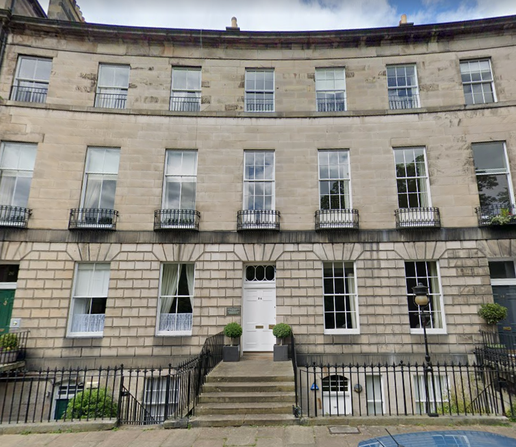
James Ker of Blackshiels esq. was the general manager of the Leith Banking Co. and lived at a fine Georgian townhouse at no. 24 Royal Circus in Edinburgh. His father, also James Ker of Blackshiels esq., had been one of the founding partners of the bank in 1792. The Kers were Jacobites and kept in the family’s possession an ornamental and incriminating drinking glass engraved with the royal cypher of the claimant James VIII of Scotland. Their predecessor, once again James Ker of Blackshiels esq., had acted as a banker to Charles Edward Stuart, the Bonny Prince and had been financially ruined as a result. But clearly along the lines the family fortune and status had been somewhat restored by the late 18th century (unlike the Stuarts!).

24 Royal Circus in Edinburgh’s New Town

So it’s rather unusual that a note made out to Ker is also signed on behalf of the bank by… Ker! As a director of the bank with which he held an account, he was fundamentally issuing his own pocket money (and that’s what it literally was, paper money that a gentleman could carry on his person)

At this time, banks issued notes to clients of sufficient standing on an individual basis, and the bank would number, sign and date every note by hand. This note has also been embossed with a 2 Shillings stamp, I’m not clear if this added or deducted that value to/from it .

Two Shillings and crown embossed stamp

And the engraving is a typical Leith scene, with a sailing ship entering the harbour. The “windmill” signal tower can be seen.

The Port of Leith

Bottom left is the mark of the engraver, John Beugo. Beugo is best known as the engraver of the portrait of Robert Burns by Alexander Naysmith. While mainly an artistic printmaker and engraver, he did turn his hands to banknotes, also doing work for the Commercial Bank of Scotland and British Linen Banks.

John Beugo’s mark

These notes were made on hard-wearing linen paper, which was produced in both Balerno and Penicuik (at mills both named Bank Mill for obvious reasons). Linen rags were a very important feedstock for the paper industry at this time (it’s where rag merchants made their money, see my thread about Asa Wass for more on the riches of this trade.) When you presented your note at the bank, it would be honoured. Deductions could be made from it, and interest or dividends paid on it, this was all noted down (by official stamp and by hand) on the back.

Various endorsements on the rear of an old banknote

These rather plain notes were promissory notes issued to the gentlemen of means that were customers of the bank. General notes of a fancier design were also issued. In 1822 the Leith Bank issued the world’s first commemorative note to mark the arrival of King George IV. The main image was based on Alexander Carse’s painting, which hangs in the Trinity House in Leith.

Leith Banking Company commemorative George IV One Guinea noteExcerpt from Carse’s painting

Two interesting features on this note. Firstly, at this time the Leith motto of “Persevere” was not in official use, instead the Latin “O Felicem Diem” just means “oh happy day!” in reference to George IV’s visit. And bottom left, “Fàilte don Rìgh“; “Welcome to the King!” I understand that this was the earliest use of Gaelic on a Scottish banknote; the Caledonian Banking Company did not open until 1836 and used “Tir Nam Beann, Nan Gleann, S’Nan Gaisgeach“, or “Land of Mountains, Glens and Heroes“. Walter Scott is known to have been a customer of the bank (from signed cheques that he drew on it), and one wonders if it was his influence on them that stimulated this romantic highland nostalgia in a lowland organisation.

£50 cheque signed by Walter Scott at Abbotsford in 1825 to pay his coachman and confidant, Peter Matheson, care of Scott’s agent, George Craig esq. of Galashiels.

Anyhoo, the Leith Banking Company was established in 1792 by 18 merchants of Edinburgh and Leith, who were its partners. It was based in Quality Street . Here we see James Ker (senior) was the original manager. Pattison and Pillans were two of the more prominent merchants in Leith.

Leith Banking Company. Foot of Quality Street.

In 1805 it moved from Quality Street to a purpose-built headquarters office in the style of the day, the architect was John Paterson (see also Seafield Baths).

Leith Banking Company HQ, Bernard Street. CC-by-SA 4.0 StephenCDicksonThe Leith Banking Company HQ, an engraving by H. S. Storer in 1820. © Edinburgh City Libraries

At this time, this was one of only 3 banks in Leith; the other two being the British Linen Company and the Commercial Banking Company of Scotland. All were established very close to each other in the commercial centre of the town, set amongst its finest buildings. The Leith Bank as it was known, prospered for a while, and extended branches to the bright lights of Callander, Dalkeith, Galashiels, Langholm and Carlisle.

Leith Banking Company £5 George IV note. This lacks the crest of Leith, and has a caricature of a sailor welcoming the King on the right, surrounded by “Huzza! O Felicem Diem”. © Edinburgh City Libraries

It had an agent in Glasgow and a travelling tent that visited provincial cattle and agricultural marts. The Lloyds Bank archives note that the Carlisle branch was registered as an English bank but was illegal according to an Act which forbade English provincial banks from having more than 6 partners! Trouble was brewing though, and the recession brought on by the “Panic of 1837” hit the bank’s business hard. The Glasgow Union Bank offered to buy it out but this was declined.

An American Whig cartoon showing the ill effects of the 1837 financial crisis

The bank soldiered on for a few more years until in 1842 it failed after a run caused debts of £123,582, including £10,000 of Leith notes in circulation. It was one of three Scottish provincial banks to fail that year, alongside the Renfrewshire and Shetland companies. According to newspaper reports of the time:

It was a very old established concern, but the business seems to have been dwindling away for some years, so that it has lately been considered of very little importance. The explanation which it is said has been given is, that one of the shareholders having retired from the concern, took the precaution of advertising his retirement in the newspapers, and that the depositors having taken alarm at this, a run on the bank commenced, and continued till it was deemed advisable to wind up its affairs

Devizes and Wiltshire Gazette, April 28th 1842

A further report stated that the partners possessed sufficient funds to pay all creditors and that “the public [were] not likely to lose any thing“. The dividends were 13s 4d per £1 on winding up, the partners were left “a reversion, a handsome one, we trust to themselves.” The Bank of Scotland took over the valuable agricultural and country clientèle at the Callendar branch and its remains were divided up by the Clydesdale Bank, its former headquarters on Bernard Street sold off to the National Bank of Scotland. The creditors of the the partners in the bank (JAmes Ker, Henry Johnston, George Craig and John Bisset) did not receive their dividend until 1848.

Footnote – in the archives of the Royal Bank of Scotland, there is something called the “spike file”. This is the sequential record (file) of the payment of promissory notes by the Drummonds Bank from 1781. When a client presented their bank note, the clerk would check their account balance, debit the relevant amount and cancel the bank note (the promissory notes were single use only) by defacing it, with a punch or cutting off a corner. It was then “filed” on a giant iron spike

The Spike File © Natwest Group Archives

The spike was retained as a record in case there was any quibble over payment, you could always go back to it and retrieve the note, on which the date and details of its payment would have been written by the clerk. The Drummonds’ spike got “filed” in a basement cupboard and forgotten about, which was then later walled up and forgotten about a bit more until recovered during renovations centuries later by which time the owner was the Royal Bank of Scotland.

And to bring us back round in a circle, Andrew Drummond of Drummond’s Bank was an Edinburgh goldsmith and financier who later established a bank under his name in London. Like the Kers, the Drummonds were Jacobites; his father was outlawed in 1690 for supporting James II, his brother died at Culloden.

Andrew Drummond, by Johan Zoffany, c. 1769

The (Andrew) Drummonds were not the same as the (George) Drummonds who were – appropriately – Hanoverians, supporters of King George. It is George Drummond for whom Drummond Place and Drummond Street in Edinburgh are named. George Drummond was a government loyalist who helped negotiate the Act of Union, was a 6-term Lord Provost of Edinburgh, a driving force behind the New Town and other public works of the “Modern Athens” such as the North Bridge and Royal Exchange – and ironically one of the founders of the Royal Bank of Scotland.

Lord Provost George Drummond

If you have found this useful, informative or amusing, perhaps you would like to help contribute towards the running costs of this site – including keeping it ad-free and my book-buying budget to find further stories to bring you – by supporting me on ko-fi. Or please do just share this post on social media or amongst friends.

These threads © 2017-2025, Andy Arthur.

NO AI TRAINING: Any use of the contents of this website to “train” generative artificial intelligence (AI) technologies to generate text is expressly prohibited. The author reserves all rights to license uses of this work for generative AI training and development of machine learning language models.

#AuctionHouseArtefact #Banking #Banks #Drummond #Edinburgh #Ker #Leith

The thread about the Clyde Shipping Company, serving people and cattle on the Irish Sea for 130 years

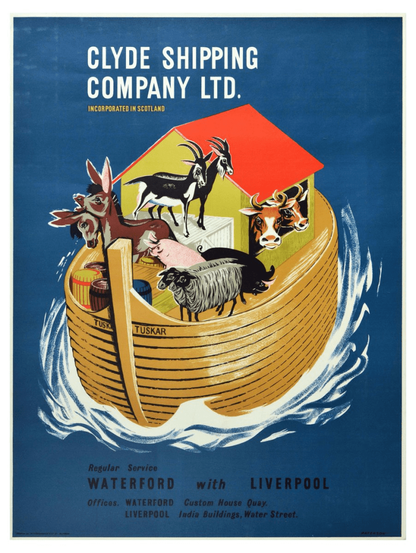
Today’s auction house artefact is this charming and rather Old Testament early 1960s advertising poster for the Clyde Shipping Company (incorporated in Scotland).

Clyde Shipping Company Ltd., Incorporated in Scotland

The name on the bow of the ark is Tuskar, in reference to the company’s (then) new motor vessel of that name. This ship was built for the Liverpool to Waterford service and despite the company’s name, most of its business was on the Liverpool to Ireland routes. Tuskar is a lighthouse on the rock of that name that has to be passed (and avoided) to enter the port of Waterford. Clyde Shipping Company named nearly all its ships after lighthouses.

The Tuskar, via Ships Nostalgia

The Tuskar didn’t last long in this service, a downturn in traditional coastal shipping as it was replaced by lorries and roll-on-roll-off ferries and cheaper flights meant that she was out of service by 1968, sold to Yugoslavia as Brioni. She did 20 years Adriatic service before being broken up in Split in 1988.

Clyde Shipping were one of the first steamship companies, with a history going back to 1815, operating steam tugs and luggage vessels on the eponymous river and firth. The house flag, featuring a Scottish lion and Irish harp, was changed in 1924 due to the political environment. The new flag featured a lighthouse and the initials CSC and was based on a suggestion by a Miss Blakiston-Houston. I believe the Blakiston-Houstons were Northern Irish gentry with shipping interests.

Post-1924 Clyde Shipping House Flag. © National Maritime Museum, Greenwich, London, Pope Collection

Tuskar’s main purpose was to have carried live animals from Ireland to the English market. It was reported in 1967 that she carried 1,000 pigs to Liverpool after a “bacon strike” had caused a dockside build up. Perhaps that’s what inspired the poster artist to choose an ark full of farmyard animals. Such was Clyde Shipping’s focus on the Irish market that in 1912 they bought the Waterford Steamship co. and built a fine quayside office in that city, with much ornamental shamrocks and thistles in evidence.

Clyde Shipping office in Waterford. © Irish National Inventory of Architectural Heritage

Indeed the importance of Clyde Shipping to Irish trade was such that the “Clyde Boats” became a byword for shipping from Ireland to the ports on the eastern side of the Irish Sea. The Wateford Civic Trust have placed a blue commemorative plaque on this building to the Clyde Shipping Company which reads “From this quay Clyde ships plied regularly to the ports of Glasgow, Liverpool, Bristol, Plymouth and London“.

While they remained important on the Clyde itself as a tugboat company, it was the Irish services that made them their money and these destinations featured prominently on advertising materials.

1902 Clyde Shipping advertisment

In December 1917, Clyde Shipping suffered a double loss on the Irish Sea route when the German submarine U62 sank their ships SS Formby and then the SS Coningbeg within days of eachother. All hands were lost on both ships; 83 lives in total, comprising 30 crew and 9 passengers from Formby and 32 crew and 12 passengers from Coningbeg.

Back on the Clyde, the tugs later began to be given names beginning with “flying”, which were painted with the same black hulls and funnels and bronze-coloured upperworks as the company’s steamers. Here is the Flying Duck in the 1960s.

https://www.flickr.com/photos/glasgowfamilyalbum/11338270743

The Flying Mist, Flying Spray and one other “Flyer” in 1975.

https://www.flickr.com/photos/gillfoto/31446614573/

And the Flying Childers, Flying Fulmar and Flying Phantom in Greenock in the 1990s

https://www.flickr.com/photos/seapigeon/2050643237/

Tragically, Flying Phantom – by then under different ownership – capsized one foggy December night in the Clyde in 2007, with the three crew losing their lives. This was the result of a string of safety failings on the part of the operators and Clydeport, with the former being fined £1.7 million and the latter £650,000 as a result, although inquiries and court cases took nearly 7 years to result in this outcome.

If you have found this useful, informative or amusing, perhaps you would like to help contribute towards the running costs of this site – including keeping it ad-free and my book-buying budget to find further stories to bring you – by supporting me on ko-fi. Or please do just share this post on social media or amongst friends.

These threads © 2017-2025, Andy Arthur.

NO AI TRAINING: Any use of the contents of this website to “train” generative artificial intelligence (AI) technologies to generate text is expressly prohibited. The author reserves all rights to license uses of this work for generative AI training and development of machine learning language models.

#AuctionHouseArtefact #Clyde #Glasgow #Ireland #IrishSea #NotEdinburgh #Shipping #Ships

The thread about the history of the Leith Police and how there is more to them than merely dismissing us

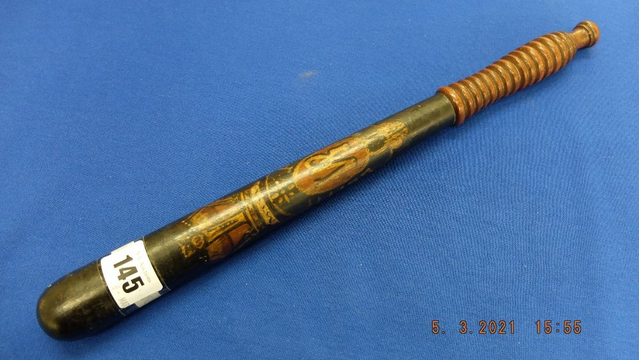
Today’s auction house artefact is this Victorian Leith Burgh Police truncheon.

Victorian Leith Police truncheon

Policing in Leith goes back to the 17th century, when the first High Constables of the Port of Leith were established. They were appointed by the Magistrates of the Royal Burgh of Leith to uphold “cleanliness and orderliness, keeping the peace, law and order“. But at this point they acted as empowered individuals, rather than a force. Orders were given in 1725 stating that “they were responsible for the apprehension of beggars and vagabonds, persons guilty of a crime or disturbance, informing on houses of ill repute, bringing order to mobs and overseeing weights and measures.”

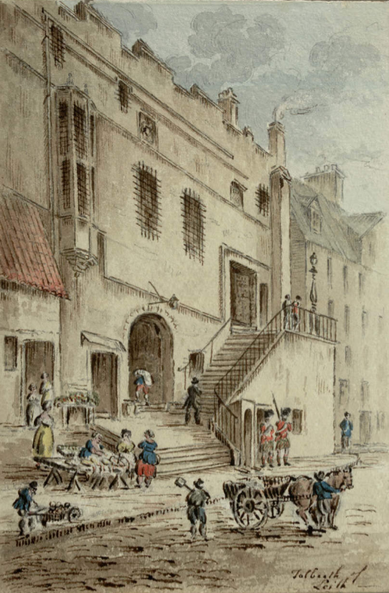
At this time, the principal civic building of Leith was the Tolbooth. It functioned as a seat of municipal government and administration, a customs house, a guardhouse, a jail and a meeting house and was one of the three essential public buildings of the Scottish Burgh; the others being the Mercat Cross and the Kirk.

Leith Tolbooth by James Skene, 1818. © Edinburgh City Libraries

In 1762, the seven constables held a meeting and elected a moderator, treasurer and clerk, and drew up regulations to form themselves into the Honourable Society of the High Constables of the Port of Leith. In 1771, Parliament passed the “Act for Cleansing and Lighting the Streets of the Town of South Leith, the Territory of St. Anthony’s and Yardheads thereunto adjoining, and for supplying the several parts thereof with fresh water“. The description of the act itself is a reminder that at this time, the municipal police were primarily concerned with lighting, cleansing and water supply; not watch keeping or law enforcement.

The act saw the election of 30 Police Commissioners to enact its provisions; the electors were the 2 magistrates of Leith (appointed by Edinburgh), the masters and 6 assistants of the 4 Leith trade incorporations (the Cordiners, Carters, Tailors and Weavers) and all heritors (the feudal landholders of a Scottish parish who were obligated to pay tax), liferenters (landholders for life) and proprietors of lands and tenement within the burgh. Basically, the people (men) with claim over land and/or property. Added to the Commissioners were the Lord Provost, Town Clerk of Leith, The Baillie (a civic officer) of St. Anthony’s Preceptory, and 2 others elected by the feudal heritors of Yardheads and St. Anthony’s.

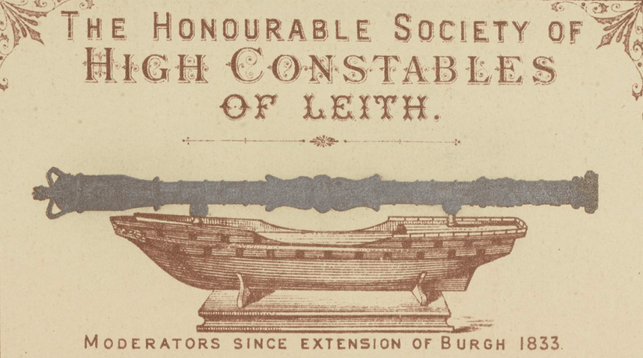
The heading of a poster from a ceremonial dinner of the Honourable Society of High Constables of the Port of Leith showing the outline of a constable’s baton © Edinburgh City Libraries

So the Police Commissioners were basically a committee of the local worthies who were charged with keeping the streets clean and supplying water. At this time, Leith had no piped water, sewers, pavements or metalled roads (causeys) of any kind so they had their hands full. Such was the difficulty in resolving these issues in Leith, that for the next 20 years the Commissioners were fully occupied with water, cleansing and lighting. It was not until 1791 that attention turned to “watching and warding”, i.e. something more akin to modern policing.

The mean streets of Leith in 1790. An illustration by Dominic Serres.

The Commissioners had always employed a part time “Police Officer”, but his job was to keep order at the wells and to try and keep people to the schedule of the carters who carried away the filth of the town. Perhaps he is the officious looking man in Serres’ illustration conferring with the carter and the town drummer and poring over a schedule?

The Leith “police officer”?

In 1791, this was made a full time position, and Leith’s first professional polisman was hired; at £25 a year. 10 years later, in 1801 the officer, one John Ross, was finally provided with a uniform. “A blue coat, red neck with buttons thereon and a red vest with a pair of boots“. In 1802, lawlessness in Leith was such that one of the Baillies proposed to the Police Commissioners that a part-time force of sixty men, in three watches, be hired for the purposes of law enforcement. At this point, Edinburgh stepped in and said “naw”, and that it would sort it. Edinburgh then did nothing for Leith, as was frequently the case; as James Scott Marshall puts it. “Edinburgh’s policy of masterly inactivity once more frustrated [Leith’s] desire for improvement.”

A new Leith Police Act, in 1806, made provision for the recruitment of watchmen for “Guarding, Patrolling and Watching the streets“. But again nothing was done, this time for want of money. Leith had 20,000 inhabitants, but Edinburgh absolutely and tightly controlled its purse strings. Finally in 1814, the size of the Leith Police force was tripled; to 3. Two watchmen were employed to assist the “intendant” (the man in the blue and red coat). The appointments were made by the Paving Committee as they had responsibility for safety on the streets.

In 1815, the force doubled in size, to 6, with 3 more watchmen being recruited. Finally in 1816, a special “Watching Committee” was formed, rather than leave the Police under the direction of the Paving Committee. But the new force was not well thought of and there were complaints asking for it to be better organised. The watchmen were also unhappy, as the day shift worked 6AM-9PM (!) and were unable to take on labouring work on the side as a result like the shorter nightshift could.

The force grew no further until the Municipal and Police Act of 1827, when the whole force of 6 was disbanded and then re-hired under a new system under a Superintendent; one James Stuart on £120 a year. The new force totalled 20, 1 Sergeant Major, 3 Sergeants, 3 “Daymen”, 3 “Night Patrol” and 10 Watchmen. Superintendent Stuart had the force raised to 27 with 1 more Dayman, 2 Night Patrol and 4 more Watchmen. The senior ranks were paid a guaranteed basic rate, which was supplemented by the court fees of each offender they brought in; half to the Sergeant Major, and the other half split between the Sergeants.

Silver and ebony High Constable’s tipstave from 1833. ; “ON ONE END IT IS NUMBERED ’41’ , ON THE OTHER END IS ENGRAVED A SHIP AND GENTLEMAN WITHIN AND AROUND THE SHIP ‘ BURGH OF LEITH 1833’. ON ONE SIDE IS ENGRAVED A SHIP WITH ‘PERSEVERE’ BELOW IT. ON THE OTHER SIDE IT IS ENGRAVED ‘ HIGH CONSTABLE’.” The Tipstave was a symbol of office, and could be unscrewed to reveal the warrant of office carried within.

The 1827 act finally settled the boundary of the Leith Police, which had been rather vaguely defined up until this point due to the fragmentary municipal boundaries and land superiority of the separate parishes of North and South Leith. When the 1832 Great Reform Act extended the boundary of Leith to the red line on this map, the reach of the Leith Police extended too. A deal was also struck with the Edinburgh Sheriff to charge him for the lodging of prisoners sent from Edinburgh to languish in Leith.

1831 boundaries of the Burgh of Leith. Reproduced with the permission of the National Library of Scotland

The 1827 act also got round to the business of providing Leith with its first modern courthouse and police station, to replace the ancient Tolbooth. Some of the land of “Dr. Colquhoun’s Chapel” was acquired; a 99 year lease being taken on it. Dr Colquhoun was the minister of St. John’s Chapel of Ease on Constitution Street. This is how Leith’s first court house and police station came to be built on the corner of Constitution Street and [Queen] Charlotte Street, where they are to this day – although the courthouse is long unused.

The New Town Hall, Leith, by Thomas Hosmer Shepherd, 1829. Dr. Colqhoun’s chapel can be seen behind.

The Leith Burgh Police were established in 1859 to cover the wider burgh of Leith defined in 1831 by the Great Reform Act. Policing of the port and docks was subsumed into the new force as a division, but the High Constables were maintained as an honourable society for ceremonial occasions. They still exist in this form, the uniform still being top hats and tails and the badge of office still being an ornamental baton. Until recently it was strictly a gentlemen’s club, although they have more recently elected a woman to their ranks.

The High Constables of Leith form a guard of honour for the arrival of HM The Queen on arrival at Leith on the HMY Britannia in 1956. The girl presenting the bouquet was “6 year old Edwina Burness”. Still from a film of the occasion held by the BFI.The High Constables of Leith and their truncheons meet the late Duke of Edinburgh. CC-by-SA, R. Clapperton via Edinburgh Collected

They can be seen performing these same ceremonial duties for royalty here in Alexander Carse’s painting of the arrival of George IV in Leith back in 1822, backs to the artist with their top hats off. The fellows with the broad bonnets, white sashes and curving long sticks (bows) are the Company of Royal Archers .

George IV’s visit to Leith by Alexander Carse

At this point, the need for separate Commissioners of Police was redundant, as Leith was finally an independent burgh, The responsibility for oversight of the Police passed to the new Town Council, who made their home in the police station and court on Constitution Street. Below can be seen a picture of the Town Hall / court house / police station in 1870. It shows St. John’s, after the mock Tudor tower was built and parish school buildings were added to the front. Between the two is the small burgh fire station building .

Leith Town Hall, 1870, Adam W. Steele. © Edinburgh City Libraries

The helmet badge adopted by the Burgh Police was from the traditional Leith coat of arms; the Virgin Mary and child on a galleon, underneath a canopy. The date of 1563 beneath refers to a letter signed by Mary Queen of Scots granting South Leith permission to erect its Tolbooth. Granting Leith this was a big step in its ancient struggle to exert independence from Edinburgh. The English had burned Restalrig Tolbooth in 1544 during the “Rough Wooing” (Restalrig at that time was the administrative centre of South Leith parish) and since then Edinburgh had been trying to prevent Leith from re-establishing its own local centre of law, order and taxation.

Leith Police helmet and badge from book cover

Anyway, Leith Burgh Police was a small force, but one well respected for keeping law and order in the potentially lawless port town. They were merged into the Edinburgh City Police as D Division in 1921.

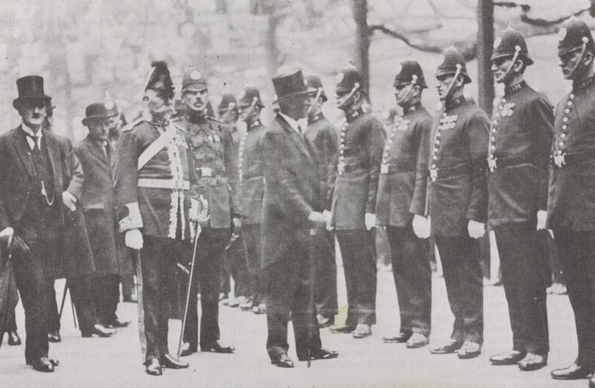
The last parade of the Leith Burgh Police in 1921, before becoming D Division of the Edinburgh City Police. © Edinburgh City Libraries

Leith policemen were distinctive for wearing a “ball top” to their custodian helmet, Edinburgh had these only for upper ranks, the rank and file had a “button top”.

British “custodian” Police helmets. Left is button, centre is pike and right is ball top. None are Edinburgh or Leith helmets.

Leith’s greatest contribution to the world of policing is of course said to be the legendary tongue twister “The Leith Police Dismisseth Us” – which was apparently a test for drunkenness (but just try saying it sober!)

The Leith police dismisseth us, I’m sorry sir to say;
The Leith police dismisseth us, They thought we sought to stay;
The Leith police dismisseth us, They thought we’d stay all day;
The Leith police dismisseth us, Which caused us many sighs;
And the size of our sighs, when we said our goodbyes;
Were the size of the Leith police.

The Leith Police Dismisseth Us, a version from 1927

However the origin of The Leith Police Dismisseth Us is probably nothing to do with Leith. It actually first originates in print on the other side of the Atlantic; in the Boston Youth’s Companion, October 20th 1887, as a line in a list of “verbal snares” or tongue-twisters. It is quite similar to an earlier American tongue-twister; variously The Sea Ceaseth and Dismisseth Us With His Blessing or The Sea Ceaseth And that Sufficeth Us and it is likely these were created for elocution purposes and inspired by biblical verse.

It first appears in a British newspaper shortly afterwards, in December 1887 in the Irvine Times, before being reprinted widely across English papers the following year. These early examples are always in lists of tongue-twisters, many of which are still familiar such as Peter Piper and She Sells Sea Shells. A fuller version does not seem to appear in print until 1919 (in The Childrens Newspaper) but it had been widely popularised before this by the Mancunian musical hall comedian Wilkie Bard, one of the biggest acts of his day, whose stage gimmick was tongue twisters. Variety magazine announced in 1909 that he was appearing in London at the Tivoli, Oxford and Paragon with “a new tongue twister. It is called The Leith Police Dismisseth Us. Bard gets a whole lot out of this number with the aid of an assistant who does a lisping souse.

Wilkie Bard, 1911, © National Portrait Gallery

The rhyme is still used for elocution, particularly in helping non-native English speakers master the “th” and -“s” sounds of the language.

Thank you to Chris Wright for his assistance and advice in researching the early details of “The Leith Police Dismisseth Us.”

If you have found this useful, informative or amusing, perhaps you would like to help contribute towards the running costs of this site – including keeping it ad-free and my book-buying budget to find further stories to bring you – by supporting me on ko-fi. Or please do just share this post on social media or amongst friends.

These threads © 2017-2025, Andy Arthur.

NO AI TRAINING: Any use of the contents of this website to “train” generative artificial intelligence (AI) technologies to generate text is expressly prohibited. The author reserves all rights to license uses of this work for generative AI training and development of machine learning language models.

#AuctionHouseArtefact #Leith #Police #Policing #Written2021

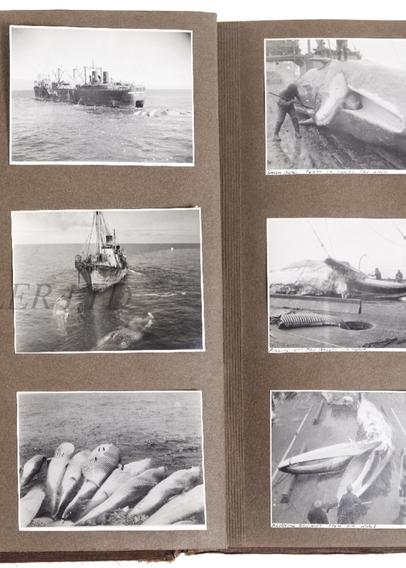
Today's #AuctionHouseArtefact is a grim reminder of one of Leith's 20th century heritage: industrial whaling. A photographic album "of the Antarctic whaling expedition of the SOUTHERN VENTURER", a Christian Salvesen's factory whaling ship out of Leith 🚢🐳 www.the-saleroom.com/en-gb/auctio...
Bluesky

Bluesky Social

Q-ship: The thread about Neil Shaw Mackinnon and the loss of the “Cullist”

Today’s auction house artefact is a set of medals awarded in World War One to Neil Shaw Mackinnon, a marine engineer officer from Leith. An experienced merchant mariner, Mackinnon’s wartime military service was brief but eventful and hallmarked by bravery and a run of luck that would end in tragedy; less than three weeks after he was presented with the Distinguished Service Cross by King George V (left hand medal, below) he would disappear with his ship into the cold, dark waters of the Irish Sea.

Medals of Neil Shaw Mackinnon. Left to right, George V Distinguished Service Cross; British War Medal; Victory Medal with Oak Leaves for Mention in Dispatches; WW1 Memorial Plaque.

Neil Shaw Mackinnon was born on April 23rd 1877 at 64 Pitt Street in North Leith, the eldest son of Jessie Shaw and Donald Mackinnon, Gaelic-speaking natives of the Ross of Mull. The family raised their four children in the Gaelic language in Leith, but Neil did spend some of his childhood back on Mull at Bunessan before following his father’s footsteps and becoming a ship’s engineer. Tragedy struck the family in July 1903 when Donald was killed; he fell from an unsafe gang plank into the depths of a London dry dock one dark and wet night when returning to his ship and never recovered from his injuries. Neil now supported his mother and two younger sisters who, after the death of Donald, had moved nearby to 203 Ferry Road in North Leith before settling at 1 Royston Terrace in Goldenacre. Neil was the honorary secretary of the Clan Mackinnon Society in Edinburgh and like many merchant seamen he was a member of the Royal Naval Reserve. It was this latter commitment that saw him called up for active service during WW1, commissioning as a temporary Engineer Lieutenant on 13th May 1917. He would find himself on probably the most dangerous sort of ship that an RNR man could expect to be on at this time; the Q-ship.

HMS Cullist had started life as the merchant steamer SS Westphalia, launched at the Caledon Shipyard in Dundee on 24th December 1912 for the Leith, Hull & Hamburg Steam Packet Company. She was the sort of small steamer that was ten-a-penny on the North Sea at the time; a 1,030 ton, 230ft long ship plying back and forward between the Scottish east coast and the German ports on the Baltic coast. Her two boilers and 1,350 horsepower steam engine were sufficient to move her along at 10 knots, a slow but economic pace. A newspaper report in the Clyde Shipping Gazette from March 1913 describes the typical and varied cargo she could expect to carry being unloaded in Grangemouth; potash, machinery parts, earthenware, paper, glass, cement, firewood, flour, chemicals, metal ores, toys, pianos, electrical insulators, bread, scrap metal and more.

Newspaper report of the launch of the Westphalia, Dundee Courier, 25th December 1912

In March 1917, Westphalia was requisitioned by the Admiralty sent to Pembroke Naval Dockyard to be converted into a Q-ship. This was a naval code name for a merchant ship that was fitted with concealed weapons, with the intention of luring German U-boats into attacking it on the surface before suddenly revealing its true purpose by opening fire on the aggressor at short range and (hopefully) sinking it. Q-ships were named after the Irish port of Queenstown where they had first been converted in 1915.

Illustration making light of a dangerous situation. Attacked Q-ships would often set false fires on deck and launch parties of men in their lifeboats to try and encourage U-boat commanders to believe they were done for and to close the distance until within point-blank range of the Q-ship’s own guns.

The Q-ships had a brief period of success in 1915 before U-boat commanders became familiar with the ruse and switched their tactics. After this they became very risky propositions for their crews, far more likely to be sunk than to do the sinking. But such was the desperate situation at sea caused by the German U-boat campaign that the Navy still persevered with them and men still volunteered to sign up for them.

Diagram showing how a Q-ship might have hidden weapons and change its appearance

It was into this extremely risky service that Neil Mackinnon went, answering to the ship’s master Lieutenant Commander Salisbury Hamilton Simpson. Apart from the application of “Dazzle Ship” camouflage paint, HMS Cullist (as the Westphalia was now known) still looked just like any other tramp steamer. But she hid a number of secrets that only the very closest of inspections could have revealed; cleverly concealed on her decks was the armament of a 4-inch gun, two 12-pounder guns and two pairs of 14-inch torpedo tubes.

“Dazzle Ship” camouflage painting model for HMS Cullist, IWM (MOD 2441)

And so it was that Mackinnon, Simpson and the Cullist went to war. The ship was disguised under a number of fictitious merchant names – SS Hayling, SS Jurassic and SS Prim were all used – plying the merchant convoy routes and looking for trouble. She did not have long to wait; on July 13th she was steaming between Ireland and France when a German U-boat appeared on the horizon around 1PM. It was more economical for submarines to stay on the surface and to sink lone merchant ships using guns, but they were aware of the threat of Q-ships and so kept their distance. The U-boat opened fire at long range, but the shots were wildly short and so it began to press closer. Cullist spotted another merchant ship in the distance at 1:30PM and signalled her to keep away. Simpson was trying to draw the U-boat slowly into his trap. He kept himself between the aggressor and the sun, to dazzle the men trying to aim her guns, and regularly changed his course. This was a standard anti-submarine technique called Zig-Zagging that frustrated the use of torpedoes. By 1:45PM the enemy had closed to 5,000 yards and had begun to find the range, her shells were landing all around Cullist and showering her with spray and splinters. It would be very tempting for Simpson to have returned fire, but once he did so the game was given away and the submarine would be able to simply dive away and attack another ship another day. By 2:07PM the Cullist had counted sixty-eight shells land around her and finally Simpson gave the order to fire back; in an instant the screens were dropped and the guns were in action. It had paid off, the third round fired from the Q-ship was a direct hit and took out the U-boat’s deck gun. Further hits landed around the bow and conning tower and within a few minutes the submarine slipped below the water, on fire.

The Q-ship “Suffolk Coast” by war artist Charles Pears, Image: © IWM (Art.IWM ART 1053)

The Cullist closed in on where the U-boat had been seen to disappear below the waves and dropped a number of depth charges. Her lookouts spotted oil and debris on the surface and the grim sight of a corpse floating on the surface in the dungarees of a naval engineer. The destroyer HMS Christopher arrived in support at 3:30PM to keep up the hunt but the submarine was never seen again. The men of Cullist were credited with her sinking; it’s not actually clear whether they actually did or even what U-boat it might have been, but German naval records show U-69 was operating in this area at this time when she disappeared to unknown causes. Lieutenant Commander Simpson was awarded the Distinguished Service Order (DSO) medal for this, with two of his officers awarded the Distinguished Service Cross (DSC) and Engineer Mackinnon recognised by a Mention in Dispatches.

The concealed gun of a Q-ship, readied for action. Note the false screens that have been dropped down, which would usually obscure it from observation by any U-boat

A little over a month later, the Cullist was back in action again. On August 20th, she was touting for business in the English Channel when a U-boat opened fire on her at long range. For two and a half hours this was kept up, but she could not be encouraged to move in any closer. After over eighty rounds had been fired to little effect, the submarine finally scored a hit. This pierced the boiler room below the waterline, started flooding and injured some of the men on duty. Engineer Mackinnon’s directed his men to plugged and shored up the hole with timbers to prevent any further intake of water and got her back up to speed again. It was by now 7:25pm, the light would soon fade and the danger was that the submarine would slip away under the water and come back at night with torpedoes. Simpson therefore reluctantly ordered his gunners to fire back at a disadvantageous range to drive her away. Once again their aim was true and the enemy departed the scene before she took any significant damage.

HMS Dunraven, in Action against a Submarine, 8th August 1917. By war artist Charles Pears © The Royal Society of Marine Artists (Art.IWM ART 5130)

Trouble seemed to follow the Cullist around and it was only another month before she was in action again. On 28th September she surprised a U-boat on the surface at the relatively close range of 5,000 yards and took the initiative, opening fire immediately without trying any ruses. Her gunners’ aim was true once more and of the thirteen rounds she fired, eight were hits. The submarine slipped below the surface in an uncontrolled manner at 12:43PM and contact was lost. It was soon picked up again and for four and a half hours a surface chase took place, Mackinnon somehow coaxing a speed of 13 knots out of his 10 knot charge. A surface U-boat could make at least 16 knots however and once again their prey eluded them. Lieutenant Commander Simpson however would recommend in his report of the last two actions that Makinnon should be considered for a medal, for his damage control in August and the speeds maintained in September. The First Lord of the Admiralty approved the award of the Distinguished Service Cross on 15th November 1917, a medal “awarded in recognition of an act or acts of exemplary gallantry during active operations against the enemy at sea“. Mackinnon would receive this decoration from the King on January 23rd 1918.

Photograph of Neil Shaw Mackinnon from the Oban Times & Argyllshire Advertiser on the occasion of his DSC being awarded, 9th February 1918.

The Cullist‘s career continued to be active. On 17th November 1917 she was fired upon by a U-boat from a distance of 8,000 yards. This time the enemy’s shooting was much better and the Q-ship was soon taking hits. Luckily the conditions were foggy and the Cullist was able to engage in a game of cat-and-mouse in the fog banks to hamper the submarine’s shooting and try and draw her in. At 4,500 yards distance, having been on the receiving end of ninety-two German rounds, she returned fire and of the fourteen shots she got off, six her hits. Once again the damaged submarine was able to dive and slip away to safety and once again the report of Mackinnon’s captain praised his engineer’s conduct during the action: ‘These officers [Mackinnon and his deputy] are stationed in the Engine Room and Boiler Room during action and have always kept their department in a high state of efficiency and ready for any emergency, stimulating all ratings under their orders with their good example.”

The ship had enjoyed a run of good luck in this time; it was rare for a Q-ship to have quite so many contacts with enemy submarines and come away from them with the upper hand. The run was soon to end however, on February 11th 1918 she was steaming 25 miles east of Drogheda in the when two torpedoes from the U-97 hit her without warning. The ship slipped below the cold, wintry surface of the Irish Sea less than two minutes later, taking forty three of the seventy on board down with her. Neil Shaw Mackinnon never made it out of his engine room. The survivors were left struggling in the water when the U-boat surfaced, asking for the captain. When we was told that the he had gone down, he kept two of the men as prisoners and abandoned the rest to their fates with parting “words and gestures of abuse“. As it transpired Simpson, although injured, was alive in the water and he and others in the water managed to survive by clambering aboard – or hanging onto – a life raft and singing songs together until a passing trawler picked them up; allegedly midway through the popular wartime ditty of A Long Way to Tipperary. The five officers, twenty seven ratings, two Royal Marines and nine Merchant Marine Reserve seamen who lost their lives that day were:

Rank and Name (age)Rank and Name (age)Donkeyman John Bartell MMR, DSM*Ordinary Seaman William Lycett RN (18)Ordinary Seaman Leonard Bates RN (20)Leading Telegraphist Christopher Maris RN (23)Officer’s Steward Ernest Brown RN, DSMAble Seaman Alfred Martin RNOrdinary Seaman Horatius Carr RN (30)Engineer Lt.Neil MacKinnon RNR, DSC*Trimmer John Cockburn MMROrdinary Seaman Dennis McCarthy RN (19)Fireman Percy Cook MMR (20)Trimmer Robert McFaddon MMR (20)Fireman Patrick Corvan MMRFireman John McIvor MMROrdinary Telegraphist Stanley Dean RNVR (20)Corporal William McRobbie RM (23)Lieutenant George Doubleday RNR, DSC (22)Cooks Mate Tom Patter RN (21)Ordinary Seaman Sidney Garwood RN (19)Leading Cooks Mate Henry Richherbert RN (26)Leading Seaman Albert Gay RN, DSM* (28) Leading Seaman Ernest Robilliard RN, DSM (28)Fireman Michael Gillan MMR (22)Petty Officer Alfred Sheather RNN (25)Engineer Sub. Lt. Lewis Gulley RNR (28)Armourer’s Crew Samuel Shoebottom RNOfficer’s Steward Frederick Hall RN (32)Able Seaman William Smith RN (25)Paymaster Robert Hindley RNR (33)Private Henry Stebbings RMOrdinary Seaman Richard Hoban RN (20)Steward 3rd Class Thomas Turner age 18 RNAble Seaman Raymond Jelfs RN (22)Ldg. Seaman Norman Walterhubert RN, * (25)Trimmer Joseph Johnson MMR (18)Signalman Frederick Whitchurch RN (24)Able Seaman Walter Kersley RN (23)Ordinary Seaman George White RN (20)Shipwright John Lamb RN (26)Surgeon Probationer David Whitton RNVR (21)Able Seaman Jeremiah Leary RN *Painter Ernest Woodall RN (24)Fireman Joseph Lewis MMR* = mentioned in dispatches

None of the bodies of those men were ever recovered and as such they are officially commemorated only in their medals and on the Royal Naval Memorial in Plymouth.

Part of the Royal Naval Memorial in Plymouth. CC 2.0 wolfgang.mller54

If you have found this useful, informative or amusing, perhaps you would like to help contribute towards the running costs of this site – including keeping it ad-free and my book-buying budget to find further stories to bring you – by supporting me on ko-fi. Or please do just share this post on social media or amongst friends.

These threads © 2017-2026, Andy Arthur.

NO AI TRAINING: Any use of the contents of this website to “train” generative artificial intelligence (AI) technologies to generate text is expressly prohibited. The author reserves all rights to license uses of this work for generative AI training and development of machine learning language models.

#AuctionHouseArtefact #Leith #Medals #QShip #RoyalNavy #Ship #Shipping #WW1
Today's #AuctionHouseArtefact is the WW1 medals of Neil Shaw Mackinnon from Leith. His wartime career was brief but eventful, hallmarked by bravery and a run of luck ending in tragedy; less than 3 weeks after he received his DSC 🎖️ he would disappear with his ship into the Irish Sea. A thread 🧵▶️
Bluesky

Bluesky Social
Today's #AuctionHouseArtefact is "Cromwell's Bartizan"; the victor of the Battle of Dunbar surveys Edinburgh from a rooftop in the Old Town, 1650. By James Drummond RSA, 1861. It is suggested this is the castle but the original description says otherwise; also, the Castle was then under siege!
Bluesky

Bluesky Social