Shackleton: a Lesson in Leadership

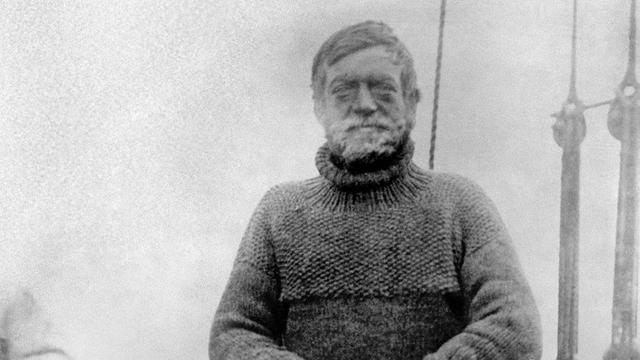
Ernest Shackleton (1874-1922)

I notice this morning a short item about a museum in Athy about explorer Ernest Shackleton, who was born in Kilkea which is near Athy. There was a museum there before, but it has been much expanded and renovated. I must make an expedition there one day to see it, as Athy is in County Kildare only about 60km to the south of Maynooth.

Seeing this article reminded me that some months ago I watched a documentary series called Shackleton: Death or Glory. It’s not a new series, but I hadn’t seen it before, and found it gripping and inspiring. You can see the entire series (3 episodes) on Youtube here. The idea was to reproduce the situation that Shackleton and his crew faced in 1916 when they had to abandon their expedition to cross Antarctica when their ship, Endurance, was trapped in the ice. The courage and leadership he showed in saving all their lives is awe-inspiring.

To cut a long and amazing story short, in 1914 Shackleton led an expedition to cross Antarctica on foot for the first time. But disaster struck before even reaching the continent. His ship Endurance was trapped in sea ice and he and his 27 men were marooned. Realising that the ship would be crushed, he ordered the crew to take everything they could, including the (two) life boats. They made a camp on the ice and stayed there several months, but it was clear they could not remain there indefinitely, so they set off with their provisions in the lifeboats towards Elephant Island, a perilous journey of almost 300 km, through freezing water thick with blocks of ice.

Elephant Island was safer that the ice shelf from which they had escaped but it was nowhere near any trade route so chance of being rescued by a passing ship was zero. The outlook was grim. A slow death from starvation and exposure seemed inevitable.

Shackleton could see only one (remote) possibility of rescue, which was to take one of the boats and try to find help. That meant travelling across the open sea to South Georgia, a journey of some 1500 km. Not just any sea, mind you: the notoriously stormy and treacherous South Atlantice. It was a very tall order but in his diary he calmy recorded his thought process, which was basically that if they all stayed put they would certainly die and if the rescue party perished those left behind would be no worse off. He had to take the chance.

Shackelton picked five men and set off in one of the lifeboats – a 22ft wooden vessel – across the merciless ocean, in an apparently desperate attempt to reach the only possible help at the Stromness Whaling station in South Georgia. The rest of the crew – 22 men – were left on Elephant Island.

Almost unbelievably, Shackleton and his five men survived 16 days at sea and made the crossing. But his gruelling mission didn’t end there, because they arrived on the wrong side of the island of South Georgia. The boat and two of the crew were in poor shape by then so they could not continue by sea. Shackleton, taking two men with him, had to traverse about 40km of an unchartered mountain range, without any mountaineering equipment in order to reach the safety of Stromness. Shackleton successfully raised the alarm, but the story was still far from over. The first thing Shackleton had to do was collect the two men he had left on the other side of South Georgia. All six were safe.

Now he had to think about the other 22 still at Elephant Island. In search of more appropriate ships, Shackleton went first to the Falkland Islands and then to Chile. Several rescue attempts failed, because of the pack ice and, once because of a fire onboard. Eventually he persuaded the Chilean Navy to lend him a steam tug, the Yelcho, which made it to Elephant Island. The men there were in poor shape, hungry and demoralised, almost but they were all alive. Against all the odds, Shackleton, saved every single one of his men from what must have seemed like certain death.

Aside from his physical courage and endurance, two things exemplify Ernest Shackleton’s leadership qualities: one is that he would never ask any of his men to do anything he wouldn’t do himself, and the other is that he put the wellbeing of his men at the centre of all his decisions. Can you say those things about your “Leader”?

These days we hear a lot of talk, in various contexts, about leadership but most of the people who claim to show leadership don’t know the meaning of the word. Next time hear some useless twit claiming to be a leader, think about Ernest Shackleton and judge them by his standards.

#Antarctica #Athy #CountyKildare #ElephantIsland #Endurance #ErnestShackleton #SouthGeorgia
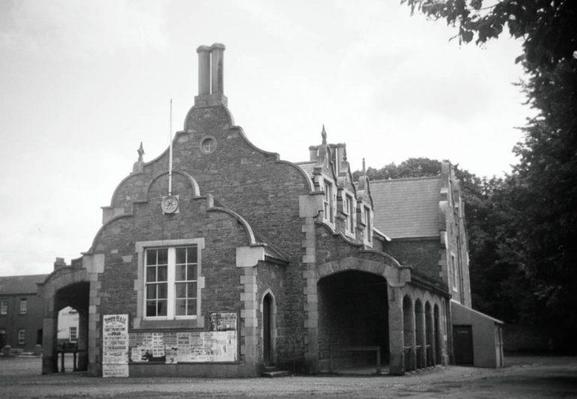
1857 – Courthouse, Athy, Co. Kildare
Architect: Frederick Darley

Curvilinear gables on this neo-Tudor style market building are at odds with its later and more severe use as a courthouse. Originally used as the town’s corn exchange and commissioned by Augustus FitzGerald, 3rd Duke of Leinster, officially opened on 6 Octobe
https://www.archiseek.com/1857-courthouse-athy-co-kildare/
#ArchitectureOfKildare #1857 #Athy #CoKildare #FrederickDarley17981872 #IrishCourtHouses #LawCourts

1857 – Courthouse, Athy, Co. Kildare | Archiseek.com

Architect: Frederick Darley Curvilinear gables on this neo-Tudor style market building are at odds with its later and more severe use as a courthouse. Originally used as the town’s corn exchange and commissioned by Augustus FitzGerald, 3rd Duke of Leinster, officially opened on 6 October 1857. At the time it was described ‘as pretty a

Archiseek.com | Irish architecture, lost & unbuilt buildings

1940 – Vocational School, Athy, Co. Kildare
Architect: Buckley & O'Gorman

Designed and constructed between 1938 to 1940, the new Vocational School, later known as St. Brigid's Post Primary School, was formally opened by the then Minister for Education Thomas O'Deirig. Finished in brick. Initially catering for 40 students, it was later extended by Rob
https://www.archiseek.com/1940-vocational-school-athy-co-kildare/
#ArchitectureOfKildare #Athy #BuckleyOGorman #CoKildare #schools

1940 – Vocational School, Athy, Co. Kildare | Architecture @ Archiseek.com

Architect: Buckley & O'Gorman Designed and constructed between 1938 to 1940, the new Vocational School, later known as St. Brigid's Post Primary School, was formally opened by the then Minister for Education Thomas O'Deirig. Finished in brick. Initially catering for 40 students, it was later extended by Robinson, Keefe & Devane in the early 1960s.

Architecture @ Archiseek.com | Irish architecture, lost & unbuilt buildings

1964 – St. Michael the Archangel Church, Athy, Co. Kildare
Architect: O'Connor & Aylward

Compare and contrast this with the wonderful church built by the Dominicans at the same time in the town. Even by Irish standards this is spectacularly conservative against the prevailing mood of the time - towards modernising Ireland.
https://www.archiseek.com/1964-st-michael-the-archangel-church-athy-co-kildare/
#ArchitectureOfKildare #1964 #Athy #churches #CoKildare #OConnorAylward

1964 – St. Michael the Archangel Church, Athy, Co. Kildare | Architecture @ Archiseek.com

Architect: O'Connor & Aylward Compare and contrast this with the wonderful church built by the Dominicans at the same time in the town. Even by Irish standards this is spectacularly conservative against the prevailing mood of the time - towards modernising Ireland. Built to accommodate 1,200 people, although seating has since been reduced with a

Architecture @ Archiseek.com | Irish architecture, lost & unbuilt buildings

1965 – Libray, Former St. Dominic’s Church, Athy, Co Kildare
Architect: John Thompson

An expressive hyperbolic paraboloid-roofed Catholic church built 1963-65 for the Dominican order. Designed by John Thompson (1917-88) working in collaboration with Father Phillip Pollock, Prior of Athy, w
https://www.archiseek.com/1965-libray-former-st-dominics-church-athy-co-kildare/
#ArchitectureOfKildare #1965 #Athy #BrdNRinn1936 #churches #CoKildare #GeorgeCampbell191779 #JohnThompson

1965 – Libray, Former St. Dominic’s Church, Athy, Co Kildare | Architecture @ Archiseek.com

Architect: John Thompson An expressive hyperbolic paraboloid-roofed Catholic church built 1963-65 for the Dominican order. Designed by John Thompson (1917-88) working in collaboration with Father Phillip Pollock, Prior of Athy, with the hyperbolic paraboloid roof engineered by Stanislaus Kenny. Thompson and Pollock had previously worked together in Limerick when both were involved in the design

Architecture @ Archiseek.com | Irish architecture, lost & unbuilt buildings

1973 – AIB, Duke Street, Athy, Co. Kildare
Architect: James V. McGrane & Son

Modernist bank building, superseding an earlier bank branch on the same street, on an attractive site alongside the river. Designed by Breffni McGrane, who took over the practice from his father in 1970, after qualifying from UCD School of Architecture in 1965
https://www.archiseek.com/1973-aib-athy-co-kildare/
#ArchitectureOfKildare #1973 #AlliedIrishBanks #Athy #banks #CoKildare #JamesVMcGraneSon

1973 – AIB, Duke Street, Athy, Co. Kildare | Architecture @ Archiseek.com

Architect: James V. McGrane & Son Modernist bank building, superseding an earlier bank branch on the same street, on an attractive site alongside the river. Designed by Breffni McGrane, who took over the practice from his father in 1970, after qualifying from UCD School of Architecture in 1965 and became a Member of the Royal

Architecture @ Archiseek.com | Irish architecture, lost & unbuilt buildings

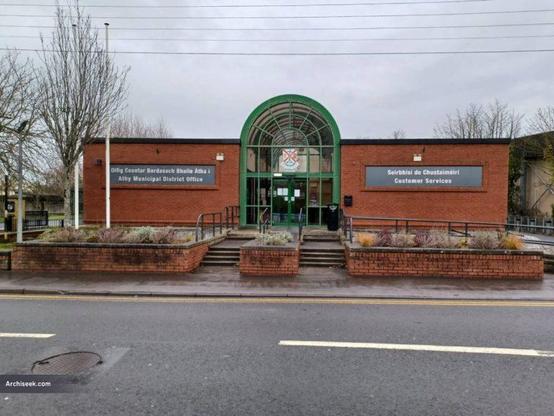
1986 – Municipal Offices, Athy, Co. Kildare
Architect: Keane Murphy Duff

Built for Athy Urban District Council but with the reorganisation of local government, now the Municipal Offices for Athy. Very much of its time, the coloured treatment to the central atrium being an element for government or civic buildings of this period
https://www.archiseek.com/1986-municipal-offices-athy-co-kildare/
#ArchitectureOfKildare #1986 #Athy #CoKildare #KeaneMurphyDuff #MunicipalBuildings

1986 – Municipal Offices, Athy, Co. Kildare | Architecture @ Archiseek.com

Architect: Keane Murphy Duff Built for Athy Urban District Council but with the reorganisation of local government, now the Municipal Offices for Athy. Very much of its time, the coloured treatment to the central atrium being an element for government or civic buildings of this period in Ireland.

Architecture @ Archiseek.com | Irish architecture, lost & unbuilt buildings
Cycling the #GrandCanalWay and onto the #BarrowBlueway - 160km off road by ebike in Ireland via #Robertstown, #Athy and #Carlow video at
https://youtu.be/vmXEC9-KVG0
Cycling the Grand Canal and onto the Barrow greenway - 160km off road by ebike

Enjoy the videos and music you love, upload original content, and share it all with friends, family, and the world on YouTube.

YouTube

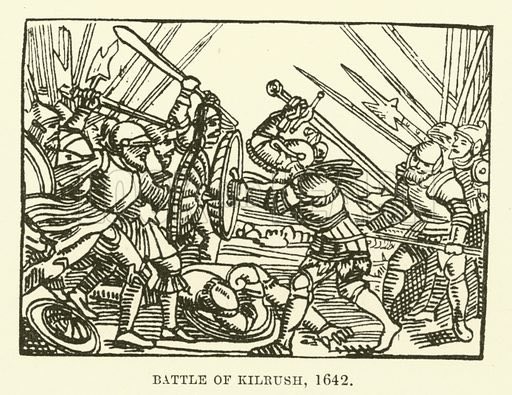
500 lay dead in a #Kildare field.

That was the Battle of Kilrush, fought on the road between #Athy and #Dublin 382 years ago #OnThisDay.

The casualties that day were one small fraction of the destruction which resulted in the deaths of some 1/7th of #Ireland's population in a war which spanned more than a decade

#GlobalIrishNation #IrishHistory #War #Battles #Conflict #OTD #Mastodaoine

https://www.irishstewpodcast.com/blog/the-battle-of-kilrush-april-15th-1642

The Battle of Kilrush - April 15th 1642

19th century etching of the Battle of Kilrush On April 15th 1642,  on the road between Athy and Dublin, two opposing armies faced off at Kilrush, Kildare. The…

Irish Stew Podcast
BREAKING: Revenue seize herbal cannabis worth over €400,000 in Kildare

As part of an intelligence-led operation, Revenue officers seized illicit drugs with an estimated value of over €400,000 in County Kildare yesterday. A spokesperson for the Revenue’s Customs Service said: "The seizure was made as a result of a joint operation conducted by Revenue&rsq...