Time of the year to re-up this #AstrophysicsFactlet

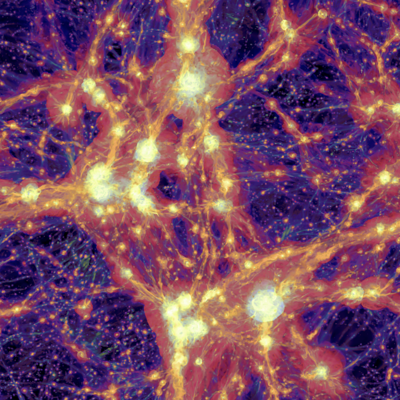
As for every astronomer next to a pool, it is impossible for me not to notice the similarity between the light patterns that refraction creates on the bottom of the pool, and the image of the cosmic web produced by cosmological simulations.

The similarity is not by chance, but there are deep connections between the two!

#astronomy
#physics #science

I am not doing any new #AstroPhysicsFactlet since a while...they took quite some work and effort!
Howvever, given the time of the year it seems in order to re-up this one

https://mastodon.social/@franco_vazza/110933328697681202

which concerned waves in a pool and the formation of the cosmic web!

#astrodon #astronomy #physics

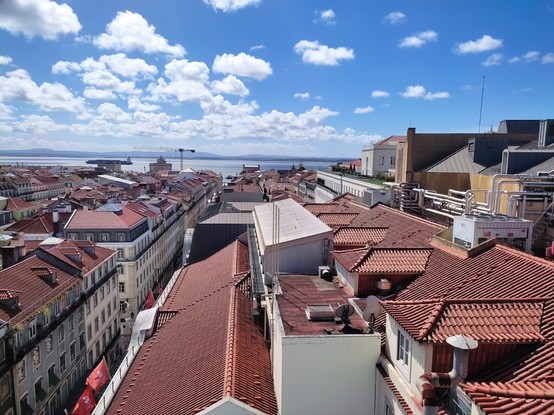
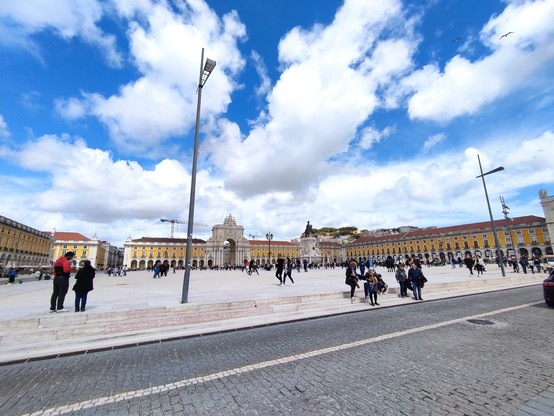
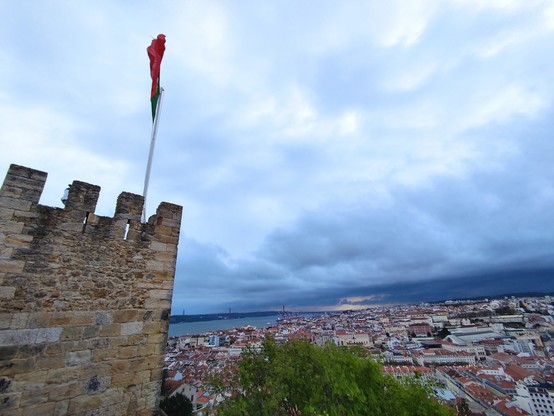
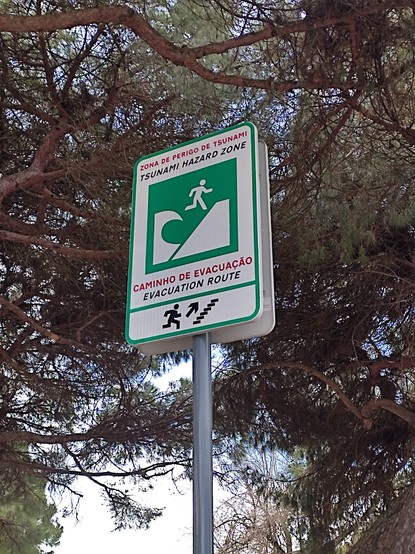
How can can one plausibly connect Easter, Lisbon, tsunamis and clusters of galaxies? Let me tell you in this rollercoaster #AstroPhysicsFactlet #astronomy #astrodon 

#paperday : A review article I just produced with Andrea Botteon (IRA/INAF) in today #astroph:

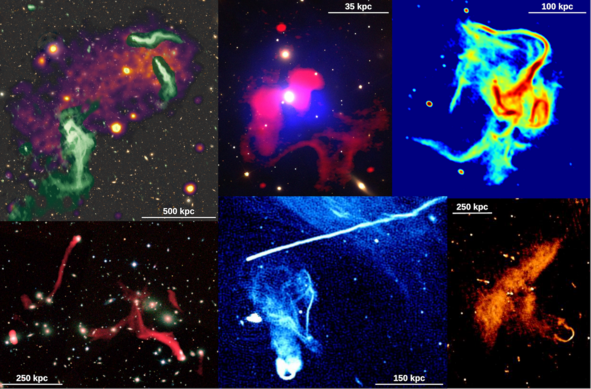
"The seeding of cosmic ray electrons by cluster radio galaxies: a review"

https://arxiv.org/abs/2403.16068

which follows a conference of last year in Tropea, which I have extensively covered with past threads
(e.g.
https://mastodon.social/@franco_vazza/111068472974045652)

Worth of a small new #AstrophysicsFactlet about the impact of Radio Galaxies in the emergence of the most gigantic radio emissions in the sky.

#astronomy #astrodon

The seeding of cosmic ray electrons by cluster radio galaxies: a review

Radio galaxies in clusters of galaxies are prominent reservoirs of magnetic fields and of non-thermal particles, which get mixed with the intracluster medium. We review the observational and theoretical knowledge of the role of these crucial ingredients for the formation of diffuse radio emission in clusters (radio halos, relics, mini halos) and outline the open questions in this field.

arXiv.org

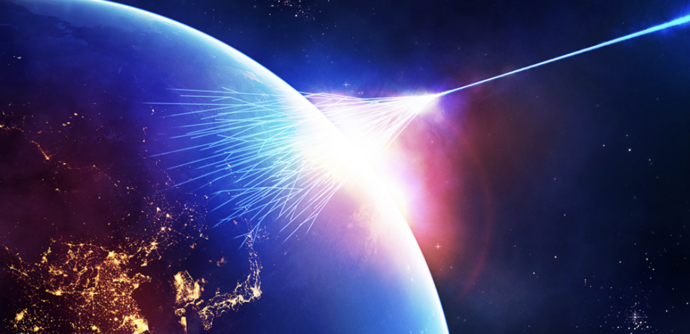
A new #AstrophysicsFactlet prompted by a smart question posed by a student of my Astroparticle course for astronomers.

In a nutshell: why the maximum energy of the #CosmicRays we can capture as they collide with the atmosphere of our planet is so much bigger than the maximum energy of the cosmic rays we can accelerate with human made accelerators, like the Large Hadron Collider (LHC) ?

#astrodon #astronomy

#paperday
CHEX-MATE : #turbulence in the intracluster medium from X-ray surface brightness
fluctuations by S. Dupourque et al. (including myself).

https://arxiv.org/abs/2403.03064
(accepted, in press)

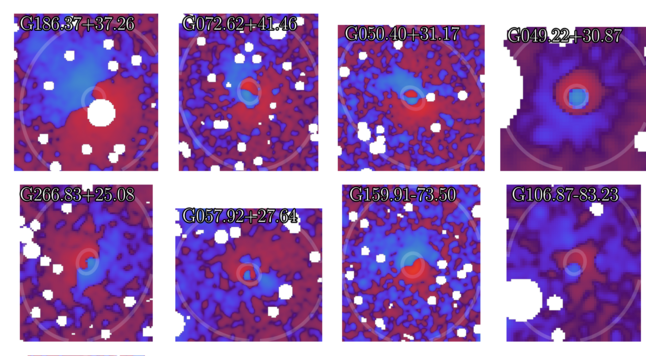
A thorough analysis of X-ray fluctuations in the CHEX-MATE sample of 64 clusters observed with XMM-Newton, as a proxy for the gas velocity fluctuations due to turbulence.

Worth of a small #AstrophysicsFactlet

#astrodon #astronomy

CHEX-MATE : turbulence in the ICM from X-ray surface brightness fluctuations

The intra-cluster medium is prone to turbulent motion that will contribute to the non-thermal heating of the gas, complicating the use of galaxy clusters as cosmological probes. Indirect approaches can estimate the intensity and structure of turbulent motions by studying the associated fluctuations in gas density and X-ray surface brightness. In this work, we want to constrain the gas density fluctuations at work in the CHEX-MATE sample to obtain a detailed view of their properties in a large population of clusters. We use a simulation-based approach to constrain the parameters of the power spectrum of density fluctuations, assuming a Kolmogorov-like spectrum and including the sample variance, further providing an approximate likelihood for each cluster. This method requires clusters to be not too disturbed, as fluctuations can originate from dynamic processes such as merging. Accordingly, we remove the less relaxed clusters (centroid shift $w>0.02$) from our sample, resulting in a sample of 64 clusters. We define different subsets of CHEX-MATE to determine properties of density fluctuations as a function of dynamical state, mass and redshift, and investigate the correlation with the presence or not of a radio halo. We found a positive correlation between the dynamical state and density fluctuation variance, a non-trivial behaviour with mass and no specific trend with redshift or the presence/absence of a radio halo. The injection scale is mostly constrained by the core region. The slope in the inertial range is consistent with Kolmogorov theory. When interpreted as originating from turbulent motion, the density fluctuations in $R_{500}$ yield an average Mach number of $M_{3D}\simeq 0.4\pm 0.2$, an associated non-thermal pressure support of $ P_{turb}/P_{tot}\simeq (9\pm 6) \%$ or a hydrostatic mass bias $b_{turb}\simeq 0.09\pm 0.06$, in line with what is expected from the literature.

arXiv.org

A new #AstroPhysicsFactlet prompted by the mix of my just started courses of electromagnetism (for engineers) and "astroparticles" for astronomers.

The question is:
can you accelerate relativistic particles with your finger?

#astronomers #astronomy

#astroph:
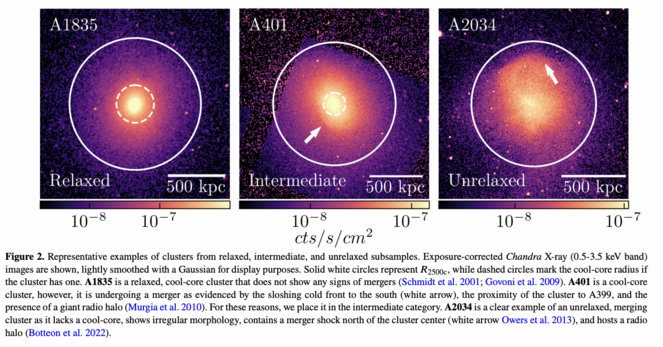
interesting new look at using X-ray fluctuations in clusters of galaxy as possible proxy for turbulent motions, using 80 clusters observed with @ChandraScience
https://arxiv.org/abs/2401.15179 by Heinrich et al.

#astronomy #astrodon

A very short #AstroPhysicsFactlet and explainer for the curious:

Merger-driven multi-scale ICM density perturbations: testing cosmological simulations and constraining plasma physics

The hot intracluster medium (ICM) provides a unique laboratory to test multi-scale physics in numerical simulations and probe plasma physics. Utilizing archival Chandra observations, we measure density fluctuations in the ICM in a sample of 80 nearby (z<1) galaxy clusters and infer scale-dependent velocities within regions affected by mergers (r<R2500c), excluding cool-cores. Systematic uncertainties (e.g., substructures, cluster asymmetries) are carefully explored to ensure robust measurements within the bulk ICM. We find typical velocities ~220 (300) km/s in relaxed (unrelaxed) clusters, which translate to non-thermal pressure fractions ~4 (8) per cent, and clumping factors ~1.03 (1.06). We show that density fluctuation amplitudes could distinguish relaxed from unrelaxed clusters in these regions. Comparison with density fluctuations in cosmological simulations shows good agreement in merging clusters. Simulations underpredict the amplitude of fluctuations in relaxed clusters on length scales <0.75 R2500c, suggesting these systems are most sensitive to missing physics in the simulations. In clusters hosting radio halos, we examine correlations between gas velocities, turbulent dissipation rate, and radio emission strength/efficiency to test turbulent re-acceleration of cosmic ray electrons. We measure a weak correlation, driven by a few outlier clusters, in contrast to some previous studies. Finally, we present upper limits on effective viscosity in the bulk ICM of 16 clusters, showing it is systematically suppressed by at least a factor of 8, and the suppression is a general property of the ICM. Confirmation of our results with direct velocity measurements will be possible soon with XRISM.

arXiv.org

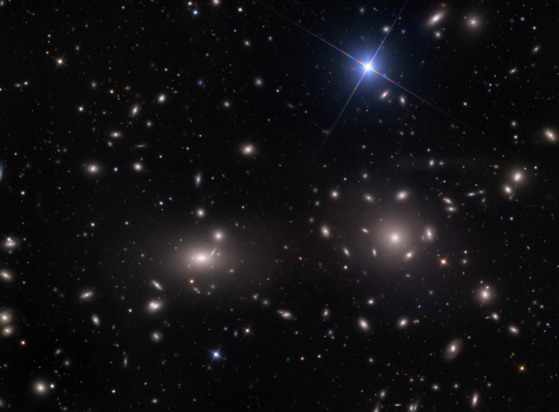
Like in real life, also in extragalactic astronomy there are VIPs*. If you are into clusters of galaxies, the top of the VIP probably is the
Coma clusters of galaxies, aka Abel 1656.

Let's do a small #AstroPhysicsFactlet to see why

#astrodon
#astronomy

*=Very Important Potential (wells)

The Universe is full of stars!

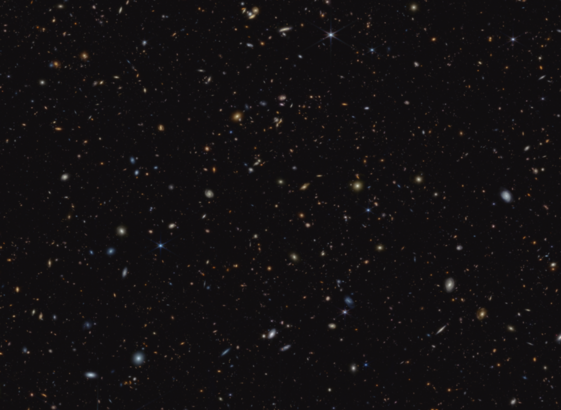
By extrapolating some numbers based on local measurements, we can guess there are about 1e12-1e13 galaxies just in the observable part of our Universe, for a total of at least~1e24 stars.

When did the Universe form them? How well do we know?

Here is an #AstrophysicsFactlet about this.

#astronomy #astrodon #astronomia