 ashwinvis
Based on the #3b1b lecture on higher dimensional spheres, I wonder if the fact that almost all volume being at the boundary and the equator is the reason why space-time is thought to be like a torus, string theory visuals portray wiggling circles?
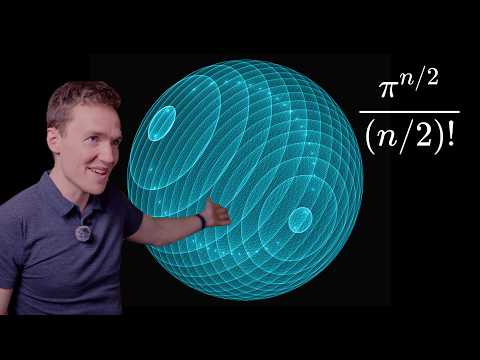
Based on the #3b1b lecture on higher dimensional spheres, I wonder if the fact that almost all volume being at the boundary and the equator is the reason why space-time is thought to be like a torus, string theory visuals portray wiggling circles?
What determines the sound pressure level of a pressurised can opening?
Questions on the Delayed Quantum Eraser Experiment
cross-posted from: https://lemmy.blahaj.zone/post/27093935 [https://lemmy.blahaj.zone/post/27093935] > Are these three statements true: > > (1) We can observe where A hits (thereby seeing A as a particle instead of a wave) before B’s path determines the availability of information? > > (2) Measuring where A hits, (even if done with thousands of previous data points of A sorted by B hits showing the interference patterns) has no predictive power over whether B’s whichpath information will be erased or not? > > (3) Whether or not B’s whichpath information was erased, has predictive power over where A landed?
What would an Alcubierre drive look like to an outside observer?
Let’s suppose we have a wish granting genie that gives us a working Alcubierre drive. The drive is turned on and the bubble is staying stationary to our frame of reference (so, it’s turned on on our imaginary helipad and it’s just sitting there). What could an outside observer expect to see when they look at the bubble? I.e. would light get redshifted or distorted, since it has to pass through space that’s expanding faster than the surrounding space? If I shine a laser pointer directly at the bubble, does it lens around the bubble and stroke the far wall, or will it pass through and strike what’s inside? Further, could one expect any ill effects from approaching or passing through the bubble, or would that even be possible? Would an Alcubierre drive in motion create a gravitational wave or something very much like it, since it works by distorting space?
What is wrong with this equation?
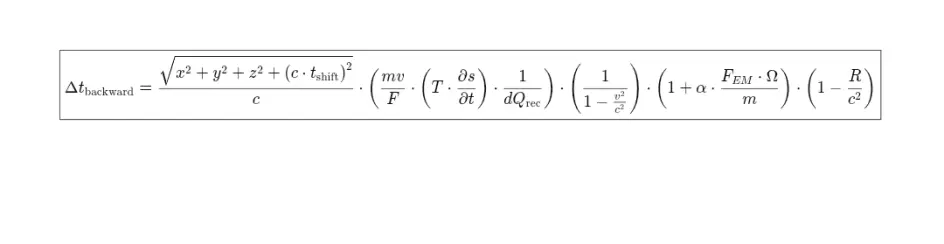
A little physics riddle
cross-posted from: https://lemmy.ca/post/33867210 [https://lemmy.ca/post/33867210] > Here’s a little physics riddle. It’s really meant as a moment of self-reflection for physics teachers (I invite you to compare what answers you’d give within Relativity Theory). > > We’re in the context of Newtonian mechanics. > > There are three small bodies. In the inertial coordinate system (t, x, y, z), we know the following about the three bodies (at a given instant of time): > > - The first has mass 3 kg > - The second has velocity (1, 0, 0) m/s > - The third has momentum (2, 0, 0) kg⋅m/s > > Now consider a new coordinate system (t’, x’, y’, z’) related to the first by the following transformation (a Galileian boost): > > t’ = t, x’ = x - u⋅t, y’ = y, z’ = z > with u = 1 m/s > > Questions: > > - What is the mass of the first body in the new coordinate system? > - What is the velocity of the second body in the new coordinate system? > - What is the momentum of the third body in the new coordinate system? > > Can you give definite answers to these three questions, and motivate your answers with simple physical principles? Note that by “definite answer” I don’t necessarily mean an answer with a definite numerical value.
Does an object's buoyancy change in a pressurized environment?
I had an idea in a dream where a pressure vessel had a buoyancy valve at the lowest point. The idea was that a ball would sit in a hole and water that may condense inside the vessel would lift the ball allowing the water to drain after which the pressure of the vessel would seal the ball back into place. That made me wonder about the possibility of a pressure based buoyancy valve and whether the physics were there.
Could a small planet actually be possible?
Was watching Rick and Morty on the Season 3 premiere and they have that very small planet that the family goes to to escape. The planet is humorously small in that it is noticeable round while walking. The planet also apparently has animals and breathable air for humans. At one point, Rick goes to the South Pole of the planet and goes into a cave that takes him to the core of the planet which is shown as being smaller than him, from what I remember and what it looked like. Could a planet like this actually exist with all of these features, only being a few acres in size, at most? Would a breathable atmosphere be possible? Would a core be present at all? To put it in more realistic terms, the planet would be the size of Manhattan Island in New York City but folded to be round.
There is a conflict between my understanding of what the event horizon of a black hole is vs the way that many theoretical physicists talk about them.
First of all, the assumptions I'm able to identify as the basis for my reasoning are these:
1. Time progresses more slowly in the presence of energy, and at the event horizon of a black hole, time does not progress at all.
2. Black holes eventually evaporate due to Hawking radiation.
Now, since an eternity would have to pass before an object truly reaches the event horizon, the object would inevitably evaporate into radiation first. That means that all observers agree: nobody ever enters a black hole.
Is my reasoning flawed? Are my assumptions wrong? Did I miss any implicit assumptions? If not, why are physicists talking about "what it's like to cross the event horizon" and "what the interior of a black hole is like"? I'm utterly confused by it. Unless I misunderstand, there is no inside.
 5714
5714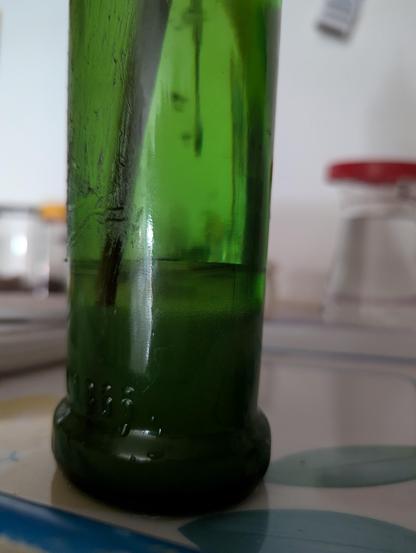

 stravanasu
 Jyek
Jyek Xenharmonic Forest