 Hao Yin
#Heme biosynthesis #Angigoenesis
Roles of #EndothelialCell FLVCR1a, a heme exporter to extracellular space in
✅Developmental Angiogenesis-🐭Retina🐟ISV
✅Tumor angiogenesis
❎Vascular homeostasis
Dr. Sara Petrillo lab Angiogenesis 2023
https://link.springer.com/article/10.1007/s10456-023-09865-w
FLVCR1a deficiency-> #EndothelialCell-autonomous defects in Mitochondria, ER stress & Angiogenic behaviors
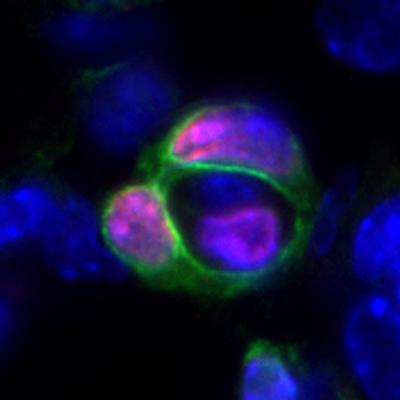
Heme accumulation triggers #Paraptosis (Organelle swelling-> Cytoplasic vacuolation)💀
Dr. Emanuela Tolosano lab Cell Death Diff 2018
https://www.nature.com/articles/s41418-017-0001-7
Other enzymes in Heme metabolism in #Angiogensis👇
Ferrochelatase is a therapeutic target for ocular neovascularization
https://www.embopress.org/doi/full/10.15252/emmm.201606561
Serine Synthesis via PHGDH Is Essential for Heme Production in Endothelial Cells
https://www.cell.com/cell-metabolism/fulltext/S1550-4131(18)30391-7

Endothelial cells require functional FLVCR1a during developmental and adult angiogenesis - Angiogenesis
The Feline Leukemia Virus Subgroup C Receptor 1a (FLVCR1a) is a transmembrane heme exporter essential for embryonic vascular development. However, the exact role of FLVCR1a during blood vessel development remains largely undefined. Here, we show that FLVCR1a is highly expressed in angiogenic endothelial cells (ECs) compared to quiescent ECs. Consistently, ECs lacking FLVCR1a give rise to structurally and functionally abnormal vascular networks in multiple models of developmental and pathologic angiogenesis. Firstly, zebrafish embryos without FLVCR1a displayed defective intersegmental vessels formation. Furthermore, endothelial-specific Flvcr1a targeting in mice led to a reduced radial expansion of the retinal vasculature associated to decreased EC proliferation. Moreover, Flvcr1a null retinas showed defective vascular organization and loose attachment of pericytes. Finally, adult neo-angiogenesis is severely affected in murine models of tumor angiogenesis. Tumor blood vessels lacking Flvcr1a were disorganized and dysfunctional. Collectively, our results demonstrate the critical role of FLVCR1a as a regulator of developmental and pathological angiogenesis identifying FLVCR1a as a potential therapeutic target in human diseases characterized by aberrant neovascularization.