 John Samuel
Wikifunctions and Abstract Wikipedia have immense, still underexplored potential for smaller-language Wikipedias and multilingual Wiktionary projects.
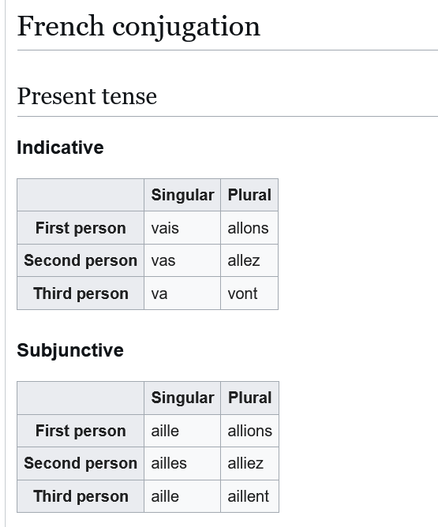
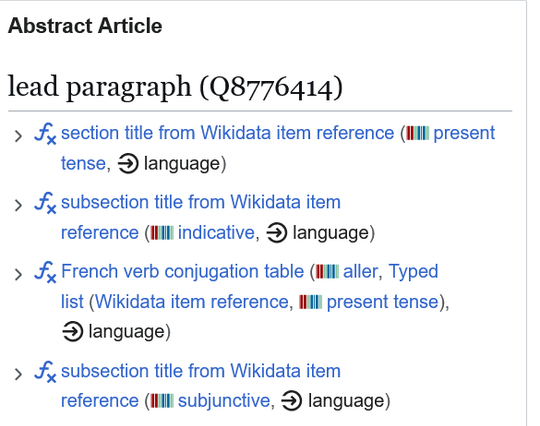
Here, I show how French conjugation tables can be generated automatically.
Wikifunctions and Abstract Wikipedia have immense, still underexplored potential for smaller-language Wikipedias and multilingual Wiktionary projects.
Here, I show how French conjugation tables can be generated automatically.
Some weeks ago, I wrote about my experiments with Abstract Wikipedia. Things are advancing.
This year during Pride Month, much of my Wikimedia focus is on Abstract Wikipedia, Wikifunctions, multilinguality, and how we can make knowledge accessible across languages.
More in my latest article. https://medium.com/@jsamwrites/this-pride-month-i-am-focusing-on-abstract-wikipedia-287bbae593c8
#lgbt #lgbtq #pridemonth #wikipedia #wikifunctions #AbstractWikipedia

Ich werde nächsten Freitag, 19. Juni 18:30, im @temporaerhaus in #Ulm sein, und wir können uns über #Wikidata #Wikifunctions #AbstractWikipedia und vieles mehr unterhalten!
Danke an @hogue_456 für die Einladung!
The recording of my @iswc_conf keynote is available online:
Wikipedia and the Semantic Web -- 20 years of co-development, and the future
Drawing on the roots of @wikipedia and the Semantic Web, how they influenced each other during the last two decades, leading to
@wikidata and peeking forward to @wikifunctions and Abstract Wikipedia.
#semanticWeb #abstractWikipedia #knowledge #knowledgeGraphs #knowledgerepresentation #wikipedia #wikidata #wikifunctions
https://videolectures.net/videos/iswc2025_nara_vrandecic_wikipedia_future
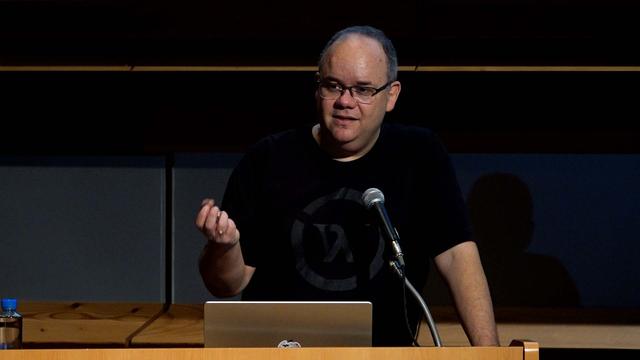
In 2005, the very first papers proposed integrating Semantic Web technologies in the nascent Wikipedia ecosystem. This wasn’t just a convergence; it ignited two decades of mutual inspiration and benefit. From this crucible, the work in semantic wikis drew inspiration. Semantic MediaWiki, particularly, which found global adoption at Google, Microsoft, NASA, and beyond. Wikipedia became the bedrock for pioneering knowledge graphs, including DBpedia, Freebase, and Yago. These pivotal experiences directly fueled the development of Knowledge Graph, a term that has since found ubiquitous adoption, and, critically, Wikidata, a project that has become an indispensable, living component of Wikipedia itself. With over half a million global contributors, Wikidata stands as the world’s most-edited wiki, powering one of, if not the, most widely-used public SPARQL endpoint. Its software, Wikibase, has spawned a federation of knowledge graphs, serving diverse domains from museums to language preservation. Furthermore, Wikidata’s evolution into lexicographic data (inspired by ontologies such as OntoLex and Lemon) laid the groundwork for projects such as Wikifunctions and Abstract Wikipedia, a vision first unveiled right here at ISWC 2018 and now an official Wikimedia Foundation project. This takes us to the present and future: Abstract Wikipedia collaboratively confronts the inherent expressivity gap in knowledge graphs, while foundational role in training and the current use of language models can not be overstated. This creates a tantalising confluence of large language models and knowledge graphs, hinting at profound opportunities - and critical challenges -for Wikipedia, the Web, and beyond. As this rich history promises many more years of co-development and mutual inspiration, we will conclude with a forward-looking sketch of open research questions and exciting upcoming opportunities.
Last month, I was in Vienna to talk about #Wikipedia and AI (and #Wikidata, #AbstractWikipedia, and the Wikidata Embedding Project). It took me some time, but I have now written down most of my talk there in English. Enjoy the story of the owl 🦉 and the bat🦇
Knowledge Production on Wikimedia Projects with Artificial Intelligence (whatever that means) There’s no doubt that what we refer to as “Artificial Intelligence” changes knowledge production. English Wikipedia has recently adopted a policy which prohibits the use of Large Language Models to generate or rewrite article content. German Wikipedia started a Request for Comment discussion on a comparable policy a little bit before that. We typically don’t see everything AI in 2026 as a field in computer science research, but in a context of exploitative business practices that – among other effects on the real world —put considerable strains on Wikimedia’s infrastructure and thus the Knowledge Commons.
#AbstractWikipedia, the project that creates articles from function calls in #Wikifunctions with data from #wikidata in (eventually) any human language is getting to a point where some impressive progress is visible.
Have a look: https://www.wikifunctions.org/wiki/Wikifunctions:Status_updates/2026-02-20
Abstract Wikipedia Newsletter 236
A sneak preview of Abstract Wikipedia
with screenshots of the current prototype
Furthermore:
* Recent Changes in the software
* Fresh Functions weekly: 21 new functions
https://www.wikifunctions.org/wiki/Wikifunctions:Status_updates/2026-02-20


Happy birthday @wikipedia
25 years of Wikipedia -- a decades-long story of language communities growing together
https://www.wikifunctions.org/wiki/Wikifunctions:Status_updates/2026-01-15
Abstract Wikipedia Newsletter 231
* We wish you a happy new Gregorian year!
* Newsletter taking a break
* Next Volunteer’s Corner on 9 February 2026
* Template to Wikifunctions on Wikipedia
* Recent Changes in the software
* Fresh Functions weekly: 51 new Functions
https://www.wikifunctions.org/wiki/Wikifunctions:Status_updates/2025-12-18
 Jonas
Jonas Denny Vrandečić
 Jens Ohlig
 Wikifunctions