Исследование мелодий на МК Padauk

К микроконтроллерам Padauk я давно присматривался. Острой необходимости в их использовании у меня нет, но очень интересовали. В какой-то момент этот интерес взял верх, и я решил попробовать что-нибудь сделать на них. Если посмотреть репозитории с примерами Free PDK, то все делают простенькое проигрывание мелодий. Я не стал долго размышлять и тоже решил сделать проигрывание мелодий, но с одним условием — чтобы небольшая мелодия проигрывалась на самом дешевом и простеньком МК, таком как PMS150C или PMS150G. Я постараюсь вспомнить всё, с чем столкнулся: от программатора Free PDK, обновления поддержки PlatformIO, создания отладочной платы под PFS154 и PMS150C (с адаптерами), музыкального брелока с PMS150G и платы с ATtiny13 — до разбора алгоритма для написания мелодий, которые можно ужать в 1 КБ памяти, а напоследок попробуем снимать значения c АЦП PFS122 и регулировать громкость музыки средствами PWM.

https://habr.com/ru/companies/timeweb/articles/983716/

#padauk #arduino #pms150c #pfs122 #pfs154 #pms150g #attiny13 #пищалка #музыка #timeweb_статьи

Исследование мелодий на МК Padauk

К микроконтроллерам Padauk я давно присматривался. Острой необходимости в их использовании у меня нет, но очень интересовали. В какой-то момент этот интерес взял верх, и я решил попробовать что-нибудь...

Хабр

Экран для вывода данных через COM-порт

Если у компьютера нет не только монитора, но и даже видео-выхода, а показания датчиков хотелось бы видеть, то решением может быть отправлять данные в виде строки в COM-порт, который будет слушать микроконтроллер и отображать приходящую строку на своём дисплее. Под катом простейшая реализация этого на микроконтроллере ATtiny13 и 0,96'-экране SSD1306 с разрешением 128х32.

https://habr.com/ru/articles/824810/

#attiny13 #ssd1306

Экран для вывода данных через COM-порт

Если у компьютера нет не только монитора, но и даже видео-выхода, а показания датчиков хотелось бы видеть, то решением может быть отправлять данные в виде строки в COM-порт, который будет слушать...

Хабр
A Solar-Powered Wristwatch With An ATtiny13

Wristwatches come in many shapes, sizes, and types, but most still have at least one thing in common: they feature a battery that needs to be swapped or recharged somewhere been every other day and…

Hackaday

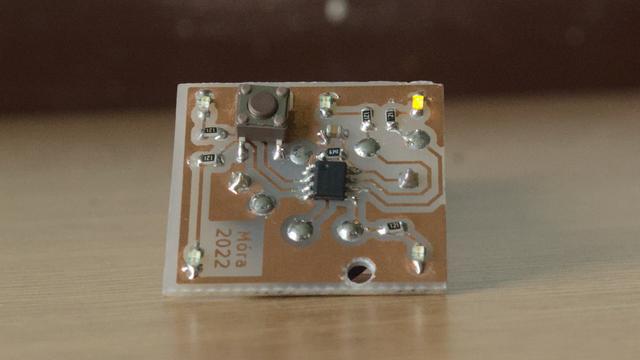
Electronics And C++ Education With an ATTiny13

When [Adam, HA8KDA] is not busy with his PhD studies, he mentors a group of students interested in engineering. To teach them a wide range of topics, he set out to build a small and entertaining embedded project as they watch and participate along the way. With this LED-adorned ATTiny13A project, [Adam] demonstrated schematic and PCB design, then taught C++ basics and intricacies - especially when it comes to building low-footprint software - and tied it all together into a real-world device students could take home after the project. His course went way beyond the "Hello world"s we typically expect, and some of us can only wish for a university experience like this.

He shares the PCB files and software with us, but also talks about the C++20 framework he's developed for this ATTiny. The ATTiny13A is very cheap, and also very limited - you get 1K of ROM and 64 bytes of RAM. This framework lets you make good use of it, providing the basics like GPIO wiggling, but also things like low-power operation hooks, soft PWM with optional multi-phase operation support and EEPROM access. Students could write their own animations for this device, and he includes them in the repo, too!

In educational projects, it pays to keep code direct and clean, cruft-less and accessible to students. These are the things you can only achieve when you truly understand the tools you're working with, which is the perfect position for teaching about them! [Adam] intends to show that C++ is more than suitable for low-resource devices, and tells us about the EEPROM class code he wrote - compiling into the same amount of instructions as an Assembly implementation and consuming the same amount of RAM, while providing compile-time checks and fail-safe syntax.

We've talked about using C++ on microcontrollers before, getting extra compile-time features without overhead, and this project illustrates the concept well. [Adam] asks us all, and especially our fellow C++ wizards, for our opinions on the framework he designed. Could you achieve even more with this simple hardware - make the code more robust, clean, have it do more within the limited resources?

What could you build with an ATTiny13, especially with such a framework? A flashy hairclip wearable, perhaps, or a code-learning RF-remote-controlled outlet. We've also seen a tiny camera trigger for endurance races,, a handheld Flappy Bird -like console, and many more!

#attinyhacks #microcontrollers #softwarehacks #attiny13 #attiny13a #avrattiny13 #c #c20 #education #educational

Electronics And C++ Education With An ATTiny13

When [Adam, HA8KDA] is not busy with his PhD studies, he mentors a group of students interested in engineering. To teach them a wide range of topics, he set out to build a small and entertaining em…

Hackaday
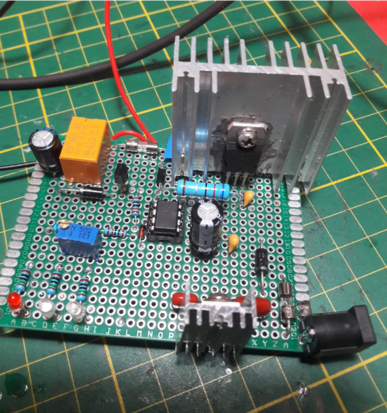
Here is my 12v #nimh charger with automatic stop. It is driver with a simple #attiny13 I use the internal ADC.As my vacuum robot does not charge anymore I replace this.
#diy #arduino
This "Smart" bathroom fan uses #ATtiny13 microcontroller & two sensors to turn on based on humidity or timed mode: https://t.co/sBF0POw2t8 source: https://twitter.com/hackaday/status/892467667646513154