Two Bronze Age neck rings found in Sweden – The History Blog
https://www.thehistoryblog.com/archives/76206

"Made of cast bronze and twisted into spirals, this type of necklace is known as a Wendel ring. They were produced in the late Bronze Age and are typically found in bogs and marshes deposited as part of a group of artifacts. Finding two Wendel rings sandwiched between stones is unprecedented."

#History #Archeology

Link-Tip: Die Website„Rom in Deutschland“ ist eine Sammlung von Örtlichkeiten, an denen römische „Hinterlassenschaften“ gefunden wurden und bietet eine geografische wie auch thematische Suche – ideal für alle, die schon immer wissen wollten, ob und wenn ja, wo genau die Römer in ihrer Region einst aktiv waren.

Link: https://rom-in-deutschland.de/

#roman #römisch #romindeutschland #romeingermany #search #suche #archäologie #archeology #antiquity #antike

Orte aus dem antiken Rom in Deutschland

Ausgrabungen, Museen, Parks und sonstige archäologische Stätten aus dem alten Rom in Deutschland; touristische Informationen; Reiseziel Limes in Deutschland; touristische Infos und Ausflugsziele/-inspirationen

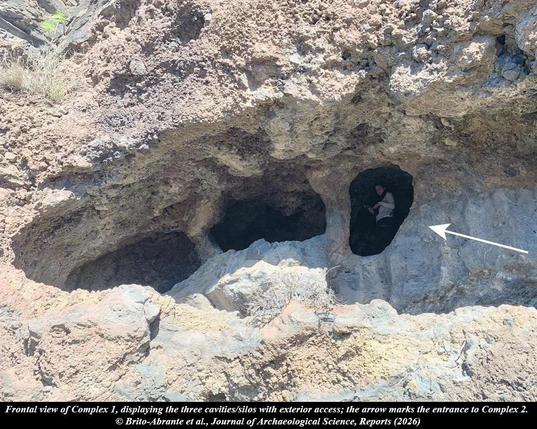
Earliest evidence of cereal harvesting by ancient Canarians discovered in Gran Canaria

Archaeologists studying a cave complex on Gran Canaria have found the earliest direct evidence of cereal harvesting in the Canary Islands, adding new detail to what is known about farming and burial customs among the island’s Indigenous communities before the Castilian conquest...

More info: https://archaeologymag.com/2026/05/earliest-evidence-of-cereal-harvesting-in-gran-canaria/

Follow @archaeology

#archaeology #archeology #archaeologynews #archaeobotany #GranCanaria

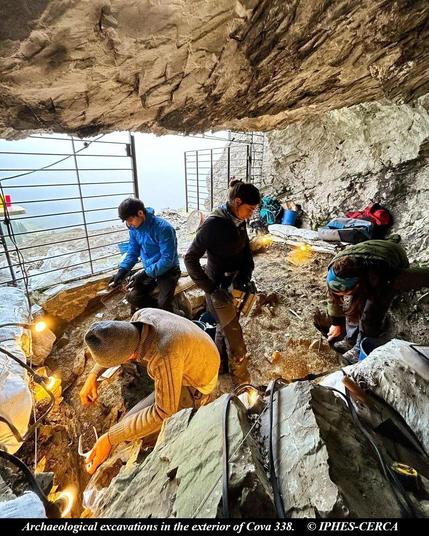
6,000 years of human occupation found in highest prehistoric cave in Spain’s Pyrenees

Archaeologists working in the eastern Pyrenees have identified what is now the highest-altitude prehistoric cave in the mountain range with strong evidence of repeated human occupation...

More information: https://archaeologymag.com/2026/05/6000-years-of-human-occupation-found-in-pyrenees/

Follow @archaeology

#archaeology #archeology #archaeologynews #neolithic #bronzeage

The Romans and Vikings left few genetic traces of their occupations of Britain, research suggests. Via @live_science #archeology #History #Anthropology #sociology #Science 🔭🔬🧪🥼🧑‍🔬

The Romans and Vikings left fe...
The Romans and Vikings left few genetic traces of their occupations of Britain, research suggests

Despite their occupations of Britain, the Romans and Vikings didn't leave much of a genetic mark on Britons. The Anglo-Saxons, though, were a different story.

Live Science

4th c. B.C. wood and stone structure found in Germany – The History Blog
https://www.thehistoryblog.com/archives/76198

"The condition of the wood was so extraordinary that at first the BLfD team thought it was the remains early modern or even modern construction, but when the oak beams were analyzed in the dendrochronology laboratory of the state office, the tree rings were compared to known oak ring chronologies and found the beams came from trees felled in the 4th century B.C."

#History #Archeology

See also:

#archeology

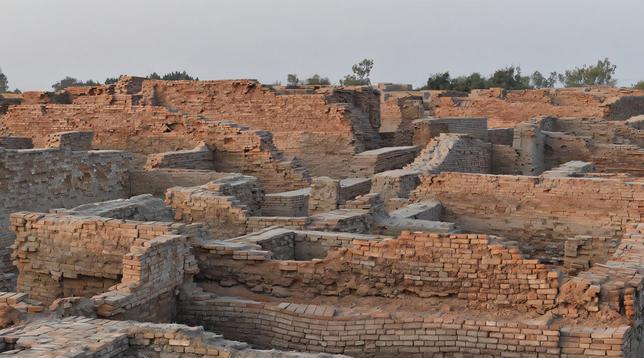
"How a 4,000-year-old city defied history's 'rules' by becoming more equal as it became more successful

For decades, historians have generally agreed that the progress of small villages as they evolved into cities came at the price of widening inequality. A small group of leaders, kings and priests, would inevitably seize control of the wealth and the gap between rich and poor would grow.

But a new study at the University of York delves into the archaeology of the 4,000-year-old Mohenjo-daro, the Indus civilization's largest city, and shows the opposite was true. By analyzing house sizes across the ancient city, researchers found that Mohenjo-daro was not only more equal than its neighbors in Mesopotamia and Greece, but it actually became more egalitarian over time."

https://phys.org/news/2026-05-year-city-defied-history-equal.html

How a 4,000-year-old city defied history's 'rules' by becoming more equal as it became more successful

For decades, historians have generally agreed that the progress of small villages as they evolved into cities came at the price of widening inequality. A small group of leaders, kings and priests, would inevitably seize control of the wealth and the gap between rich and poor would grow.

Phys.org

#archeology

"Ancient mega-structure discovered in Romania

Archaeologists investigating a prehistoric settlement in northeastern Romania have uncovered evidence from a massive communal building that could transform our understanding of how some of Europe’s earliest large communities were organised more than 6,000 years ago.

One structure in particular, amongst the similarly sized buildings, was immediately apparent. It was about 350 square metres in size, many times larger than the average houses of the settlement and stood at the centre of what looks like the main entrance.

Such buildings are called mega-structures and have long fascinated archaeologists looking at the Cucuteni-Trypillia cultural complex, which flourished between roughly 5000 and 3000 BC in modern-day Romania, Moldova and Ukraine. These settlements are of such immense size, some so-called .mega-sites' containing thousands of houses and populations numbering in the tens of thousands. Yet for all their size, there has not been any evidence for rulers or palaces or clear social hierarchies.

Researchers therefore consider mega-structures as possible communal buildings where decisions were made, ceremonies performed, or economic activities coordinated."

https://www.heritagedaily.com/2026/05/ancient-mega-structure-discovered-in-romania/158191

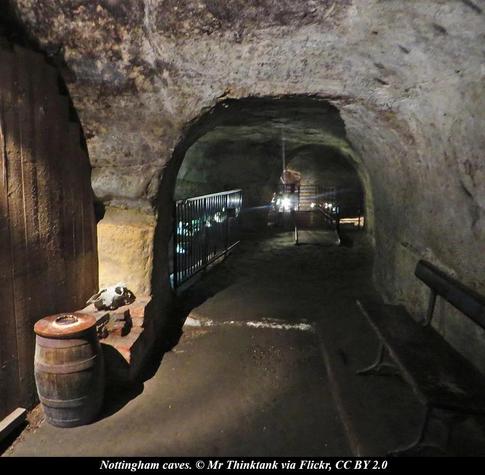
Nottingham reaches 1,000 recorded underground caves in major archaeological milestone in England

Nottingham has reached a recorded milestone of 1,000 caves beneath its streets, a number built through years of archaeological work and historical research. The city sits on soft sandstone, a material easy to carve, which allowed generations to create underground spaces across centuries..

More info: https://archaeologymag.com/2026/05/nottingham-reaches-1000-recorded-underground-caves/

Follow @archaeology

#archaeology #archeology #archaeologynews #Nottingham

You know those old planners you've pithed out over the years?

800-year-old #notebook found well-preserved in #medieval toilet https://interestingengineering.com/culture/800-year-old-notebook-medieval-toilet

#history #archeology #midden

800-year-old notebook found well-preserved in medieval toilet

Archaeologists discovered a well-preserved 800-year-old notebook in a toilet in Germany.

Interesting Engineering